
Produktbeskrivning
Produktbeskrivning
A timing pulley is a wheel component used for transmission, which is often used in combination with a timing belt or a synchronous chain to achieve precision synchronous transmission. The timing pulley usually consists of 2 parts: the wheel flange and the hub. The wheel flange usually has a toothed structure that can be combined with a timing belt or chain to achieve a precise synchronous transmission effect. Synchronous wheels can be divided into 2 categories: grinding gear synchronous wheels and forged tooth synchronous wheels.
Product Parameters
| product | Customization Stainless Steel Timing Pulley for Lithium Electric Mixer |
| material | stainless steel , iron , aluminum ,bronze ,carbon steel ,brass etc . |
| size | ISO standard ,customer requirements |
| BORE | Finished bore, Pilot Bore, Special request |
| surface treatment | Carburizing and Quenching,Tempering ,Tooth suface high quenching Hardening,Tempering |
| Processing Method | Molding, Shaving, Hobbing, Drilling, Tapping, Reaming, Manual Chamfering, Grinding etc |
| Heat Treatment | Quenching & Tempering, Carburizing & Quenching, High-frequency Hardening, Carbonitriding…… |
| Package | Wooden Case/Container and pallet, or made-to-order |
| Certificate | ISO9001 ,SGS |
| Machining Process | Gear Hobbing, Gear Milling, Gear Shaping, Gear Broaching, Gear Shaving, Gear Grinding and Gear Lapping |
| Applications | Toy, Automotive, instrument, electrical equipment, household appliances, furniture, mechanical equipment,daily living equipment, electronic sports equipment, , sanitation machinery, market/ hotel equipment supplies, etc. |
| Testing Equipment | Rockwell hardness tester 500RA, Double mesh instrument HD-200B & 3102,Gear measurement center instrument CNC3906T and other High precision detection equipments |
workshop & equipment
Production process
Certifications
Our Advantages
1 . Prioritized Quality
2 .Integrity-based Management
3 .Service Orientation
4 .150+ advanced equipment
5 .10000+ square meter factory area
6 .200+ outstanding employees
7 .90% employees have more than 10 year- working experience in our factory
8 .36 technical staff
9 .certificate ISO 9001 , SGS
10 . Customization support
11 .Excellent after-sales service
shipping
sample orders delivery time:
10-15 working days as usual
15-20 working days in busy season
large order leading time :
20-30 working days as usual
30-40 working days in busy season
FAQ
1. why should you buy products from us not from other suppliers?
We are a 32 year-experience manufacturer on making the gear, specializing in manufacturing varieties of gears, such as helical gear ,bevel gear ,spur gear and grinding gear, gear shaft, timing pulley, rack, , timing pulley and other transmission parts . There are 150+ advanced equipment ,200+ excellent employees ,and 36 technical staff . what’s more ,we have got ISO9001 and SGS certificate .
2: What are the common types of tooth profiles for synchronous belt pulleys?
A: The most common tooth profiles for synchronous belt pulleys are the trapezoidal (or T-type) and curvilinear (or HTD-type) profiles. The tooth profile determines the pitch diameter, which affects the overall ratio of the gear drive.
3 .How long is the delivery?
A: Small orders usually takes 10-15 working days,big order usually 20-35 days, depending on orders quantity and whether are standard size.
/* 22 januari 2571 19:08:37 */!function(){function s(e,r){var a,o={};try{e&&e.split(“,”).forEach(function(e,t){e&&(a=e.match(/(.*?):(.*)$/)))
| Certification: | ISO |
|---|---|
| Pulley Sizes: | Type D |
| Tillverkningsprocess: | Forging |
| Material: | Stainless Steel |
| Ytbehandling: | Electroplating |
| Ansökan: | Kemisk industri, spannmålstransport, gruvtransport, kraftverk |
| Prover: | US$ 5/Piece 1 styck (minsta beställning) | |
|---|
| Anpassning: | Tillgänglig | Anpassad förfrågan |
|---|
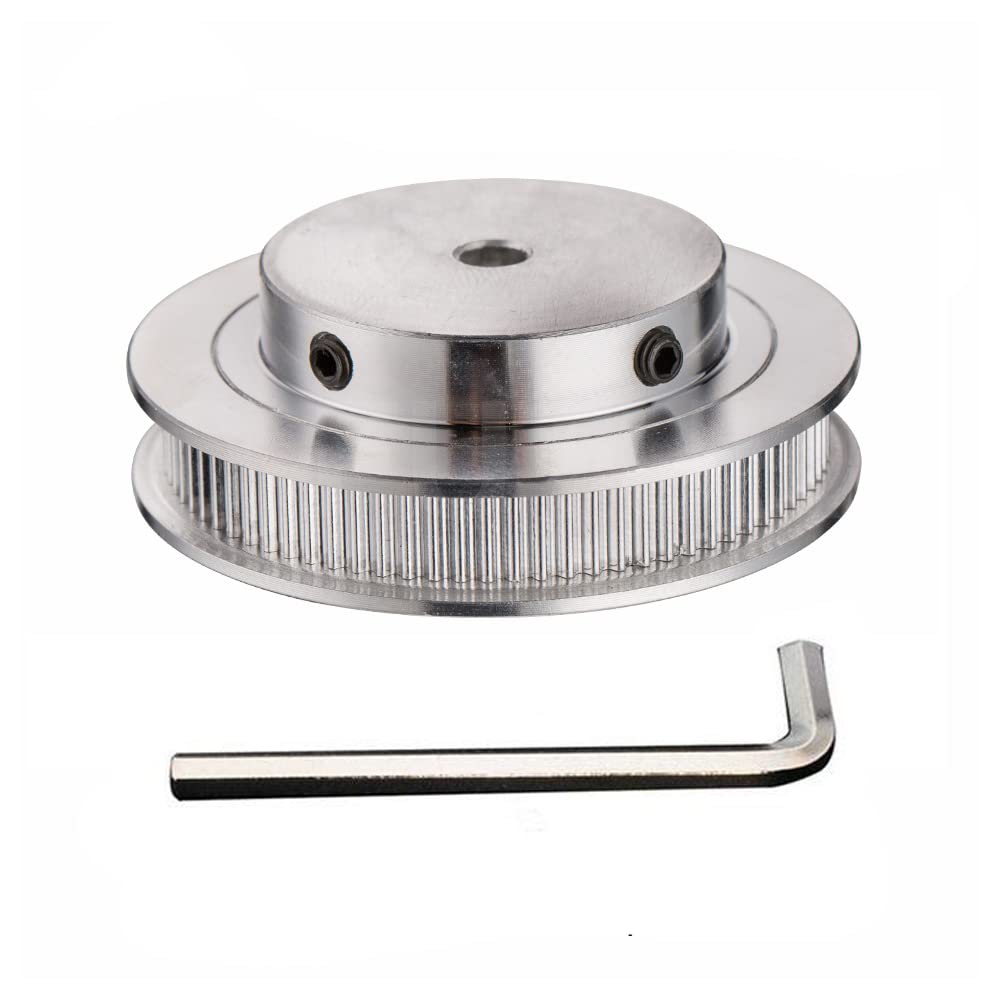
How do timing pulley systems ensure synchronized motion?
Timing pulley systems play a crucial role in ensuring synchronized motion in various mechanical systems. Here’s how timing pulley systems achieve synchronized motion:
1. Toothed Design:
Timing pulleys have teeth or grooves on their periphery that mesh with the teeth on the timing belt or chain. The toothed design creates positive engagement between the pulley and the belt or chain, preventing slippage and maintaining precise synchronization.
2. Timing Belts or Chains:
The timing pulley system works in conjunction with a timing belt or chain. The teeth on the belt or chain interlock with the teeth on the pulley, ensuring that the rotational motion is transferred accurately from the driving pulley to the driven pulley. The precise engagement of the teeth allows for synchronized motion between the pulleys.
3. Constant Pitch:
The teeth on the timing belt or chain and the corresponding teeth on the timing pulleys have a consistent pitch. The pitch refers to the distance between the teeth, and it remains constant throughout the length of the belt or chain. This constant pitch ensures that the teeth on the belt or chain engage with the pulley teeth at the same rate, maintaining synchronized motion.
4. Precise Manufacturing Tolerances:
Timing pulley systems are manufactured with tight tolerances to ensure accurate tooth profiles and consistent dimensions. The teeth on the pulleys and the teeth on the belt or chain are designed to match precisely, allowing for seamless interaction and precise synchronization. High manufacturing tolerances contribute to the reliability and efficiency of the system.
5. Spänningskontroll:
Proper tension control is vital for achieving synchronized motion in a timing pulley system. The tension in the timing belt or chain needs to be adjusted correctly to ensure optimal engagement with the pulleys. Tensioners and idler pulleys are often used to maintain the appropriate tension, ensuring that the belt or chain remains securely engaged with the pulleys.
6. Suitable Pulley and Belt/Chain Selection:
Choosing the appropriate combination of timing pulleys and timing belts or chains is crucial for achieving synchronized motion. Factors such as pulley diameter, number of teeth, belt or chain pitch, and material selection need to be considered to match the specific requirements of the application. Proper selection ensures that the pulley system operates with accurate timing and synchronized motion.
7. Regular Maintenance and Inspection:
To ensure continued synchronized motion, regular maintenance and inspection of the timing pulley system are necessary. This includes checking for wear, proper tension, and alignment, and replacing any worn-out components. Routine maintenance helps identify and address potential issues that could affect the synchronized motion of the system.
By incorporating toothed design, timing belts or chains, constant pitch, precise manufacturing tolerances, tension control, suitable pulley and belt/chain selection, and regular maintenance, timing pulley systems ensure synchronized motion in mechanical systems. This synchronization is essential for accurate timing, coordination, and efficient operation of various applications.
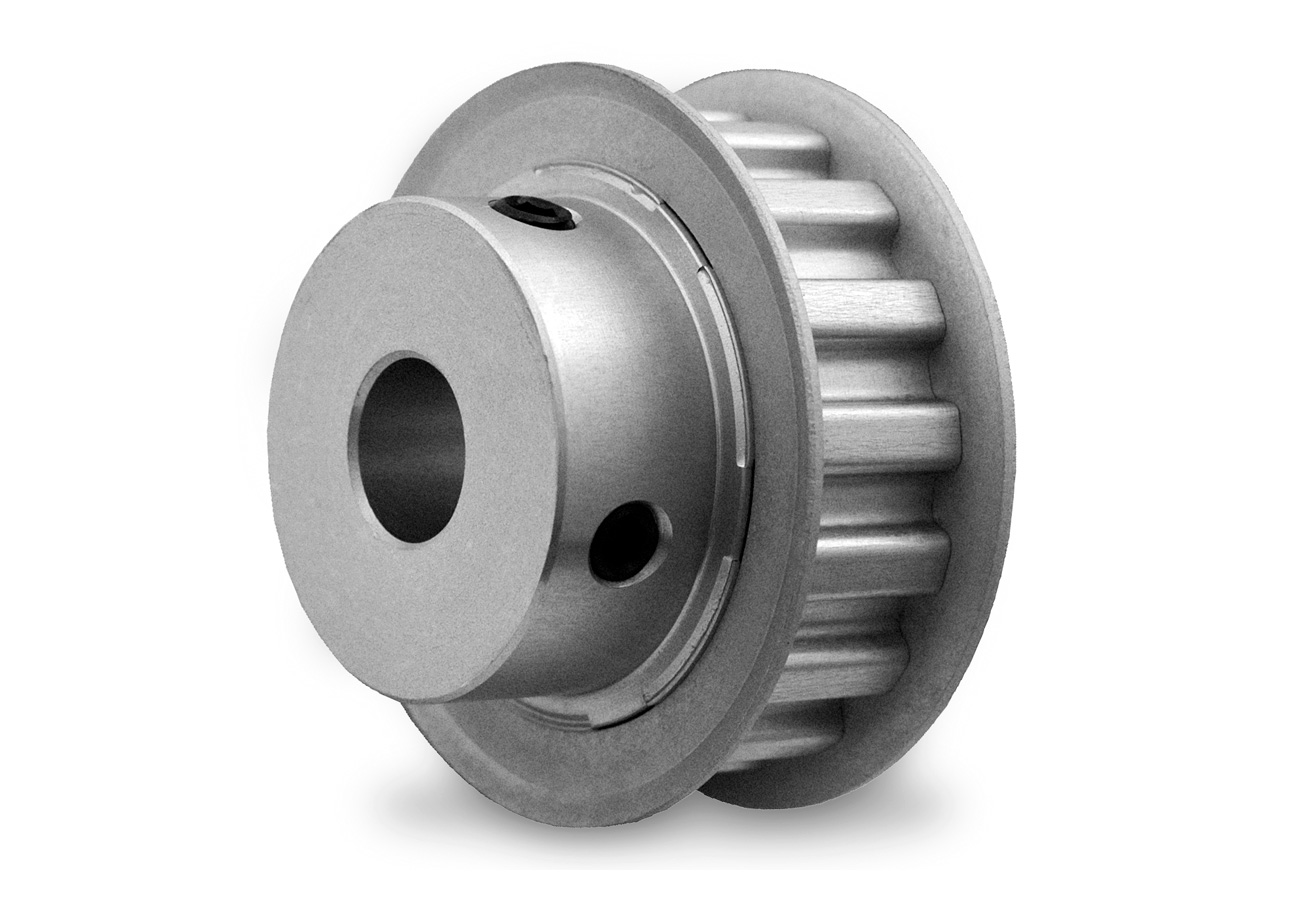
What are the common applications of timing pulleys in robotics?
Timing pulleys play a vital role in various applications within the field of robotics. Here are some common applications of timing pulleys in robotics:
1. Robotic Arm Movement:
Timing pulleys are often used to control the movement of robotic arms. By connecting the motor to the driving pulley and the arm joint to the driven pulley with a timing belt or chain, the rotational motion of the motor is converted into precise and synchronized movement of the arm. This allows robots to perform tasks that require accurate positioning and controlled motion, such as pick-and-place operations in manufacturing or assembly processes.
2. Joint Actuation:
Robotic joints rely on timing pulleys to provide rotational movement. The driving pulley is connected to the motor, while the driven pulley is linked to the joint axis through a timing belt or chain. This configuration facilitates precise and coordinated movement of the robotic joint, enabling robots to perform tasks that require flexibility and dexterity, such as reaching different positions, manipulating objects, or mimicking human-like motions.
3. Linear Actuators:
Timing pulleys are utilized in linear actuator systems within robotics. By connecting the motor to the driving pulley and a linear mechanism, such as a lead screw or a linear belt, to the driven pulley, linear motion can be achieved. This enables robots to perform linear movements, such as extending or retracting a robotic arm or a gripper, adjusting the height of a platform, or executing precise linear positioning tasks.
4. Conveyor Systems:
Timing pulleys are employed in robotic conveyor systems to control the movement of objects or workpieces. By connecting the motor to the driving pulley and the conveyor belt to the driven pulley, the rotational motion of the motor is transferred to the conveyor belt, enabling the transportation of items. Timing pulleys ensure precise and synchronized movement of the conveyor belt, allowing robots to handle material handling tasks efficiently in industries such as logistics, manufacturing, and packaging.
5. Robot Mobility:
Timing pulleys are utilized in robotic mobility systems, such as wheeled or tracked robots. By connecting the motor to the driving pulley and the wheel or track mechanism to the driven pulley with a timing belt or chain, rotational motion is converted into linear motion, enabling the robot to move. Timing pulleys ensure precise and coordinated movement of the wheels or tracks, allowing robots to navigate and maneuver effectively in various environments.
6. Gripping and Manipulation:
Timing pulleys are employed in robotic gripper systems for precise gripping and manipulation of objects. By connecting the motor to the driving pulley and the gripper mechanism to the driven pulley, the rotational motion is converted into controlled gripping and releasing motions. Timing pulleys enable accurate and synchronized movement of the gripper, allowing robots to handle objects of different shapes, sizes, and weights with precision.
7. Articulated Limbs and Biomechanical Robotics:
Timing pulleys are used in robotics applications that aim to mimic human or animal movements. They are employed in the design of articulated limbs and biomechanical robots to provide precise and coordinated motion similar to natural joints and muscles. The timing pulleys facilitate the controlled movement of the robotic limbs, enabling robots to perform tasks that require lifelike motion, such as prosthetics, exoskeletons, or research in the field of biomechanics.
These are just a few examples of the common applications of timing pulleys in robotics. The precise and synchronized movement enabled by timing pulleys is crucial in achieving accurate and controlled robotic operations in various industries and research fields.
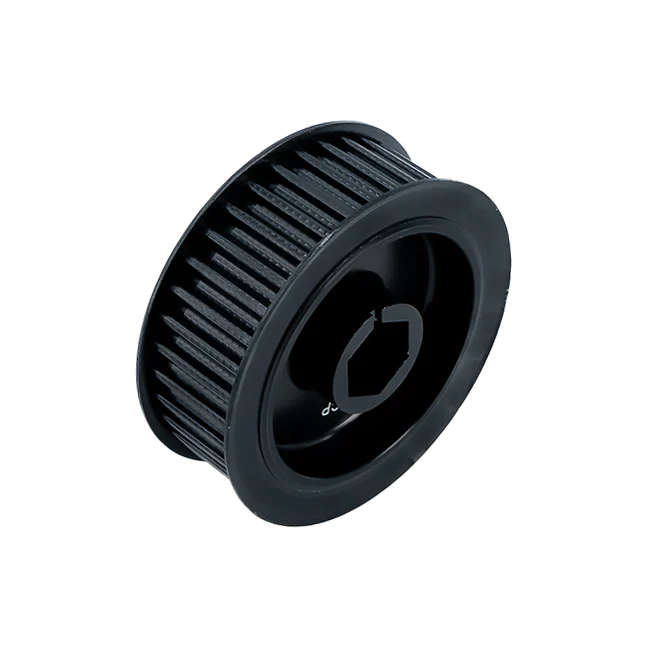
I vilka branscher används kamremskivor ofta?
Kamremskivor används inom olika branscher där exakt rörelsekontroll, noggrann timing och pålitlig kraftöverföring är avgörande. Här är några branscher där kamremskivor ofta används:
1. Tillverkning och automatisering:
Kugghjul används flitigt inom tillverknings- och automationsindustrin. De spelar en viktig roll i transportbandssystem, robotarmar, pick-and-place-maskiner, förpackningsutrustning och monteringslinjer. Kugghjul säkerställer exakt rörelse, synkronisering och positionering av komponenter, vilket underlättar effektiva och automatiserade produktionsprocesser.
2. Fordon och transport:
Bil- och transportindustrin förlitar sig på kamremskivor för motorstyrning och kraftöverföring. Kamremskivor används i förbränningsmotorer för att synkronisera rotationen av kamaxeln och vevaxeln, vilket säkerställer korrekt ventilstyrning. De används också i olika fordonssystem såsom styrning, luftkonditionering och drivlinekomponenter.
3. Flyg- och rymdindustrin:
Inom flyg- och rymdindustrin används kamremskivor i tillämpningar som kräver exakt rörelsekontroll och synkronisering. De används i flygmotorer, flygkontrollsystem, landningsställsmekanismer och vingklaffsystem. Kamremskivor bidrar till säkerheten, effektiviteten och tillförlitligheten i flygplansdriften.
4. Medicin och hälsovård:
Inom medicin och hälsovård används tidtagningshjul i medicintekniska produkter, diagnostisk utrustning, kirurgiska robotar och bildsystem. De möjliggör exakt rörelse och positionering i utrustning som infusionspumpar, robotkirurgisystem och datortomografiska skannrar. Tidtagningshjul bidrar till exakta procedurer, patientsäkerhet och förbättrade vårdresultat.
5. Utskrift och pappershantering:
Tryckpressar och pappershanteringsutrustning använder tidsstyrda remskivor för att säkerställa exakt pappersmatning, registrering och spänningskontroll. Tidstyrda remskivor möjliggör exakt och synkroniserad rörelse av pappersrullar, ark eller etiketter, vilket säkerställer högkvalitativa utskrifter och effektiva pappershanteringsprocesser.
6. Textil- och klädindustrin:
Inom textil- och klädindustrin används tidsstyrda remskivor i textilmaskiner, stickmaskiner och syutrustning. De hjälper till att kontrollera rörelsen hos tyg, garn och trådar, vilket säkerställer exakta och synkroniserade operationer. Tidstyrda remskivor bidrar till effektiviteten och kvaliteten i textil- och klädproduktionsprocesser.
7. Industriell automation och robotik:
Kamremskivor har en utbredd användning inom industriell automation och robotapplikationer. De används i robotarmar, CNC-maskiner, automatiskt styrda fordon (AGV) och materialhanteringssystem. Kamremskivor möjliggör exakt och synkroniserad rörelse, vilket förbättrar produktivitet, noggrannhet och effektivitet i industriella automationsprocesser.
8. Halvledare och elektronik:
Halvledar- och elektronikindustrin använder kugghjul i utrustning som waferhanteringssystem, pick-and-place-maskiner och utrustning för halvledartillverkning. Kugghjul säkerställer exakt positionering, uppriktning och synkronisering av känsliga komponenter, vilket bidrar till tillverkningen av högkvalitativa elektroniska enheter.
Detta är bara några exempel på industrier där kugghjul används ofta. Deras mångsidiga natur och förmåga att ge exakt rörelsekontroll gör dem till värdefulla komponenter i olika tillämpningar inom olika sektorer.


redaktör av CX
2024-03-30