
Produktbeskrivning
Produktbeskrivning
Aluminum/C45 Timing Belt Pulley
| Product Name | Aluminium Timing Pulley MXL XL L H XH XXH T2.5 T5 T10 AT5 AT10 S2M S3M S5M S8M GT2 GT3 GT5 3M 5M 8M Tooth timing Belt Pulley | |
| Teeth profile | Trapezoidal toothed | MXL, XXL, XL, L, H, XH, XXH |
| T-toothed | T2.5, T5, T10, T20 | |
| Arc toothed | HTD3M, HTD5M, HTD8M, HTD14M, HTD20M, Gt2, Gt3, Gt5 | |
| S-toothed | S2M, S3M, S4.5M, S5M, S8M, S14M | |
| Parabolic-toothed | P2M, P3M, P5M, P8M, P14M | |
| Y-toothed | G2M, G3M, G5M, Y8M | |
| Teeth Quantity | 10-150 teeth or customized | |
| Inner Bore | 2-200mm H7 precision or customized | |
| Belt width | 4mm, 6mm, 9mm, 10mm, 12mm, 15mm, 20mm, 25mm, 30mm, 40mm, 50mm, 1/4”, 5/16”, 3/8”, 1/2”, 3/4”, 1”, 1.5”, 2”or customized | |
| Material | carbon steel C45, Aluminum 6061, 6082 | |
| Surface treatment | Anodize,Black Oxide,Phosphate, Galvanization, Nitriding, Dichromate | |
Detailed Photos
Timing pulley used on conveyor roller
Workshop
Equipments:
Lathe machine, Hobbing machine,Drilling machine,CNC machine,Milling machine, etc
FAQ
Q1: Are you trading company or manufacturer ?
A: We are factory.
Q2: How long is your delivery time and shipment?
1.Sample Lead-times: 10-20 days.
2.Production Lead-times: 30-45 days after order confirmed.
Q3: What is your advantages?
1. The most competitive price and good quality.
2. Perfect technical engineers give you the best support.
3. OEM is available.
/* 22 januari 2571 19:08:37 */!function(){function s(e,r){var a,o={};try{e&&e.split(“,”).forEach(function(e,t){e&&(a=e.match(/(.*?):(.*)$/)))
| Certification: | ISO |
|---|---|
| Pulley Sizes: | Timing Belt Pulley |
| Tillverkningsprocess: | Hobbing Teeth |
| Material: | Aluminum |
| Ytbehandling: | Anodizing |
| Ansökan: | Kemisk industri, spannmålstransport, gruvtransport, kraftverk |
| Anpassning: | Tillgänglig | Anpassad förfrågan |
|---|
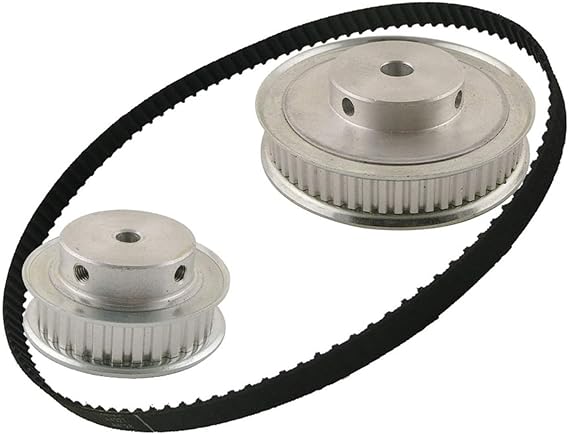
What is the role of timing belts in conjunction with timing pulleys?
Timing belts play a crucial role when used in conjunction with timing pulleys in various mechanical systems. Here’s an overview of the role of timing belts:
1. Power Transmission:
The primary role of a timing belt is to transmit power from the driving pulley to the driven pulley. It acts as a flexible, durable, and high-strength link between the two pulleys. As the driving pulley rotates, the teeth on the timing belt engage with the teeth on the timing pulley, enabling the transfer of rotational motion and power.
2. Synchronization:
Timing belts ensure precise synchronization between the driving and driven pulleys. The teeth on the timing belt match the tooth profile of the timing pulley, creating a positive drive system. This synchronization ensures that the rotation of the driven pulley matches the rotation of the driving pulley, maintaining precise timing and coordination between different components in the system.
3. Lastfördelning:
Timing belts help distribute the load evenly across the system. The teeth on the timing belt engage with the tooth profile of the timing pulley, allowing for the efficient transfer of torque and power. This even load distribution reduces stress concentration on individual components, promoting longevity and reliability.
4. Shock Absorption:
Timing belts have inherent flexibility, which allows them to absorb shocks and vibrations within the system. This absorption capability helps protect the components from sudden jolts and impacts, ensuring smooth and reliable power transmission. The flexibility of the timing belt also contributes to noise reduction in the system.
5. Low Maintenance and Lubrication-Free Operation:
Timing belts offer the advantage of maintenance-free operation. Unlike some other power transmission systems, timing belts do not require lubrication, resulting in cleaner and more environmentally friendly operation. The absence of lubrication also reduces the risk of contamination in sensitive applications such as food processing or cleanroom environments.
6. Wide Range of Applications:
Timing belts find applications in various industries and systems, including automotive engines, industrial machinery, robotics, printing presses, and more. They are suitable for transmitting power over long distances, operate at high speeds, and can accommodate different torque requirements.
7. Material Selection:
Timing belts are manufactured using different materials such as rubber, polyurethane, or reinforced synthetic materials. The choice of material depends on the specific application requirements, including factors such as load capacity, temperature resistance, chemical resistance, and environmental conditions.
In summary, timing belts, when used in conjunction with timing pulleys, facilitate efficient power transmission, ensure synchronization, distribute loads evenly, absorb shocks, require low maintenance, and find wide-ranging applications. The combination of timing belts and timing pulleys provides reliable and precise power distribution in various mechanical systems.
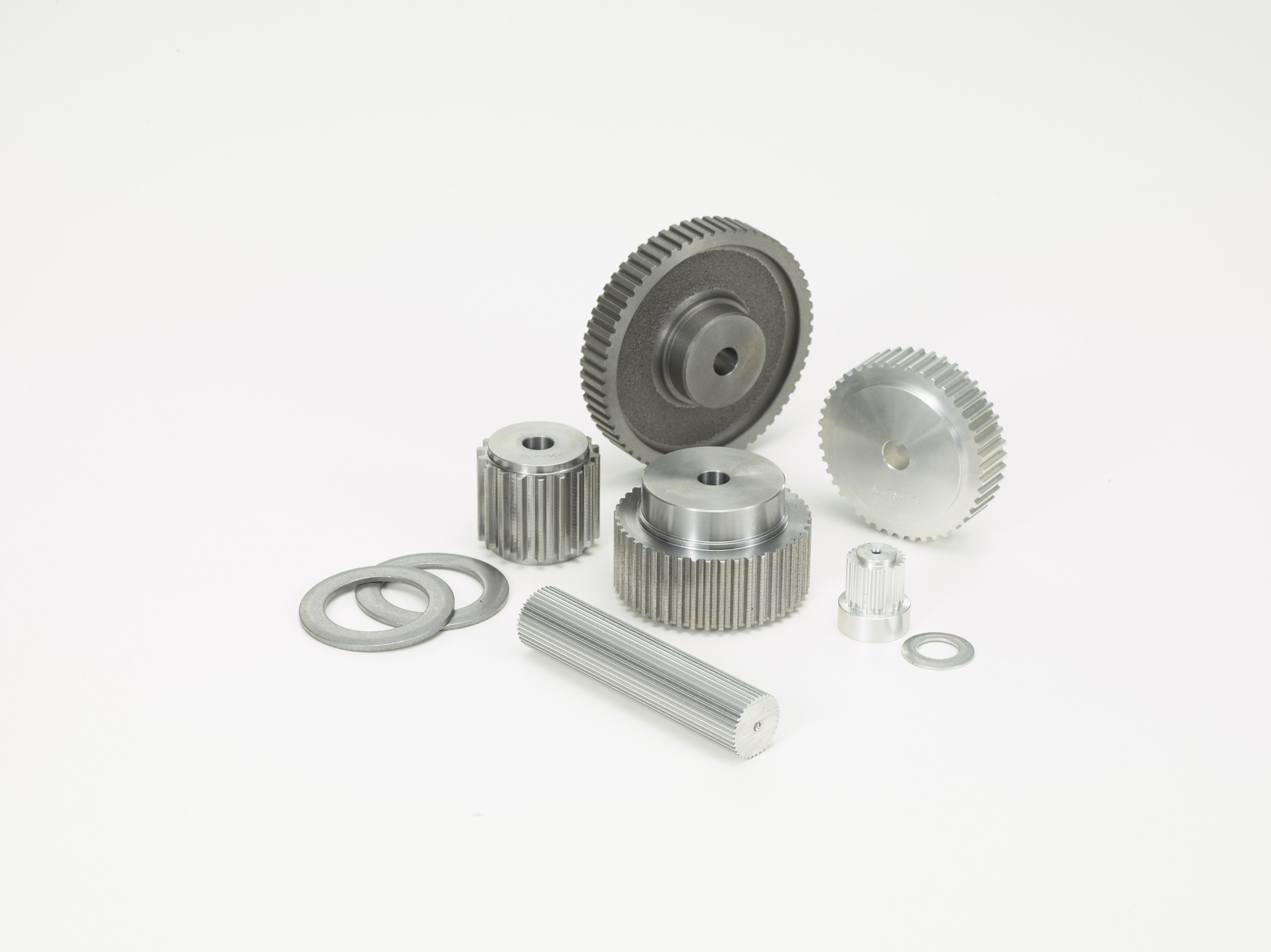
Vilka säkerhetsaspekter bör man tänka på när man arbetar med kugghjul?
Att arbeta med kugghjul kräver noggrann säkerhetsåtgärder för att förhindra olyckor och skador. Här är några viktiga säkerhetsaspekter att tänka på:
1. Korrekt träning:
Säkerställ att personer som arbetar med kugghjul har fått korrekt utbildning i säker hantering och användning. Utbildningen bör omfatta ämnen som korrekta installationsprocedurer, underhållsriktlinjer och förståelse för riskerna med kugghjulssystem.
2. Personlig skyddsutrustning (PPE):
Använd lämplig personlig skyddsutrustning, inklusive skyddsglasögon, handskar och annan nödvändig skyddsutrustning när du arbetar med kugghjul. Personlig skyddsutrustning hjälper till att skydda mot potentiella faror som flygande skräp, vassa kanter eller oavsiktlig kontakt med rörliga delar.
3. Procedurer för utlåsning/uttaggning:
Följ etablerade procedurer för låsning/märkning när du utför underhålls- eller reparationsuppgifter på maskiner utrustade med kugghjul. Låsnings-/märkningsprocedurer innebär att isolera strömkällan, göra systemet strömlöst och säkra det med ett lås eller en etikett för att förhindra oväntad start eller spänningssättning.
4. Maskinskydd:
Säkerställ att kamremskivorna är ordentligt skyddade för att förhindra oavsiktlig kontakt. Installera lämpliga maskinskydd, barriärer eller inkapslingar för att förhindra att fingrar, kläder eller andra föremål kommer i kontakt med de rörliga remskivorna eller remmarna.
5. Regelbunden inspektion och underhåll:
Kontrollera regelbundet kamremskivorna för tecken på slitage, skador eller feljustering. Byt ut slitna eller skadade komponenter omedelbart för att upprätthålla säker drift. Följ tillverkarens rekommenderade underhållsschema och procedurer.
6. Undvik löst sittande kläder och smycken:
Undvik att bära löst sittande kläder, smycken eller andra föremål som kan fastna i transmissionshjulen eller tillhörande maskineri. Lösa kläder eller tillbehör kan utgöra en betydande risk för intrassling eller skada.
7. Korrekt lyftning och hantering:
Använd korrekt lyftteknik och utrustning för att förhindra påfrestningar eller skador vid hantering av kugghjul eller relaterad utrustning. Sök hjälp när du hanterar tunga eller skrymmande remskivor.
8. Riskbedömning:
Genomför en grundlig riskbedömning av maskiner och arbetsmiljö för att identifiera eventuella ytterligare säkerhetsåtgärder som kan krävas. Tänk på faktorer som bullernivåer, ventilation och ergonomi för att säkerställa en säker arbetsmiljö.
9. Nödstopp och avstängning:
Se till att maskiner utrustade med kugghjul har tillgängliga nödstoppsknappar eller strömbrytare. Bekanta dig med placeringen och funktionen av dessa nödstoppsanordningar och vet hur man snabbt stänger av maskinen i händelse av en nödsituation.
10. Följ tillverkarens riktlinjer:
Följ tillverkarens riktlinjer, instruktioner och varningar som gäller specifika för kugghjulen och tillhörande maskiner. Tillverkare tillhandahåller värdefull information om säker drift, underhållsprocedurer och rekommenderade säkerhetsåtgärder.
Genom att följa dessa säkerhetsöverväganden kan individer minimera riskerna i samband med arbete med kugghjul och främja en säker arbetsmiljö.
What advantages do timing pulleys offer for precise power transmission?
Timing pulleys offer several advantages for precise power transmission in mechanical systems. Here are some of the key advantages:
1. Positive Drive System:
Timing pulleys, when used in conjunction with a timing belt, create a positive drive system. The teeth on the timing pulleys mesh with the teeth on the timing belt, ensuring a positive engagement and eliminating slippage. This positive drive system enables precise power transmission without loss of motion or power.
2. Accurate Speed Ratios:
Timing pulleys allow for accurate speed ratios between the driving and driven components. The number of teeth on the pulleys and the belt determines the speed ratio, ensuring a consistent and predictable transmission of rotational motion. This is crucial in applications where precise speed control and synchronization are required.
3. High Torque Transmission:
The positive engagement between the teeth of the timing pulleys and belt allows for efficient transmission of high torque. The teeth effectively transmit the rotational force without slipping or losing power, enabling reliable torque transfer in applications that require high torque output.
4. Precise Positioning and Indexing:
Timing pulleys facilitate precise positioning and indexing of components in a mechanical system. The teeth on the pulleys and belt ensure accurate movement and control, allowing for repeatable and controlled motion. This is essential in applications that require precise positioning, such as CNC machines, robotics, and automated systems.
5. Minimal Backlash:
The positive engagement between the teeth of timing pulleys results in minimal backlash or play in the power transmission system. Backlash refers to the undesired motion or gap between mating components when the direction of force is reversed. A timing pulley system with minimal backlash ensures precise and immediate response to changes in direction, enhancing overall system performance and accuracy.
6. Reduced Maintenance:
Timing pulleys and belts require minimal maintenance compared to other power transmission systems. The positive drive system eliminates the need for frequent tension adjustments and lubrication. Additionally, timing belts made of durable materials with reinforcing cords provide long service life and resist wear, reducing the need for frequent replacements.
7. Low Noise and Vibration:
Timing pulleys contribute to low noise and vibration levels in a mechanical system. The positive engagement between the teeth minimizes vibration and noise generation during power transmission. This is especially important in applications where noise and vibration can affect system performance, precision, or user comfort.
8. Design Flexibility:
Timing pulleys offer design flexibility, allowing for various configurations and customization options. They are available in different sizes, materials, and tooth profiles to suit specific application requirements. This flexibility enables engineers to design systems that meet precise power transmission needs.
Overall, timing pulleys provide significant advantages for precise power transmission, including a positive drive system, accurate speed ratios, high torque transmission, precise positioning, minimal backlash, reduced maintenance, low noise and vibration, and design flexibility. These advantages make timing pulleys a preferred choice in applications where precise motion control, accurate timing, and reliable power transmission are essential.


redaktör av CX
2024-03-08