
Descripción del Producto
ODM OEM Synchronous Timing Pulleys With Aluminum Alloy Stainless Steel
Synchronous belt pulley transmission is composed of an annular belt with equidistant teeth on the inner peripheral surface and a belt pulley with corresponding teeth. During operation, the belt teeth mesh with the tooth slots of the belt pulley to transmit motion and power. It is a new belt transmission that integrates the respective advantages of belt transmission, chain transmission and gear transmission.
Product Parameters
| Product | standard timing belt pulley & idler pulley |
| Customized | OEM, drawings or samples customized |
| Teeth type | Normal Torque Drive Type:MXL,XL,L,H,XH,XXH High Torque Drive Type:S2M,S3M,S5M,S8M,HTD2M,HTD3M,HTD5M,HTD8M,P2M,P3M,P5M,P8M High Precision Position Drive Type:2GT,3GT,5GT,8YU Light Load Drive Type:T5,T10,T20 Heavy Load Drive Type:AT5,AT10,AT20 |
| Basic shape | Type A,Type B,Type D,Type E,Type F,Type K |
| Adaption | Adapt to 1/4 inch,5/16 inch,1/2 inch, 3/8inch, 2/25inch, 1/5inch belt |
| surface treatment | Natural color anodizing,Black anodizing,Hard anodizing,Ni-plating,Blackening |
| Material | 6061(aluminum),S45C(45# steel),SUS304(Stainless steel) |
| Bore | Pilot bore, Taper bore and Customized bore. |
| Tolerance Control | Outer diameter ±0.005mm Length dimension ±0.05mm |
| Standard | DIN, ISO/GB, AGMA, JIS |
| Teeth Accuracy | DIN Class 4, ISO/GB Classs 4, AGMA Class 13, JIS Class 0 |
| Weight | Max 15Tons |
| testing equipment | projecting apparatus,salt spray test,durometer,and coating thickness tester,2D projector |
| producing equipment | CNC machine,automatic lathe machine,stamping machine,CNC milling machine,rolling machine,lasering,tag grinding machine etc. |
| Machining Process | Gear Hobbing, Gear Milling, Gear Shaping, Gear Broaching,Gear Shaving, Gear Grinding and Gear Lapping |
| Application industry | Robot industry,Medical industry,Making machine industry,Automation industry,3C industry equipment,Packaging industry,UAV industry,New energy industry. |
Embalaje y envío
FAQ
| Main markets | Southeast Asia, North America, Eastern Europe, Mid-East, West Europe |
| How to order | *You send us drawing or sample |
| *We carry through project assessment | |
| *We give you our design for your confirmation | |
| *We make the sample and send it to you after you confirmed our design | |
| *You confirm the sample then place an order and pay us 30% deposit | |
| *We start producing | |
| *When the goods is done,you pay us the balance after you confirmed pictures or tracking numbers | |
| *Trade is done,thank you!! |
/* 22 de enero de 2571 19:08:37 */!function(){function s(e,r){var a,o={};try{e&&e.split(“”,).forEach(function(e,t){e&&(a=e.match(/(.*?):(.*)$/))&&1
| Certification: | CE, ISO |
|---|---|
| Pulley Sizes: | Type A |
| Proceso de fabricación: | Machining |
| Material: | Iron |
| Tratamiento de superficie: | Pulido |
| Solicitud: | Chemical Industry, Grain Transport, Mining Transport, Power Plant, Machine |
| Muestras: | US$ 15/Piece 1 unidad (pedido mínimo) | |
|---|
| Personalización: | Disponible | Solicitud personalizada |
|---|
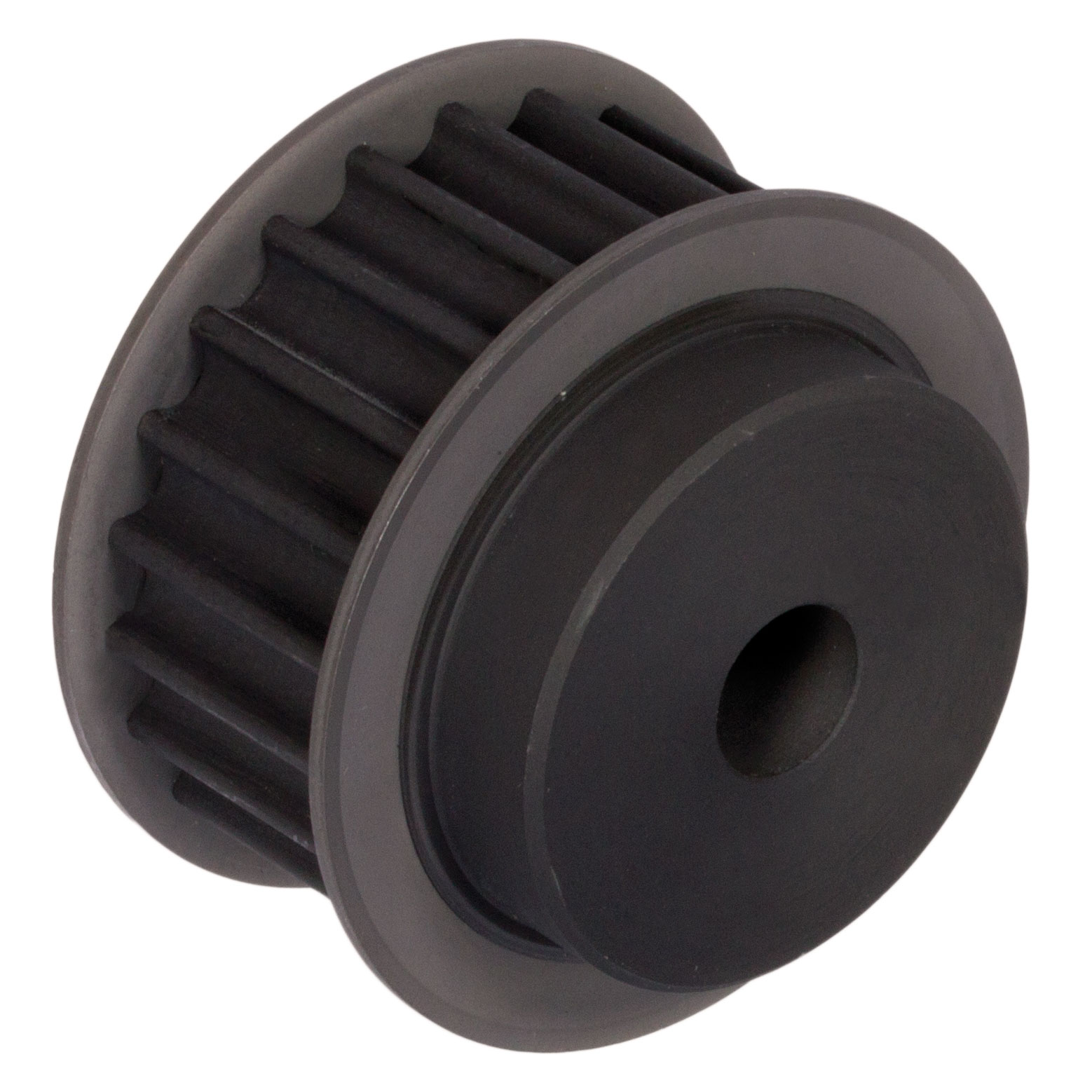
What types of materials are typically used to manufacture timing pulleys?
Timing pulleys are manufactured using a variety of materials, each chosen based on its specific properties and performance requirements. Here are some of the materials typically used:
1. Steel:
Steel is a commonly used material for timing pulleys due to its high strength, durability, and resistance to wear. Steel pulleys can withstand heavy loads and high-speed applications. They are often used in industrial machinery, automotive engines, and power transmission systems that require robust and reliable performance.
2. Aluminum:
Aluminum timing pulleys are favored for their lightweight nature, corrosion resistance, and excellent heat dissipation properties. They are commonly used in applications where weight reduction is a priority, such as aerospace and automotive industries. Aluminum pulleys are also suitable for high-speed applications where reduced inertia is desired.
3. Cast Iron:
Cast iron timing pulleys offer excellent strength and durability. They are known for their high load-carrying capacity and resistance to wear and deformation. Cast iron pulleys are commonly used in heavy-duty industrial applications that involve high loads and harsh operating conditions.
4. Engineering Plastics:
Various engineering plastics, such as polyamide (nylon), polyoxymethylene (acetal), and polycarbonate, are used to manufacture timing pulleys. These materials offer good strength, wear resistance, and low friction properties. Engineering plastic pulleys are often chosen for their lightweight, low noise, and self-lubricating characteristics. They find applications in industries such as packaging, food processing, and automation.
5. Composite Materials:
Composite materials, which combine different materials such as carbon fibers or glass fibers with a polymer matrix, are used to manufacture high-performance timing pulleys. These pulleys offer exceptional strength-to-weight ratios, high stiffness, and excellent resistance to temperature and chemicals. Composite pulleys are typically used in demanding applications that require lightweight construction and high performance, such as motorsports and advanced machinery.
6. Other Materials:
Depending on the specific application requirements, timing pulleys can also be manufactured using materials such as brass, bronze, or stainless steel, which offer specific properties like corrosion resistance or electrical conductivity.
The choice of material for timing pulleys depends on factors such as load capacity, speed, operating conditions, environmental factors, and cost considerations. Manufacturers select the most suitable material to ensure optimal performance, durability, and reliability in the intended application.
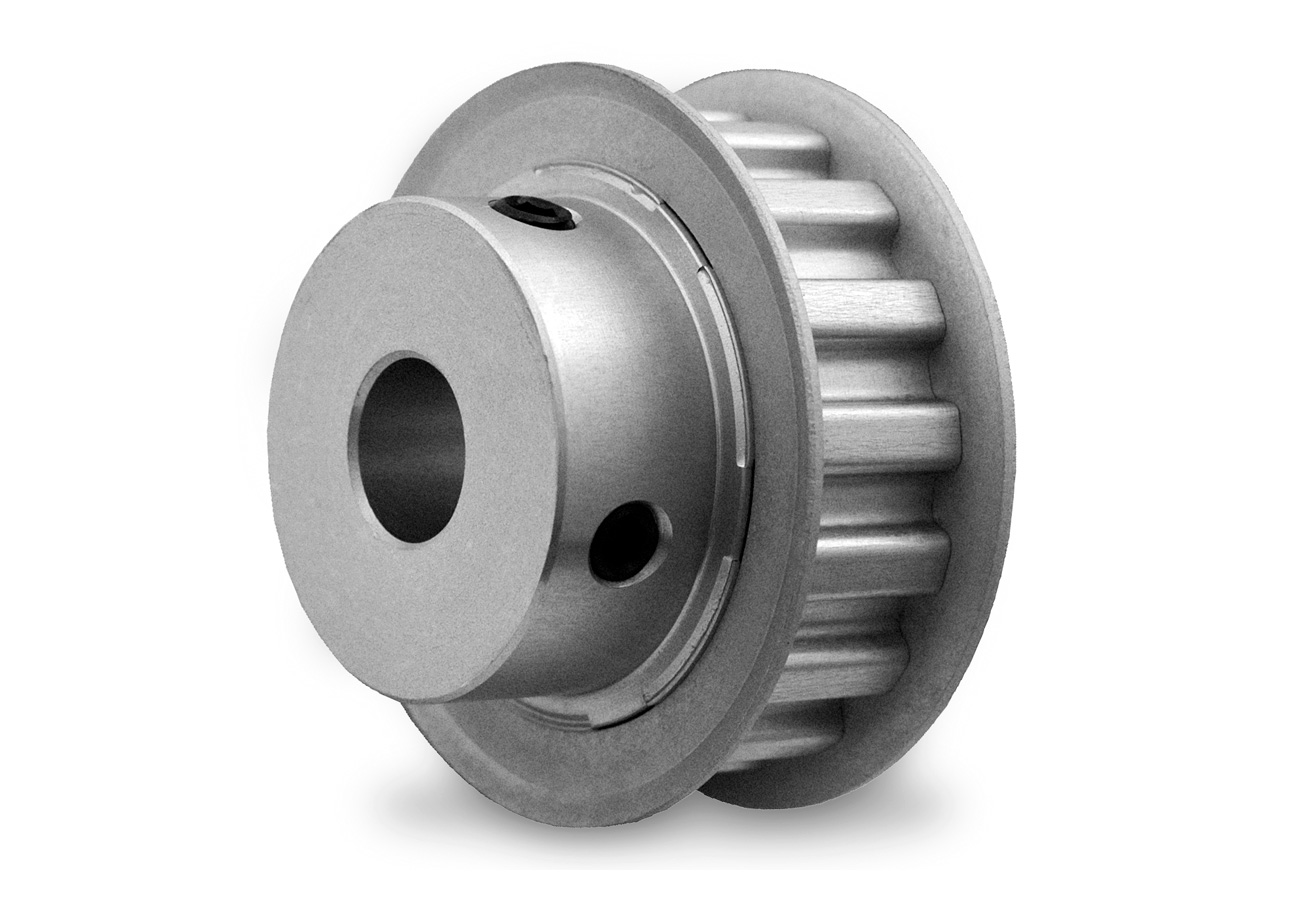
What are the common applications of timing pulleys in robotics?
Timing pulleys play a vital role in various applications within the field of robotics. Here are some common applications of timing pulleys in robotics:
1. Robotic Arm Movement:
Timing pulleys are often used to control the movement of robotic arms. By connecting the motor to the driving pulley and the arm joint to the driven pulley with a timing belt or chain, the rotational motion of the motor is converted into precise and synchronized movement of the arm. This allows robots to perform tasks that require accurate positioning and controlled motion, such as pick-and-place operations in manufacturing or assembly processes.
2. Joint Actuation:
Robotic joints rely on timing pulleys to provide rotational movement. The driving pulley is connected to the motor, while the driven pulley is linked to the joint axis through a timing belt or chain. This configuration facilitates precise and coordinated movement of the robotic joint, enabling robots to perform tasks that require flexibility and dexterity, such as reaching different positions, manipulating objects, or mimicking human-like motions.
3. Linear Actuators:
Timing pulleys are utilized in linear actuator systems within robotics. By connecting the motor to the driving pulley and a linear mechanism, such as a lead screw or a linear belt, to the driven pulley, linear motion can be achieved. This enables robots to perform linear movements, such as extending or retracting a robotic arm or a gripper, adjusting the height of a platform, or executing precise linear positioning tasks.
4. Conveyor Systems:
Timing pulleys are employed in robotic conveyor systems to control the movement of objects or workpieces. By connecting the motor to the driving pulley and the conveyor belt to the driven pulley, the rotational motion of the motor is transferred to the conveyor belt, enabling the transportation of items. Timing pulleys ensure precise and synchronized movement of the conveyor belt, allowing robots to handle material handling tasks efficiently in industries such as logistics, manufacturing, and packaging.
5. Robot Mobility:
Timing pulleys are utilized in robotic mobility systems, such as wheeled or tracked robots. By connecting the motor to the driving pulley and the wheel or track mechanism to the driven pulley with a timing belt or chain, rotational motion is converted into linear motion, enabling the robot to move. Timing pulleys ensure precise and coordinated movement of the wheels or tracks, allowing robots to navigate and maneuver effectively in various environments.
6. Gripping and Manipulation:
Timing pulleys are employed in robotic gripper systems for precise gripping and manipulation of objects. By connecting the motor to the driving pulley and the gripper mechanism to the driven pulley, the rotational motion is converted into controlled gripping and releasing motions. Timing pulleys enable accurate and synchronized movement of the gripper, allowing robots to handle objects of different shapes, sizes, and weights with precision.
7. Articulated Limbs and Biomechanical Robotics:
Timing pulleys are used in robotics applications that aim to mimic human or animal movements. They are employed in the design of articulated limbs and biomechanical robots to provide precise and coordinated motion similar to natural joints and muscles. The timing pulleys facilitate the controlled movement of the robotic limbs, enabling robots to perform tasks that require lifelike motion, such as prosthetics, exoskeletons, or research in the field of biomechanics.
These are just a few examples of the common applications of timing pulleys in robotics. The precise and synchronized movement enabled by timing pulleys is crucial in achieving accurate and controlled robotic operations in various industries and research fields.
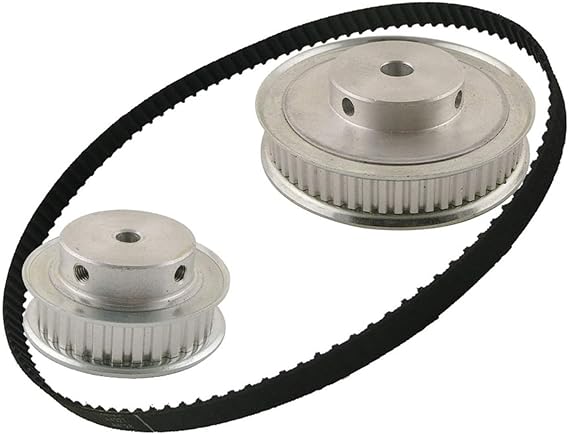
¿Qué es una polea de distribución y cómo se utiliza en los sistemas mecánicos?
Una polea de distribución, también conocida como polea síncrona, es un tipo de polea diseñada específicamente para funcionar con correas dentadas o correas de distribución. Presenta ranuras o dientes en su superficie circunferencial que engranan con los dientes correspondientes de la correa. Las poleas de distribución se utilizan en sistemas mecánicos que requieren una transmisión de potencia precisa y sincronizada, donde la sincronización y el posicionamiento exactos son cruciales. A continuación, se explica la función y el uso de las poleas de distribución en los sistemas mecánicos:
1. Transmisión de potencia:
La función principal de una polea de distribución es transmitir el movimiento rotacional y la potencia entre dos o más ejes en un sistema mecánico. Los dientes de la polea engranan con los de la correa de distribución, creando un sistema de transmisión positiva. Este engranaje positivo garantiza que la polea y la correa se muevan juntas sin deslizarse, proporcionando una sincronización precisa y una transmisión de potencia óptima.
2. Sincronización:
Las poleas de distribución se utilizan para sincronizar la rotación de diferentes componentes en un sistema mecánico. Mediante el uso de correas y poleas de distribución compatibles, el movimiento de rotación de la polea motriz se transmite con precisión a las poleas conducidas. Esta sincronización es fundamental en aplicaciones que requieren una sincronización precisa, como en motores, impresoras, máquinas CNC y robótica.
3. Control de velocidad y par motor:
Las poleas de sincronización permiten controlar la velocidad y el par en sistemas mecánicos. Al variar el diámetro o el número de dientes de las poleas, se pueden lograr diferentes relaciones de velocidad entre los ejes motriz y conducido. Esta característica permite ajustar la velocidad de rotación y el par según los requisitos específicos de la aplicación.
4. Posicionamiento e indexación:
Las poleas de distribución se utilizan frecuentemente para el posicionamiento y la indexación precisos de componentes en sistemas mecánicos. Los dientes de la polea y la correa de distribución garantizan un movimiento y posicionamiento exactos de las piezas, lo que permite un movimiento repetible y controlado. Esto hace que las poleas de distribución sean idóneas para aplicaciones como líneas de montaje automatizadas, impresoras 3D y sistemas de control de movimiento de precisión.
5. Bajo mantenimiento:
Las poleas y correas de distribución requieren un mantenimiento mínimo gracias a su diseño. El perfil dentado evita el deslizamiento y elimina la necesidad de ajustes constantes de tensión. Además, funcionan con un mínimo de ruido y vibración, lo que reduce el desgaste del sistema y aumenta su fiabilidad general.
6. Variaciones y configuraciones:
Las poleas de distribución están disponibles en diversos tamaños, materiales y configuraciones para adaptarse a diferentes aplicaciones. Pueden fabricarse con materiales como aluminio, acero o plástico, según los requisitos del sistema. Además, pueden tener diferentes perfiles de dientes, pasos y número de dientes, lo que permite personalizarlas según las necesidades específicas de transmisión de potencia.
En resumen, las poleas de sincronización son poleas especializadas que se utilizan en sistemas mecánicos para proporcionar una transmisión de potencia precisa y sincronizada, una sincronización y posicionamiento exactos, control de velocidad y par, y un funcionamiento que requiere poco mantenimiento. Su uso es frecuente en aplicaciones que requieren un movimiento fiable y controlado, como motores, robótica, máquinas CNC y sistemas automatizados.


Editor por CX
2024-04-26