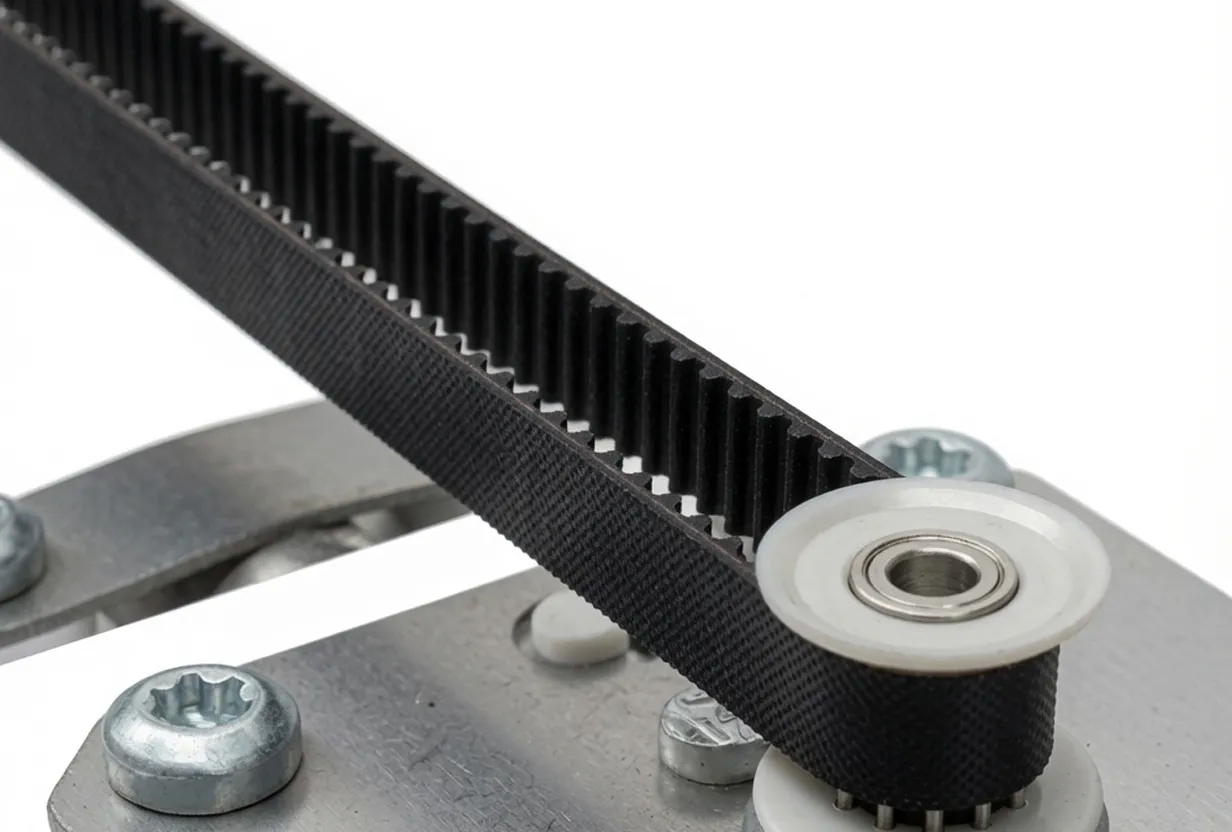
EP-L50 9.525 mm Straight Bore Timing Pulley

The EP-L050 9.525mm Pitch Straight Bore Timing Pulley — Steel & Cast Irons are precision-engineered for synchronous drive systems with a 9.525mm pitch. Available in tooth counts from 10 to 120, these pulleys offer versatile speed ratio options for diverse industrial applications. Constructed from high-quality steel (6F/6WF types) or cast iron (6W/6A types), they ensure durability and reliable performance under varying loads.

Key dimensions include a consistent flange width (F) of 19mm across all models. Smaller pulleys (10-36 teeth) feature lengths (L) of 28-32mm, while larger models (40-120 teeth) extend to 32-42mm. The series accommodates various bore sizes (Dm), ranging from 20mm for the smallest 10-tooth pulley up to 75mm for the largest 65-120 tooth variants. With precise outer diameters (De) spanning from 29.56mm to 363.07mm, these pulleys provide accurate transmission for automation, robotics, and heavy machinery.

straight bore timing pulley nearby | Timing Pulley | L Series

EP-L050 9.525 mm
Straight Bore Timing Pulley

L pitch 9.525 mm • 10 to 120 teeth • Steel (6F / 6WF) and Cast Iron (6W / 6A) • Type 6F / 6WF / 6W / 6A configurations • Pitch diameters 30.32 mm to 363.83 mm • ISO 9001:2015 certified • China timing pulley global OEM supply

1. Technical Specifications — EP-L050 Straight Bore Timing Pulley

L050 Series • Pitch 9.525 mm • Straight bore • Material: Steel (6F/6WF, 10–48 teeth) and Cast Iron (6W/6A, 49–120 teeth)

All dimensions in mm. Dp = Pitch Diameter, De = Outside Diameter, Df = Flange OD (where applicable), Dm = Hub OD, Di = Bore, F = Flange thickness, L = Hub length, d = Keyway depth. Flange Number indicates the standard flange plate code.

Part CodeTeethTypeMaterialDp (mm)De (mm)Df (mm)Dm (mm)Di (mm)F (mm)L (mm)d (mm)Flange No.
10 L 050106FSTEEL30.3229.5637201928850
11 L 050116F33.3532.5937221930850
12 L 050126F36.3835.6243241930852
13 L 050136F39.4138.6544281930883
14 L 050146F42.4541.6848281930854
15 L 050156F45.4844.7251341930855
16 L 050166F48.5147.7554361932856
17 L 050176F51.5450.78573619321057
18 L 050186F54.5753.81604019321058
19 L 050196F57.6156.84644019321059
20 L 050206F60.6459.8866.54019321060
21 L 050216F63.6762.91704519321061
22 L 050226F66.7065.94754519321062
23 L 050236F69.7368.97795519321063
24 L 050246F72.7772.00795519321063
25 L 050256F75.8075.0482.55819321064
26 L 050266F78.8378.07865819321165
27 L 050276F81.8681.10865819321165
28 L 050286F84.8984.13915819321166
29 L 050296F87.9387.16945819321167
30 L 050306F90.9690.20977019321168
32 L 050326F97.0296.261027019321170
33 L 050336F100.0599.291067019321171
34 L 050346F103.08102.321127019321172
35 L 050356F106.12105.351127019321172
36 L 050366F109.15108.391157019321174
40 L 050406WF121.28120.511287010019321178
41 L 050416WF124.31123.551357010319321180
42 L 050426WF127.34126.581357010619321180
44 L 050446WF133.40132.641427011219321181
45 L 050456WF136.44135.671427011519321181
47 L 050476WF142.50141.741507012119321185
48 L 050486WF145.53144.771507012419321185
49 L 050496WCAST IRON148.56147.8070127193214
50 L 050506W151.60150.8370130193214
52 L 050526W157.66156.9070136193214
56 L 050566W169.79169.0270149193214
57 L 050576W172.82172.0670152193214
60 L 050606W181.91181.1575160194214
65 L 050656A197.07196.3175176194214
66 L 050666A200.11199.3475179194214
72 L 050726A218.30217.5375197194214
84 L 050846A254.68253.9275233194214
90 L 050906A272.87272.1175252194214
96 L 050966A291.06290.3075269194214
120 L 0501206A363.83363.0775342194214

Note: Di (bore) values marked – indicate no pre-machined inner bore — the hub is supplied with solid metal ready for customer boring to required shaft diameter. Standard bore sizes available on request for specific shaft dimensions. Keyway dimensions per applicable shaft diameter standard (JIS or ISO).

Straight Bore Timing Pulley

2. EP-L050 Straight Bore Timing Pulley — Product Overview

The EP-L050 is a precision-machined straight bore timing pulley manufactured to the L (Large) pitch standard, with a pitch of 9.525 mm (3/8 inch). The L pitch series occupies the mid-range of inch-pitch timing belt systems — above the XL (extra-light) and MXL (miniature extra-light) series and below the H (heavy) series — providing the combination of tooth load capacity and system speed range that suits a broad range of general industrial automation, packaging machinery, textile equipment, and conveyor drive applications. The EP-L050 range covers tooth counts from 10 teeth (Dp 30.32 mm pitch diameter) to 120 teeth (Dp 363.83 mm pitch diameter), enabling drive designers to select from a very wide pitch diameter range within a single belt pitch family.

Two material grades are offered in the L050 product family: steel (designated types 6F and 6WF, covering tooth counts from 10 to 48 teeth) and cast iron (designated types 6W and 6A, covering tooth counts from 49 to 120 teeth). The material progression from steel at smaller tooth counts to cast iron at larger diameters reflects the engineering reality that larger-pitch-diameter timing belt pulleys benefit from cast iron mass for vibration damping while the smaller steel pulleys benefit from the higher strength and machinability of steel at compact sizes. All straight bore pulleys in this range are supplied with a precision-bored through-hole ready for keyway broaching or set screw installation to the driving shaft.

The timing belt pulley functions as the toothed driving or driven wheel that engages the timing belt tooth profile, transmitting motion at a fixed ratio between shafts without the slip or elongation losses inherent in friction-belt or chain drive systems. As a China timing pulley supplier offering the complete L050 tooth count range, we supply both standard stock configurations and custom bore and face-width variants to industrial OEM and aftermarket customers globally.

3. Five Key Product Advantages

01 — Complete Tooth Count Range: 10 to 120 Teeth

The EP-L050 range covers tooth counts from 10 to 120 in a single product family, providing pitch diameters from 30.32 mm up to 363.83 mm. This breadth allows drive designers to achieve almost any required speed ratio within the L belt pitch family without switching to a different belt pitch. Whether the application requires a compact 10-tooth drive pinion for a high-speed servo drive or a large 120-tooth driven pulley for a slow, high-torque output stage, the complete range is available from one source with consistent material and dimensional standards.

02 — Steel and Cast Iron Material Options for Each Size Class

The material selection follows engineering best practice: steel for 10 to 48 tooth pulleys (types 6F and 6WF) where higher strength, finer machining tolerance, and lower mass are desirable at compact pitch diameters; cast iron for 49 to 120 tooth pulleys (types 6W and 6A) where the greater diameter benefits from the mass damping and machinability of cast iron. Both materials are machined to the same tooth profile accuracy and hub geometry standards, ensuring correct belt engagement across the full tooth count range.

03 — Flanged and Open-Rim Configurations for Belt Guidance

The type designation system (6F for flanged without web, 6WF for flanged with web, 6W for open with web, 6A for open without web for large pulleys) provides the flexibility to select a flanged straight bore timing pulley where the flanges are required for lateral belt guidance, or an open-rim configuration where belt tracking is handled by the drive geometry. Flanged configurations (6F, 6WF) are standard for most timing belt drive applications where axial belt wandering is a concern; open configurations (6W, 6A) are typically used as the large driven pulley in a two-pulley drive where the small driving pulley is flanged.

04 — Precision Tooth Profile for Zero-Slip Synchronous Drive

The L pitch tooth profile is machined to the dimensional accuracy required by ISO 5294 (Synchronous Belt Drives — Pulleys) and the equivalent RMA (Rubber Manufacturers Association) standard for L-pitch inch-series timing pulleys. The tooth form accuracy — tooth pitch, profile height, and land width — determines whether the timing belt seats fully in each tooth groove without interference or excessive clearance, both of which reduce the effective tooth contact area and lower the rated working torque capacity of the drive. All EP-L050 units are inspected by CMM for tooth profile accuracy before dispatch.

05 — Ready-to-Install Straight Bore for Simple Shaft Mounting

The straight bore configuration provides a plain through-bore at the standard stock bore diameter, ready for keyway broaching to customer specification or set screw installation on the driving shaft. Unlike taper-lock or QD bushing bore configurations that require a matching bushing set, this timing pulley mounts directly to the shaft with a standard key and set screw arrangement — the simplest, lowest-cost installation method for timing belt drive systems in packaging machinery, conveyor drives, textile equipment, and general industrial automation applications worldwide.

4. Working Principle — How the L-Pitch Timing Pulley Drives a Belt System

A timing belt pulley achieves synchronous power transmission by meshing the raised teeth of the pulley with the corresponding tooth cavities of the timing belt. Unlike V-belt or flat-belt pulleys that transmit power through friction between the belt and pulley rim, a timing belt drive relies on positive tooth engagement — each belt tooth seats into the corresponding pulley groove, and the tension in the belt transmits the tangential force from the driving pulley to the driven pulley. This tooth-mesh mechanism eliminates slip entirely, maintaining a fixed velocity ratio between the driving and driven shafts at all times regardless of load variation or speed change.

The pitch of the timing system — 9.525 mm for the L series — is the center-to-center spacing of adjacent teeth on both the belt and the pulley. The number of teeth on the pulley determines its pitch diameter (Dp), which is the diameter at the pitch line (the center of the belt tooth pitch points as the belt wraps around the pulley). For the EP-L050 range, the pitch diameter relationship is: Dp = (Teeth × Pitch) / π = (N × 9.525) / π. This formula gives the values shown in the specification table for each tooth count — for example, 10 teeth gives Dp = (10 × 9.525) / π = 30.32 mm as listed in the table.

The outer diameter (De) of the timing pulley is always slightly smaller than the pitch diameter, because the pitch line runs through the mid-plane of the belt tooth height and not at the tip of the pulley tooth. De = Dp − 2α where α is the dedendum (the distance from the pitch line to the root of the pulley tooth). This distinction between pitch diameter and outer diameter is important for drive geometry calculations — center distance between two pulleys is calculated using pitch diameters, not outer diameters.

The timing belt tensioner arrangement for an L-pitch belt drive requires maintaining correct belt tension to ensure that all teeth in the arc of contact remain engaged without jumping teeth under peak torque conditions. The minimum arc of contact is specified as at least six teeth in mesh at the smaller pulley, which sets the minimum ratio between the two pulleys in the drive. The timing pulley body depth (L dimension, 28 to 42 mm in the L050 range) and face width must match the belt width being used — the belt face must be narrower than the pulley face for correct edge clearance.


5. Materials and Construction

The material selection for a timing pulley has a direct impact on tooth profile accuracy, service life, and suitability for the operating environment. The EP-L050 range uses two material grades across the tooth count range, each selected to match the structural and machining requirements of the pulley size class it covers.

Steel — 10 to 48 Teeth (Types 6F and 6WF)

Medium-carbon steel (S45C or equivalent) is the specified material for L050 pulleys with 10 to 48 teeth — the smaller pitch-diameter end of the range where higher tensile strength is needed to resist bending stress at the tooth roots under the contact forces generated during normal timing belt operation. The steel hub is turned, hobbed for tooth profile, and the bore and keyway are machined to required tolerances. For corrosion protection in humid or chemical-exposure environments, zinc plating, nickel plating, or black oxide treatment options are available on request for the steel L050 timing pulley range.

Cast Iron — 49 to 120 Teeth (Types 6W and 6A)

Grey cast iron (GG20 / HT200 grade) is used for L050 pulleys with 49 to 120 teeth, where the larger pitch diameter benefits from the thermal mass and vibration-damping characteristics of cast iron. The higher mass of the large cast iron pulleys acts as a flywheel effect that smooths torque variations in the belt drive system — particularly valuable in applications where the driving motor produces speed ripple (as in single-phase AC motors at light load) that would otherwise transmit as velocity fluctuation to the driven shaft. Cast iron is also directly compatible with the oil-based lubricants used in enclosed gear boxes where the timing belt drive is integrated into a lubricated environment.

Tooth Profile Machining — Hobbing to ISO 5294

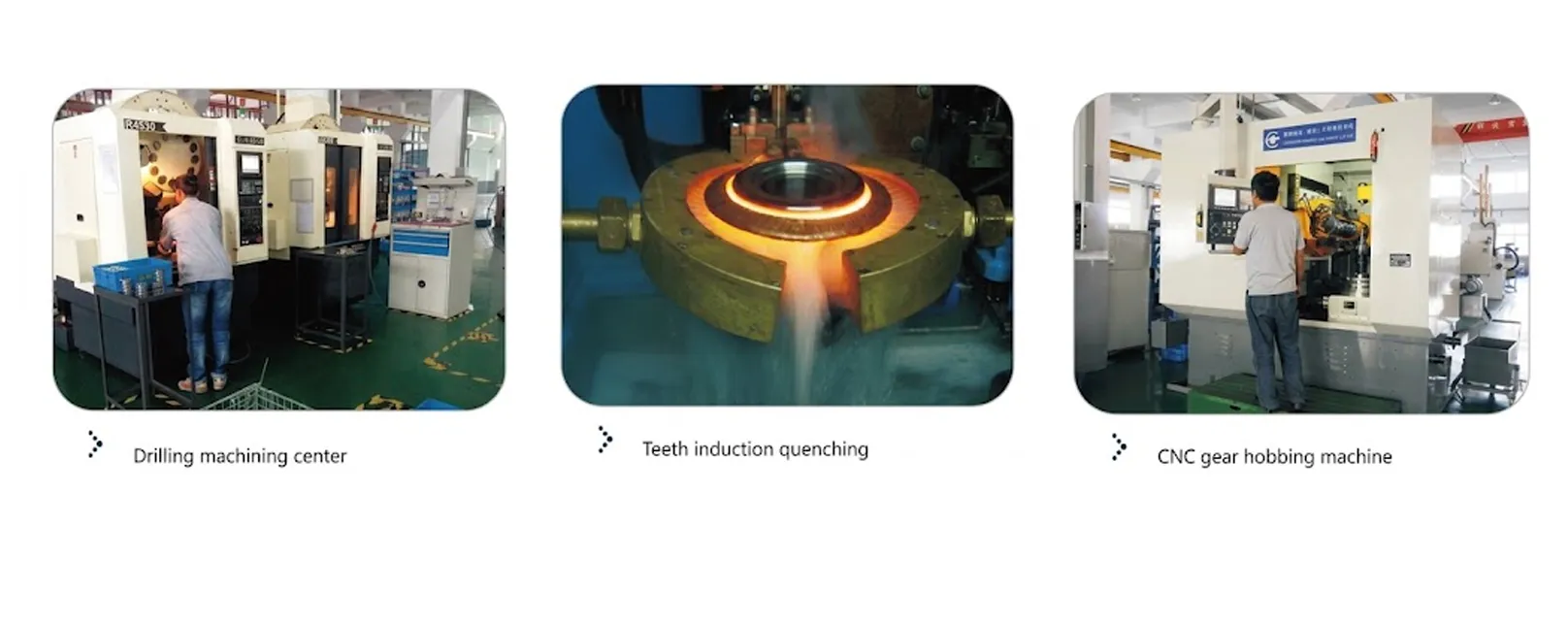
The tooth profile of all EP-L050 timing pulleys is generated by CNC hobbing using a hob ground to the L pitch tooth form. The hobbing process produces the trapezoidal tooth profile specified by the L series standard — with the tooth land width, groove depth, and flank angle tolerances required for correct mesh with L-pitch timing belts from any standard belt manufacturer. Post-hobbing deburring removes sharp edges at the tooth tips that could accelerate belt tooth wear at entry and exit from mesh, and all pulleys are dimensionally inspected against the tooth profile tolerance requirements of ISO 5294 before dispatch.

Flanges — Steel Plate, Individually Selectable

The flanges on Type 6F and 6WF pulleys are supplied as steel plate discs with their own flange number (50 through 85 in the L050 range), pressed or screwed onto the pulley body. The flange diameter Df is larger than the outside diameter De and acts as a lateral containment guide for the timing belt, preventing it from walking off the pulley edge under side-load conditions. Type 6W and 6A cast iron pulleys (49 teeth and above) do not carry flanges — at larger pitch diameters the belt can be guided by the geometry of the drive rather than by physical rim flanges, reducing the rotational inertia of the larger pulleys.

china-timing-pulley-products-EP-L50 9.525 mm Straight Bore Timing Pulley

6. Regulatory Compliance — International Standards for Timing Pulleys

Timing belt pulleys are used globally across industrial, automotive, and consumer machinery applications, and are subject to a range of dimensional and safety standards that ensure interoperability between pulley and belt from different manufacturers. The following standards framework governs the EP-L050 straight bore timing pulley.

ISO 5294 (Synchronous Belt Drives — Pulleys): The primary international standard governing the tooth form, dimensional tolerances, and acceptance criteria for timing belt pulleys in metric and inch pitch series. ISO 5294 specifies the tooth profile geometry, groove width tolerances, and pitch diameter calculation method that ensure interchangeability between pulleys from different manufacturers when used with the same pitch belt. Units in this EP-L050 series are manufactured to conform to the inch-pitch L series tooth dimensions specified in ISO 5294 and the equivalent RMA (Rubber Manufacturers Association) standard IP-22.

EU Machinery Directive 2006/42/EC and EN ISO 4413: When a straight bore timing pulley is incorporated into a machine sold in the European Union, the assembled machine must carry CE marking under the Machinery Directive. The timing belt drive itself (pulley, belt, and guarding) must meet the mechanical safety requirements of EN ISO 4413 (Hydraulic fluid power — applicable to machinery safety in general) and the drive safety requirements of EN ISO 11684 series. Belt guards enclosing timing belt drives on industrial machinery in Europe must comply with EN 953 (Guards — safety distances) to prevent operator contact with rotating pulleys and belts.

OSHA 29 CFR 1910.212 (USA — Machine Guarding): For timing belt drives incorporated into equipment sold in the United States, OSHA 29 CFR 1910.212 requires that all power transmission components, including timing pulleys and belts, be enclosed by guards that prevent employee contact. The guarding requirement applies regardless of rotational speed or pulley size, and must be considered in the drive design alongside the pulley selection and mounting arrangement.

JIS B 1856 (Japan) and GB/T 10413 (Domestic Standards): The Japanese Industrial Standard JIS B 1856 and the domestic equivalent GB/T 10413 specify timing pulley tooth dimensions for the L pitch series in the respective markets. EP-L050 timing pulleys are manufactured to the dimensional requirements of these standards in addition to ISO 5294, ensuring that our pulleys are suitable for use with L-pitch timing belts from Japanese and Asian belt manufacturers as well as European and American belt brands — covering the full global B2B market for timing belts and pulleys.

ISO 9001:2015 Quality Management: Our timing pulley production facility operates under ISO 9001:2015 certified quality management, covering raw material procurement, machining, inspection, and dispatch. Material certificates for steel and cast iron blanks, dimensional inspection records for tooth profile and bore geometry, and shipping documentation for international export are provided on request for customers with vendor qualification requirements.

RoHS Directive (EU) 2011/65/EU: Steel and cast iron materials used in EP-L050 production comply with EU RoHS requirements restricting hazardous substances in electrical and electronic equipment. No lead, cadmium, mercury, or hexavalent chromium compounds are present in the base materials or in the black oxide and zinc-plating surface treatments applied to the steel variants. Buyers incorporating EP-L050 pulleys into equipment sold in the EU, UK (under UK RoHS 2012), or markets with equivalent legislation can request an RoHS declaration of conformity as part of their technical file documentation package. For customers supplying machinery into Southeast Asian markets — where Vietnam, Thailand, and South Korea all maintain national RoHS-equivalent regulations — equivalent substance-restriction declarations are available to support local market-entry documentation requirements.

7. Drive Selection Guide — Choosing the Right L050 Configuration

Selecting the optimal configuration from the EP-L050 series involves four key engineering decisions: tooth count, material grade, bore diameter, and flange type. Working through these decisions in sequence avoids the most common specification errors that lead to premature belt or pulley wear.

Step 1 — Determine the required drive ratio. The ratio equals driven pulley tooth count divided by driving pulley tooth count. In the EP-L050 range, the minimum practical driving tooth count for low-noise operation in servo drives is 18T to 20T (Dp 54.57–60.64 mm); the minimum for positive belt engagement at start-up under high inertia loads is 14T (Dp 42.45 mm). Once the driving tooth count is fixed, the driven tooth count follows directly from the ratio. For ratios above 4:1, verify that the driven pulley pitch diameter (which grows rapidly) fits within the available machine envelope. The 120-tooth driven pulley has a pitch diameter of 363.83 mm — confirm shaft clearance and frame clearance before specifying at this size.

Step 2 — Confirm belt width and face width compatibility. The EP-L050 series is designed for 0.50-inch (12.7 mm) wide L-pitch timing belts. The face width F = 19 mm across the entire range provides lateral clearance for the 12.7 mm belt while keeping the total pulley face compact. If your existing belt installation uses 0.75-inch (19.05 mm) or 1-inch (25.4 mm) L-pitch belts, you need the EP-L075 or EP-L100 pulley series respectively — the face width dimension F must match the belt width in use, not simply the tooth pitch.

Step 3 — Select material grade based on tooth count. The EP-L050 series automatically assigns material by tooth count: 10T to 48T in steel (Types 6F and 6WF), 49T to 120T in cast iron (Types 6W and 6A). If your application calls for a 45-tooth pulley in cast iron — for additional mass damping in a low-speed, high-vibration conveyor environment, for instance — this requires a custom material specification. Contact our technical team for custom material requests; standard lead times extend by approximately 10 to 15 working days for non-standard material configurations.

Step 4 — Specify bore diameter and keyway. The standard stock bore diameters are 8 mm (10T–13T), 10 mm (14T–39T), 11 mm (40T–48T), and 14 mm (49T–120T). If the driving shaft diameter differs from these standard bore sizes, order the pulley with a custom bore machined to the required diameter, specifying bore diameter, keyway width, and keyway depth in the order. Our technical team can also advise on the maximum bore diameter permissible for each tooth count while maintaining the minimum hub wall thickness required for the rated torque capacity of the drive.

8. Application Scenarios

The EP-L050 straight bore timing pulley and the L-pitch timing belt system serve a wide range of industrial drive applications where synchronous, zero-slip power transmission is required at moderate speed and torque levels.

Packaging Machinery

Packaging machines — form-fill-seal, carton erectors, labelers, and wrapping machines — use timing belt and pulley drives extensively for their combination of precise synchronization, low maintenance, and clean operation in food-contact environments. The L-pitch timing belt pulley size range (30 mm to 364 mm pitch diameter) covers the typical drive ratios used between the servo motor and the packaging machine functional axes — film feed, jaw drive, and conveyor belt synchronization.

Conveyor and Material Handling

Industrial conveyor drives and transfer systems use L-pitch timing belt pulley assemblies for their positive engagement and clean, grease-free operation — an advantage over chain drives in environments where lubricant contamination of the conveyed product is unacceptable. The large cast-iron L050 pulleys (60 to 120 teeth) are suitable for slow-speed, high-torque conveyor head drum drives where the timing belt provides direct torque transmission from a reducer gearbox output shaft to the conveyor drum without a coupling or sprocket chain stage.

Textile Machinery

Textile weaving, knitting, and spinning machines use timing belt drives between the main motor and the various functional mechanisms (shuttle drive, yarn feed, needle bar) where precise velocity synchronization between axes is critical for fabric quality. The L-pitch straight bore timing pulley provides the synchronization accuracy required at the speed ranges typical of modern textile machinery, without the lubrication contamination risk of chain-and-sprocket alternatives in the vicinity of the fabric being processed.

CNC Machine Tool Axes

CNC machining center axes, particularly ballscrew drives and spindle speed-change drives, use metric timing pulleys or inch-pitch timing pulleys (including L and XL series) to connect servo motors to ballscrews or to step down spindle motor speed to the required belt and pulley speed for the cutting tool. The precision tooth profile of the EP-L050 straight bore timing pulley — manufactured to ISO 5294 accuracy — provides the positional repeatability required for CNC axis applications where tooth profile error translates directly to positioning error at the cutting tool.

3D Printers and Desktop CNC

Desktop FDM 3D printers and compact CNC routers use small L-pitch (or MXL/XL) timing pulleys on stepper motor drive trains for XY axis movement. The 10 to 20 tooth range of the EP-L050 steel pulleys (Dp 30 to 60 mm) covers the most common drive pulley sizes in these applications. The plain-bore configuration mounts directly to the motor shaft with a setscrew, providing the simplest possible installation for the compact drive mechanisms used in desktop fabrication equipment worldwide.

Printing and Graphics Machinery

Offset printing presses, wide-format inkjet printers, and screen-printing machines use timing belt drives for the print cylinder and media advance mechanisms where printing registration depends on exact synchronization between the image cylinder and the substrate feed system. An L-pitch timing belt pulley provides the registration accuracy required for multi-color print overlay registration — any accumulated tooth error in the drive produces a corresponding registration shift that is immediately visible in the printed output.

9. Compatible Products — Complete Timing Belt Drive System Supply

The EP-L050 is one component of a complete timing belt drive system. We supply compatible belt drive components that allow customers to source the complete drive from a single supplier.

Metric Pitch Standard Toothed Bars

Metric pitch standard toothed bars (rack and linear tooth bars for timing belt systems) are used where the timing belt drive produces linear rather than rotary output — as in CNC axis drives, automated guided vehicle belt systems, and linear conveyor positioning systems. Our toothed bar range uses the same L-pitch tooth profile as the EP-L050 timing pulley, ensuring correct mesh when the belt runs across both a rotating pulley and a fixed toothed bar section in a mixed rotary-linear drive configuration.

Metric pitch standard toothed bars compatible with timing pulley
V-Pulley (V-Belt Pulley)

V-belt pulleys are complementary to timing belt pulleys in machine drives where a primary V-belt drive steps down the motor speed before the final synchronous timing belt drive handles the precision synchronization stage. Many industrial machine designs use a combination of V-belt primary reduction and timing belt final drive to achieve the required speed ratio and drive geometry with the most cost-effective component arrangement. Our V-pulley range covers standard classical (A, B, C, D, E), narrow (SPZ, SPA, SPB, SPC), and variable-speed section profiles in a full range of sheave diameters and groove configurations.

Browse V-Pulley Products →

Taper lock V-belt pulley compatible with timing belt drive system

10. About Us

We are a specialist timing pulley manufacturer and global supplier covering the full range of inch-pitch series (MXL, XL, L, H, XH, XXH) and metric-pitch series (T2.5, T5, T10, AT5, AT10, HTD 3M, 5M, 8M, 14M) in straight bore, taper-lock bore, and custom bore configurations. Our ISO 9001:2015 certified production facility operates CNC hobbing machines, CNC lathes, and dedicated timing pulley inspection equipment for tooth profile verification. The EP-L050 range is held in quantity stock for immediate dispatch of standard sizes and tooth counts, with custom bore and surface treatment orders fulfilled within standard lead times.

We supply B2B customers across North America, Europe, Southeast Asia, Australia, the Middle East, and Latin America with full export documentation including commercial invoice, certificate of origin, packing list, and ISO 9001 conformity certificate. Technical support for timing belt drive selection — including ratio calculation, belt length calculation, center distance calculation, and shaft and bearing load analysis — is available from our engineering team for global customers designing new drives or selecting replacement components for existing equipment.

For custom straight bore timing pulley orders — non-standard tooth counts, non-standard bore sizes, special face widths, or special materials including aluminium timing pulley or stainless steel timing pulley variants — contact our technical sales team with your drawing or dimensional specification for a formal quotation within 3 to 5 business days.

WorkShop

Timing pulley production facility 1
Timing pulley manufacturing workshop 2
Straight bore timing pulley inspection
Timing belt pulley quality control

Frequently Asked Questions

Q1. What is the difference between a straight bore timing pulley and a taper-lock bore timing pulley and which is better for a conveyor application?
A plain-bore timing pulley has a cylindrical bore that slides directly onto the shaft and is secured by a keyway-and-key arrangement plus set screws. A taper-lock bore timing pulley uses a separate tapered bushing that expands against both the shaft and the pulley bore when tightened, providing a higher grip force and easier removal. For conveyor applications where the driven pulley needs to be removed regularly for maintenance or belt replacement, the taper-lock configuration is generally preferred because the bushing releases cleanly. For drives where removal frequency is low and the simpler plain-bore configuration is adequate, the direct-mount straight bore timing pulley is the more economical choice.
Q2. How do I calculate the correct pitch diameter for an L-pitch straight bore timing pulley to achieve a specific drive ratio in my machine?
The drive ratio equals the tooth count of the driven pulley divided by the tooth count of the driving pulley. To achieve, for example, a 3:1 reduction, select a 30-tooth driving pulley (Dp 90.96 mm, part code 30 L 050) and a 90-tooth driven pulley (Dp 272.87 mm, part code 90 L 050). The center distance between the two shafts can then be calculated using the standard timing belt center distance formula: C = (L − π(D1+D2)/2) / 2 + sqrt((L − π(D1+D2)/2)²/4 − (D2−D1)²/8), where L is the chosen belt pitch length and D1, D2 are the two pitch diameters. Contact our technical team for assistance with the full drive calculation.
Q3. What is the timing belt pulley replacement interval and when should I replace the straight bore timing pulley along with the timing belt?
Straight bore timing pulleys do not have a fixed replacement interval like timing belts do — properly specified pulleys in a correctly tensioned drive system can outlast multiple belt changes. However, the pulley should be inspected and replaced if: the tooth flanks show visible wear or rounding (reducing effective tooth contact with the new belt), the bore or keyway has become loose-fitting due to fretting or damage, the flanges are cracked or bent, or the pulley body has been damaged by belt seating. When replacing a timing belt on a critical drive, it is good practice to inspect the pulley tooth profile against the new belt tooth form to confirm correct engagement before recommencing operation.
Q4. What are the timing pulley standard sizes for the L pitch series and how do I identify the correct tooth count for my timing belt drive?
The standard L-pitch straight bore timing pulley tooth count range in the EP-L050 series runs from 10 teeth (Dp 30.32 mm) to 120 teeth (Dp 363.83 mm), with steel pulleys available from 10 to 48 teeth and cast iron pulleys from 49 to 120 teeth. To identify the correct tooth count, first determine the required drive ratio from your speed and torque requirements, then select the driving pulley tooth count that fits the driving shaft and timing belt width constraints. The driven pulley tooth count equals the driving tooth count multiplied by the required ratio. Cross-reference the resulting pitch diameters with the table to confirm the hub and flange dimensions fit within your machine design envelope.
Q5. Which straight bore timing pulley material should I select for a food-processing machine that requires regular wash-down cleaning in a Japanese or German facility?
For food-processing machinery subject to frequent wash-down cleaning in Japanese or German facilities, where the timing pulley may be exposed to detergent solutions, hot water, and steam cleaning cycles, we recommend specifying the stainless steel timing pulley variant (custom order) rather than the standard steel or cast iron. Stainless steel (grade 304 or 316L) resists both the alkaline cleaning agents and the moisture exposure during cleaning without rusting or corroding the tooth profile. If stainless steel is not available for the required tooth count within your lead time, an aluminium timing pulley with anodizing treatment is a practical alternative for food-adjacent (not direct food-contact) drive positions.
Q6. What is a timing belt idler pulley and when should I include one in an L-pitch timing belt drive for a textile machine?
A timing belt idler pulley is a non-driving pulley used to maintain belt tension, guide the belt around obstacles in the machine frame, or increase the wrap angle at the driving pulley when the center distance does not allow adequate arc of contact. In L-pitch timing belt drives for textile machinery where the center distance is fixed by the machine frame geometry, an idler pulley positioned on the slack side of the drive allows the belt to be tensioned correctly without adjusting shaft positions. The idler pulley engages the back (non-toothed) face of the timing belt and should be a smooth-face idler pulley rather than a toothed timing pulley, to avoid introducing additional tooth loading that would reduce belt life.
Q7. How does the straight bore timing pulley tooth count affect the minimum arc of contact and belt jumping risk in a high-torque CNC machine drive?
The arc of contact (number of teeth in mesh) at the smaller pulley decreases as the ratio between the two pulleys increases. The minimum recommended arc of contact for L-pitch timing belt drives is six teeth at the smaller pulley. If the drive ratio is very high (for example 10:1), even a 20-tooth driving pulley will have adequate arc of contact at the small pulley, but the tension loads on the belt and the specific tooth force will be higher. For high-torque CNC machine drives where belt tooth jumping is a concern, increasing the driving pulley tooth count (from 20 to 30 teeth, for example) improves the arc of contact and reduces the specific tooth force per engaged tooth, significantly improving the drive tooth-jumping resistance without changing the overall drive ratio.
Q8. Where can I find a reliable timing pulley manufacturer for a custom L-pitch straight bore timing pulley batch for an OEM equipment supplier in Australia or the United Kingdom?
We supply custom and standard L-pitch straight bore timing pulleys to OEM equipment suppliers in Australia, the United Kingdom, and across the global B2B market with full export documentation including ISO 9001 conformity certificate, material certificates, and dimensional inspection reports. For Australia, delivery is typically arranged by sea freight to Sydney, Melbourne, or Brisbane ports, or by air freight for urgent small batches. For the United Kingdom, sea freight to Felixstowe or air freight to Heathrow are the standard options. Lead times for custom bore sizes on standard tooth-count pulleys are typically 15 to 25 business days for production quantities; in-stock sizes with standard bore can be dispatched within 5 to 10 business days.

Editor: PXY