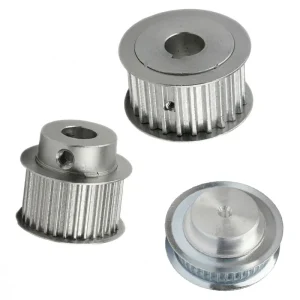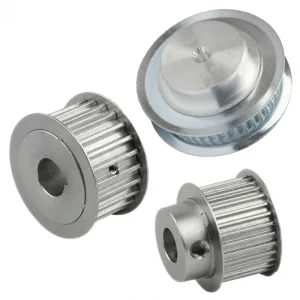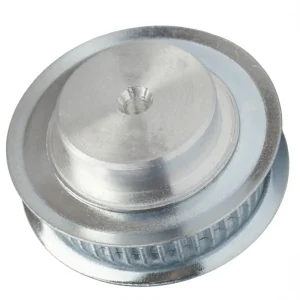
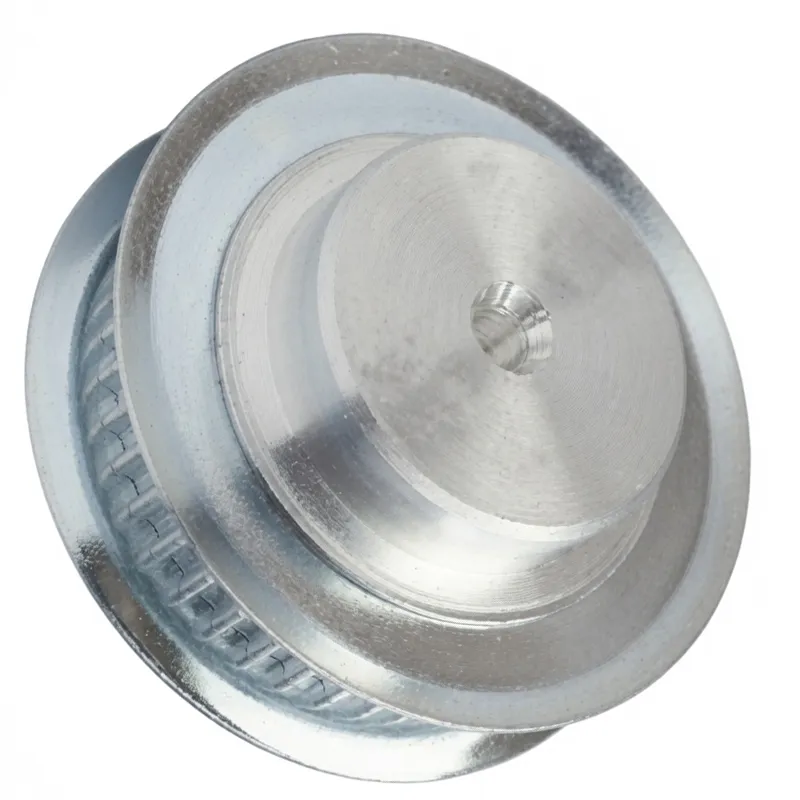
Takal Pemasaan Lurus Aluminium EP-T 10MM — Lebar Tali Sawat 16MM
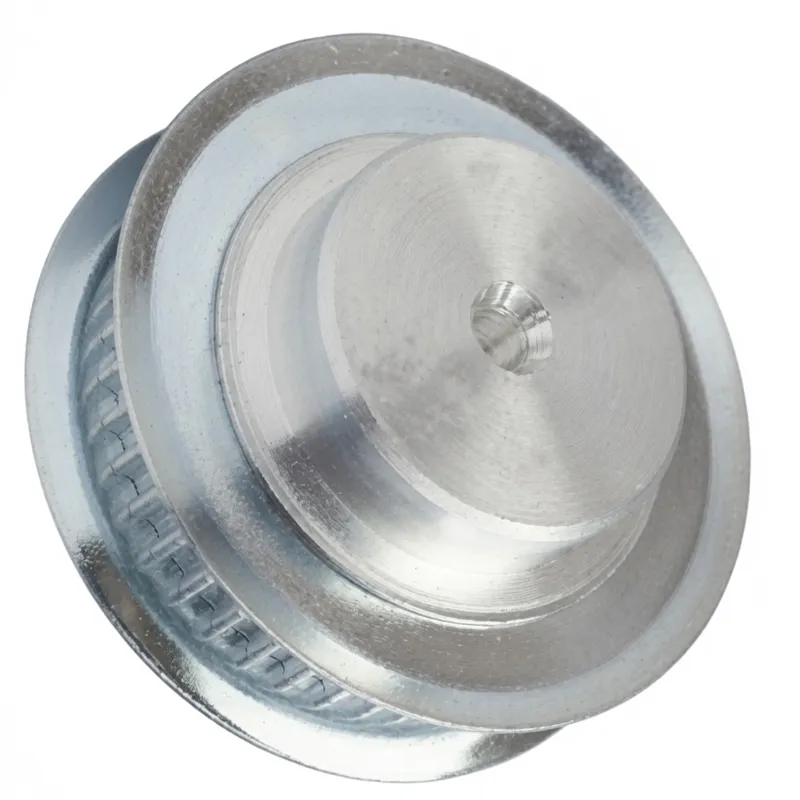
The EP-T10 series aluminum timing pulleys are designed for precise power transmission using 16mm wide belts with a 10mm pitch. Available in tooth counts from 12 to 60, these pulleys feature a consistent face width (F) of 21mm and overall length (L) of 31mm. Bore diameters (Dm) range from 28mm to 110mm, accommodating various shaft sizes, while outer diameters (De) span 36.35mm to 189.10mm. Models with 12–40 teeth include flanges (Type 6F) for secure belt tracking, with specific flange numbers provided; larger sizes (44–60 teeth) are unflanged (Type 6). Constructed from lightweight aluminum, this series offers reliable synchronization and reduced inertia for industrial automation and machinery requiring moderate torque capacity.
Takal Pemasaan Lurus Aluminium EP-T 10MM — Lebar Tali Sawat 16MM
Yang Takal Pemasaan Lurus Aluminium EP-T 10MM with belt width 16 mm is a precision-engineered power transmission component conforming to the DIN 7721 T10 standard. Built from high-grade aluminium alloy, this takal pemasaan lubang lurus is designed to deliver consistent, slip-free synchronisation between drive shafts and belt systems across a wide range of industrial automation, packaging, and motion control applications. The 10 mm pitch spacing of the T10 profile ensures reliable tooth engagement with matching T10 takal tali sawat pemasaan systems, minimising backlash and maintaining positional accuracy even under dynamic load conditions. With 20 tooth-count variants available — from 12 teeth through 60 teeth — this takal pemasaan lubang lurus series covers an extensive selection of transmission ratios without the need for custom tooling, making it one of the most versatile aluminum straight bore timing pulleys in the T-profile metric family. Whether you are engineering a new conveyor line in Europe, sourcing a takal pemasaan lubang lurus as a penggantian takal pemasaan for existing OEM equipment, or specifying a complete tali sawat dan takal pemasaan package for a machine build, the EP-T 10 takal pemasaan lubang lurus provides the dimensional consistency and material quality your application demands. This is equally a go-to choice for engineers searching for a reliable new straight bore timing pulley and for procurement teams sourcing an penggantian takal pemasaan lubang lurus aluminium for existing drive systems.
1. Technical Specifications — T10 Straight Bore Timing Pulley (Belt Width 16 mm)
The following dimensional data covers the full range of the EP-T 10 takal pemasaan lubang lurus series, conforming to DIN 7721 for T-profile metric pitch timing pulleys. All values are in millimetres. Dp = Pitch Diameter, De = Outside Diameter, Df = Flange Outside Diameter, Dm = Hub Diameter, F = Belt Width (21 mm for 16 mm belt), L = Hub Length, d = Bore Diameter. This takal pemasaan lubang lurus aluminium series carries material designation AL (Aluminium) with Type 6F flanged construction. Buyers specifying a penggantian takal pemasaan pitch metrik should verify the part code against their existing assembly before ordering. The takal pemasaan lubang lurus bore dimension is the key interface measurement to confirm against your shaft size before purchase.
| Kod Bahagian | Gigi | Jenis | Bahan | Tp (mm) | De (mm) | Df (mm) | Dm (mm) | F (mm) | P (mm) | d (mm) | No. Bebibir |
|---|---|---|---|---|---|---|---|---|---|---|---|
| 12T10-31 | 12 | 6F | AL | 38.20 | 36.35 | 42 | 28 | 21 | 31 | 6 | 13 |
| 14T10-31 | 14 | 6F | AL | 44.56 | 42.70 | 48 | 32 | 21 | 31 | 8 | 11 |
| 15T10-31 | 15 | 6F | AL | 47.75 | 45.90 | 51 | 32 | 21 | 31 | 8 | 16 |
| 16T10-31 | 16 | 6F | AL | 50.93 | 49.10 | 54 | 35 | 21 | 31 | 8 | 18 |
| 18T10-31 | 18 | 6F | AL | 57.29 | 55.45 | 60 | 40 | 21 | 31 | 8 | 21 |
| 19T10-31 | 19 | 6F | AL | 60.48 | 58.65 | 66.5 | 44 | 21 | 31 | 8 | 24 |
| 20T10-31 | 20 | 6F | AL | 63.66 | 61.80 | 66.5 | 46 | 21 | 31 | 8 | 24 |
| 22T10-31 | 22 | 6F | AL | 70.03 | 68.20 | 75 | 52 | 21 | 31 | 8 | 27 |
| 24T10-31 | 24 | 6F | AL | 76.39 | 74.55 | 83 | 58 | 21 | 31 | 8 | 29 |
| 25T10-31 | 25 | 6F | AL | 79.58 | 77.70 | 83 | 60 | 21 | 31 | 8 | 29 |
| 26T10-31 | 26 | 6F | AL | 82.76 | 80.90 | 87 | 60 | 21 | 31 | 8 | 31 |
| 27T10-31 | 27 | 6F | AL | 85.95 | 84.10 | 91 | 60 | 21 | 31 | 8 | 32 |
| 28T10-31 | 28 | 6F | AL | 89.12 | 87.25 | 93 | 60 | 21 | 31 | 8 | 33 |
| 30T10-31 | 30 | 6F | AL | 95.49 | 93.65 | 97 | 60 | 21 | 31 | 8 | 35 |
| 32T10-31 | 32 | 6F | AL | 101.86 | 100.00 | 106 | 65 | 21 | 31 | 10 | 38 |
| 36T10-31 | 36 | 6F | AL | 114.59 | 112.75 | 119 | 70 | 21 | 31 | 10 | 43 |
| 40T10-31 | 40 | 6F | AL | 127.32 | 125.45 | 131 | 80 | 21 | 31 | 10 | 47 |
| 44T10-31 | 44 | 6 | AL | 140.05 | 138.20 | — | 88 | 21 | 31 | 10 | — |
| 48T10-31 | 48 | 6 | AL | 152.78 | 150.95 | — | 95 | 21 | 31 | 16 | — |
| 60T10-31 | 60 | 6 | AL | 190.98 | 189.10 | — | 110 | 21 | 31 | 16 | — |
Note: Df and Flange Number shown as "—" for larger tooth counts where standard flanges are not fitted in the Type 6 (non-flanged) configuration. Belt width F = 21 mm applies to all variants in this T10 takal pemasaan lubang lurus range for 16 mm belt compatibility.
Takal Pemasaan Aluminium Lebar Tali Sawat 10MM
2. How a Straight Bore Timing Pulley Works
A takal pemasaan lubang lurus operates on the principle of positive engagement between the pulley's machined teeth and the corresponding tooth profile of a timing belt. Unlike friction-based V-belts or flat-belt drives, a takal pemasaan lubang lurus relies on form-locking: each tooth on the belt fits precisely into a tooth space on the pulley, so the drive ratio is governed by tooth count rather than slip. This makes the T10 takal pemasaan lubang lurus aluminium ideal for applications requiring accurate angular position transfer — for example, servo-driven linear actuators, indexing tables, or cam-driven packaging machinery where even a fraction of a degree of positional error is unacceptable. Engineers selecting a takal pemasaan lubang lurus for precision servo axes appreciate that positive drive eliminates the need for belt slip compensation in motion control firmware.
The T-profile tooth geometry used in this takal pemasaan lubang lurus series is a trapezoidal form standardised under DIN 7721. The 10 mm pitch — measured from one tooth centre to the next along the pitch line — defines which takal pemasaan metrik and belt combination must be used; mixing pitch families will cause interference and accelerated wear. The bore through the centre of this takal pemasaan lubang lurus is finished as a straight cylindrical hole, allowing the user to mount the pulley directly to a shaft using one or more keyways and set-screws, or to press-fit it onto a precision-ground shaft. This mounting approach contrasts with taper-lock bushed pulleys, which require a separate split bushing — the takal pemasaan lubang lurus design is simpler to fit and more economical at smaller shaft diameters.
When the drive motor rotates, torque is transmitted from the motor shaft through the takal pemasaan lubang lurus bore interface, out through the pulley body, and into the timing belt via the tooth engagement. The belt carries that torque to the driven takal tali sawat pemasaan, completing the power transmission loop. Flanges on Type 6F variants guide the belt laterally, preventing walk-off under side-loading or misalignment — an important feature for takal tali sawat pemasaan metrik used in high-speed or high-overhang-load configurations. The aluminium construction of this takal pemasaan lubang lurus keeps rotational inertia low, which directly reduces motor settling time in indexing and positioning axes, contributing to higher machine throughput in production environments.
3. Lima Kelebihan Produk Utama
Every EP-T 10 takal pemasaan lubang lurus is machined and inspected to DIN 7721 dimensional tolerances — the international standard governing pitch line diameter accuracy, tooth profile geometry, and hub concentricity. A unit conforming to this published standard will mesh correctly with any DIN 7721-compliant T10 belt regardless of the belt manufacturer, protecting your procurement flexibility throughout the product's service life. Buyers in the EU, where machinery directive compliance often demands traceable component standards, particularly benefit from this assured dimensional basis when specifying any takal pemasaan lubang lurus for regulated machinery.
Machined from high-strength aluminium alloy, this takal pemasaan lubang lurus aluminium offers an outstanding strength-to-weight ratio. Lower rotating mass translates to faster acceleration in servo-controlled axes, reduced bearing loads, and lower motor inertia mismatch ratios. In packaging machinery, pick-and-place robots, and CNC router heads — all environments where axes cycle repeatedly at high speed — an takal pemasaan aluminium can measurably increase throughput and reduce motor sizing requirements compared with a steel equivalent. The alloy machines cleanly, allowing the takal pemasaan lubang lurus bore and keyway to be held to H7 tolerances as standard.
With 20 standard variants, this takal pemasaan lubang lurus series supports transmission ratios from roughly 1:1 through to 1:5 and beyond, all from stok takal pemasaan rather than bespoke machined components. The consistent hub length (L = 31 mm) across all tooth counts simplifies machine frame design — shaft bearing spans do not change when the ratio is revised at the design stage. For engineers who iterate ratio choices during prototyping, this is a meaningful practical benefit that distinguishes a well-designed takal pemasaan lubang lurus range from narrower catalogues requiring custom timing pulleys for every ratio change.
The Type 6F flange configuration fitted to all takal pemasaan lubang lurus variants up to 40 teeth provides positive lateral guidance for the T10 belt in service. Belt walk — the tendency of a belt to migrate toward one side of a takal pemacu tali sawat pemasaan under load or misalignment — is a common failure mode at high speed or under overhung loads. The precision-machined aluminium flanges keep the belt centred without external alignment tooling. On larger variants where centrifugal effects reduce the tendency to walk, unflanged Type 6 takal pemasaan lubang lurus construction saves material and reduces assembly width.
As a specialist China timing pulley manufacturer with an extensive catalogue of T-series, HTD, and metric pitch variants, we maintain ready inventory across the full 20-tooth-count range for this T10 16 mm belt takal pemasaan lubang lurus series. Standard orders typically ship within 3–5 working days, and consolidated shipments combining multiple takal pemasaan lubang lurus types, belts, and accessories are dispatched in a single consignment to reduce landed cost for international buyers. For buyers searching for a straight bore timing pulley nearby in a distributor location — we ship globally from our manufacturing facility with documentation to support customs clearance in any destination market.
4. Materials & Construction Quality
The EP-T 10 takal pemasaan lubang lurus aluminium is produced from a 6061-T6 or equivalent high-strength aluminium alloy, selected for its machinability, corrosion resistance, and mechanical properties. This alloy achieves a tensile strength of approximately 310 MPa and a yield strength of around 276 MPa — adequate for the tooth bending stress levels encountered in T10-pitch drives at the belt forces associated with 16 mm belt widths. The material complies with EN AW-6061 (European Norm) and ASTM B221 (North American), giving buyers in both markets confidence in material traceability. When procuring a best aluminum straight bore timing pulley for demanding applications, verifying alloy designation and heat treatment is recommended — our products carry full material certification on request.
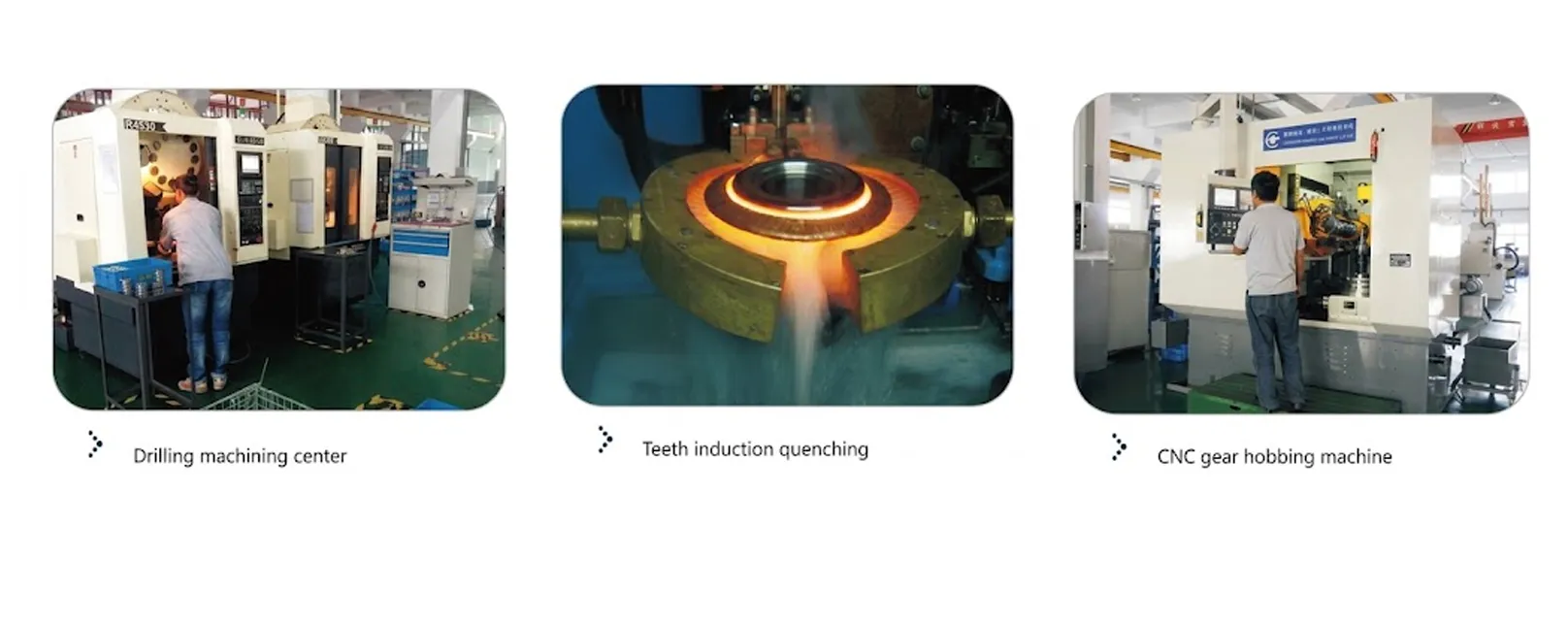
Tooth profile machining for each takal pemasaan lubang lurus is performed on CNC hobbing or milling equipment, with pitch accuracy verified using measuring instruments traceable to national standards. The bore is finish-machined after tooth cutting to ensure concentricity between the pitch circle and the shaft interface — a critical relationship that determines runout and belt tension variation. Bore tolerances are held to ISO H7 as standard, and keyway dimensions conform to ISO 773 or DIN 6885, depending on bore size. This compatibility with globally standard keys eliminates the need for custom keyway cutting at the point of installation and streamlines the penggantian takal pemasaan lubang lurus aluminium process on existing machines.
The surface of this takal pemasaan lubang lurus is typically left in natural machined aluminium finish or anodised on request. Neither process involves paint coatings that could chip and contaminate downstream processes — important in food, pharmaceutical, and semiconductor manufacturing environments where particle contamination must be controlled. All materials are RoHS-compliant under EU Directive 2011/65/EU (RoHS 2) and its 2015 amendment, supporting compliance for machinery sold into the European single market. A takal pemasaan keluli tahan karat variant is also available for highly corrosive environments — contact us for details specific to that material grade.
5. Senario Aplikasi
The EP-T 10 takal pemasaan lubang lurus for 16 mm belt width finds deployment across a wide spectrum of industrial and commercial machinery. Below are the primary environments where this takal pemasaan aluminium performs most effectively, drawing on the key characteristics of the T10 takal pemasaan lubang lurus design.
In robotic arm joints, SCARA robot wrist drives, and collaborative robot link actuators, low-inertia aluminum timing pulleys paired with T10 belts provide precise angular transmission for repeatable positioning. The takal pemasaan lubang lurus mounts directly to motor shaft stubs, keeping the drive train compact. High-cycle robotic applications in automotive assembly plants across Germany, Japan, South Korea, and North America depend on this class of takal pemacu tali sawat pemasaan for 24/7 operation. Procurement teams at system integrators frequently search for a reliable belt straight bore timing pulley with fast delivery — our ready stock supports these timelines.
Flow wrappers, carton erectors, and labelling heads use synchronised drives throughout to maintain registration between film, carton blank, and product. A matched pair of straight bore timing pulleys linked by a T10 belt ensures multiple machine axes remain in phase even at film speeds above 100 m/min. The light weight of the takal pemasaan aluminium reduces the flywheel effect, allowing machines to be jogged and inched more controllably during setup. Machine builders across Italy, Germany, and the UK who need a takal pemasaan lubang lurus aluminium tali pinggang for packaging line upgrades will find this series fully interchangeable with standard DIN 7721 components.
Wide-format inkjet printers, laser engravers, and CNC plasma cutters use takal tali sawat pemasaan drives on gantry axes because the positive engagement of a takal pemasaan lubang lurus eliminates the creep that causes position drift. In printing, even sub-millimetre errors degrade colour registration. CNC router manufacturers across Europe and North America routinely specify T10 takal pemasaan metrik for gantry drives. Machine builders who need a new straight bore timing pulley to complete a gantry upgrade find the EP-T 10 series a reliable drop-in solution compatible with the most common T10 belt specifications.
Automated liquid handling systems, medical imaging gantries, and diagnostic equipment incorporate T10 straight bore timing pulleys because the pulley-and-belt drive generates less particulate than a lead screw and nut pair. The aluminium alloy construction of this takal pemasaan lubang lurus suits sterilisation environments where plastic components would degrade. Instrument manufacturers in Germany, the USA, Japan, and the UK specify takal tali sawat pemasaan metrik in this pitch range for motion-critical medical device axes where a reliable penggantian takal pemasaan source is essential to maintain service uptime.
Seed drills, seeding robots, and greenhouse automation systems increasingly use takal tali sawat pemasaan drives where chain drives were previously standard. The absence of lubrication oil eliminates contamination risk in food-contact zones, and the takal pemasaan lubang lurus aluminium's natural corrosion resistance suits washdown environments. Replacing worn chain drives with a T10 takal pemasaan lubang lurus and belt set also reduces audible noise — a growing consideration in urban-fringe food production facilities where community noise regulations apply in Australia, Canada, the Netherlands, and other jurisdictions with strict environmental permitting.
Solar tracker actuators, wind turbine pitch control systems, and electric vehicle auxiliary drives represent a growing demand segment for takal pemasaan metrik. The EP-T 10 takal pemasaan lubang lurus handles moderate torque levels in solar azimuth and elevation axes while delivering the positional accuracy needed to maximise power generation efficiency. EV cooling pump drives and thermal management actuators benefit from the zero-slip characteristic of a takal tali sawat pemasaan system — making this takal pemasaan lubang lurus a relevant component for the green energy sector globally.

6. Regulatory Compliance & Standards — Global Overview
Power transmission components including straight bore timing pulleys are governed through the safety requirements of the machine or assembly into which they are incorporated. The following summarises the key regulatory frameworks buyers should be aware of when specifying this takal pemasaan lubang lurus aluminium for their application — not as a substitute for qualified local engineering or legal advice, but as a practical orientation for international procurement teams.
European Union: Machines incorporating takal tali sawat pemasaan drives must comply with the EU Machinery Directive 2006/42/EC (to be superseded by the Machinery Regulation (EU) 2023/1230 entering full application in January 2027). The directive requires that power transmission components be guarded against contact, appropriate fatigue-life data be available to the machine designer, and CE marking is achieved for the finished machine. The RoHS 2 Directive 2011/65/EU restricts hazardous substances; this takal pemasaan lubang lurus is manufactured to RoHS compliance. Reach Regulation (EC) No 1907/2006 applies to chemical substances used in any surface treatments applied to this takal pemasaan lubang lurus.
United States: OSHA 29 CFR 1910.219 (Mechanical Power Transmission Apparatus) requires that belts, pulleys, and related takal penegang tali sawat pemasaan components be guarded when operated at hazardous speeds in the workplace. ANSI B15.1 addresses safeguarding of mechanical power transmission equipment. Products imported into the USA must comply with CBP import requirements, including HTS classification — straight bore timing pulleys typically fall under Chapter 84 (machinery parts). Buyers sourcing takal pemasaan lubang lurus untuk dijual from international suppliers should confirm HS code with their customs broker.
China / Export: As a manufacturer of China timing pulleys, products exported to the EU must comply with CE marking requirements of the machines they are incorporated in. Exports to Japan should conform to JIS B 1858 (timing belt drives) where applicable. Products destined for Australia and New Zealand are evaluated under Work Health and Safety regulations referencing AS/NZS ISO 12100 for machinery risk assessment. Our facility operates under an ISO 9001 quality management system with documented inspection records for all takal pemasaan lubang lurus batches, supporting the traceability requirements of OEM customers across automotive, medical device, and food machinery sectors.
7. Tentang Kami
We are a specialist pengeluar takal pemasaan with over two decades of focused experience producing takal pemasaan metrik, T-series, HTD, and L-series takal tali sawat pemasaan for global industrial customers. Our production facility is equipped with CNC gear hobbing machines, multi-axis machining centres, and coordinate measuring machines (CMMs) to ensure dimensional accuracy across every takal pemasaan lubang lurus part code in the EP range. We maintain a comprehensive catalogue of stok takal pemasaan spanning aluminium, steel, and speciality alloy constructions, and our engineering team provides technical support for application selection, transmission ratio calculations, and shaft-fit specification — particularly useful for customers new to takal pemacu tali sawat pemasaan system design.
As a trusted China timing pulley supplier to OEM machine builders and distributors across Europe, North America, Southeast Asia, and Australia, we combine competitive pricing with the product quality and documentation standards that international customers require.
Kedai Kerja


8. Related Products & System Compatibility
A complete takal tali sawat pemasaan drive system requires more than the takal pemasaan lubang lurus alone. We manufacture and supply the full range of compatible components as a one-stop source, ensuring dimensional consistency across every item — a meaningful advantage when you need to match multiple components to the same takal pemasaan lubang lurus series in a machine build or retrofit project.
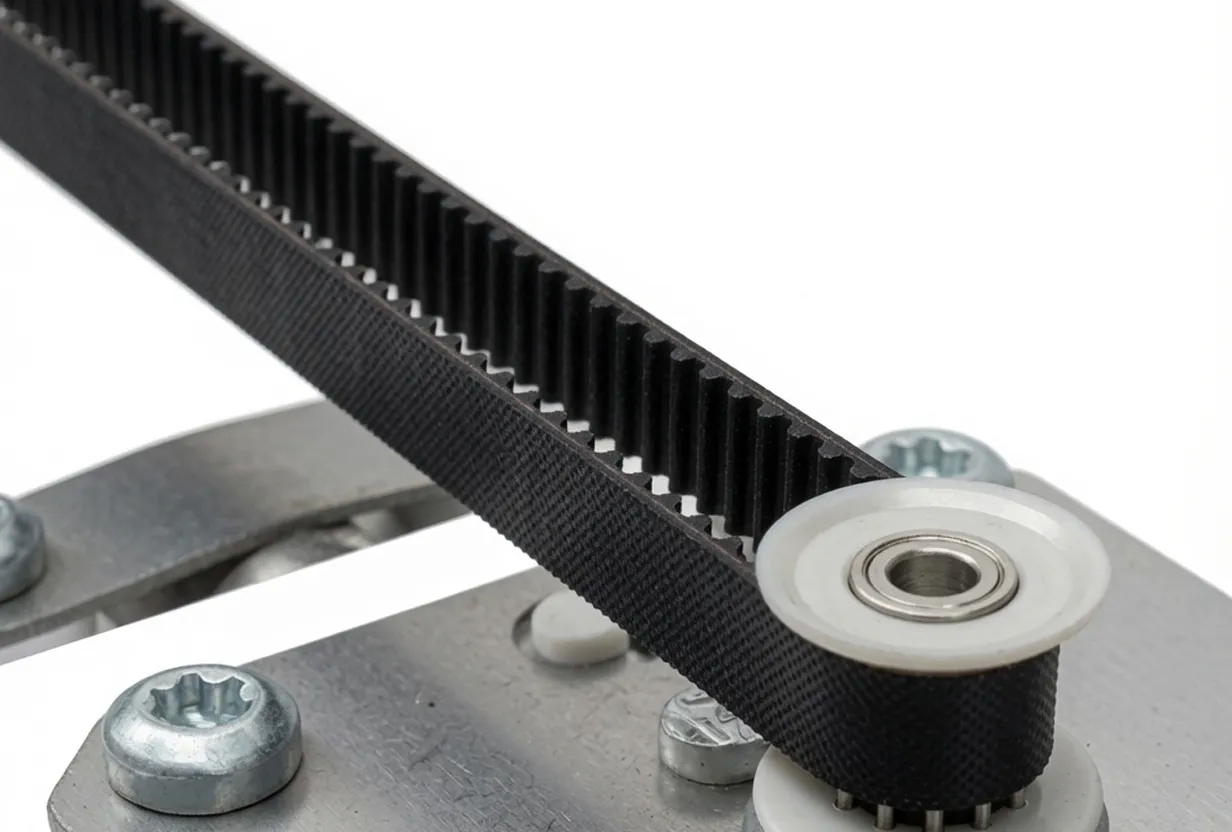
For linear drive applications where a rotating takal tali sawat pemasaan must drive a linear rack — commonly found in CNC router gantries, pick-and-place axes, and automated storage systems — our Metric Pitch Standard Toothed Bars provide the matching linear component to the EP-T 10 takal pemasaan lubang lurus. The tooth geometry is compatible with standard T10 timing belts, allowing seamless integration into new machine designs and straight bore timing pulley replacement retrofits. Consistent quality across both the rack and the takal pemasaan aluminium ensures smooth, backlash-free linear motion throughout the operating speed range.
Many industrial machines use a combination of timing belt drives (for precision axes) and V-belt drives (for high-torque main drives). Sourcing both timing pulleys and V-Pulley components from a single supplier reduces vendor management overhead, simplifies quality documentation for CE-marked machines, and allows consolidated shipping alongside your takal pemasaan lubang lurus order. Our V-pulley range covers classical, narrow, and wedge-groove profiles in cast iron, steel, and aluminium, with stock sizes available for rapid dispatch. This one-stop approach to takal dan tali sawat pemasaan system sourcing is a practical advantage for machine builders managing multiple component supply chains.

Soalan Lazim
Q1. What is a straight bore timing pulley and how does it differ from a taper lock timing pulley used in industrial automation?
A takal pemasaan lubang lurus has a cylindrical through-hole machined to a precise diameter, allowing it to be mounted directly onto a shaft using a keyway and set-screw, or by press-fit. A taper lock timing pulley uses a split tapered bushing that expands into a matching taper bore when tightened — making removal from the shaft easier on larger or heavily loaded assemblies. The takal pemasaan lubang lurus design is generally the better choice for smaller pulleys like this T10 16 mm belt series, where shaft diameters are modest and the holding force of a key and set-screw is fully adequate. They are also less expensive and require no separate bushing inventory — an advantage when managing spare parts for maintenance of multiple machines equipped with the same takal pemasaan lubang lurus type.
Q2. Which straight bore timing pulley tooth count should I choose for a specific speed ratio in my European packaging machine build?
The transmission ratio equals the driven pulley tooth count divided by the driving pulley tooth count. For example, if your motor runs at 3,000 rpm and you need 1,500 rpm at the driven shaft, you would use a 20-tooth drive takal pemasaan lubang lurus and a 40-tooth driven takal pemasaan lubang lurus — both available in the EP-T 10 series. It is generally good practice to use a minimum of 12 teeth on the smaller pulley to ensure adequate tooth wrap under belt tension. If you need help calculating the correct combination for your specific motor speed, required output RPM, centre distance, and torque, our technical team can assist with a drive design calculation at no charge.
Q3. How do I know if this aluminum straight bore timing pulley is compatible with my existing T10 timing belt from a different supplier?
All T10 takal tali sawat pemasaan and belts conforming to DIN 7721 share the same tooth pitch (10 mm), tooth profile geometry, and belt width dimensions. If your existing belt is labelled as T10 and is 16 mm wide, it will mesh correctly with any DIN 7721-compliant T10 takal pemasaan lubang lurus — regardless of the belt manufacturer. The critical figure to match is the tooth count (pitch circle diameter), not the belt brand. We recommend verifying the part code against the DIN 7721 standard or contacting us with your existing pulley's pitch diameter measurement if the original part code is no longer legible.
Q4. Where can I find a reliable supplier of straight bore timing pulleys for sale with fast delivery to North America or the EU?
We ship straight bore timing pulleys for sale directly from our production facility to customers in North America (USA, Canada, Mexico), the European Union, the UK, Australia, Southeast Asia, and the Middle East. Standard stock items in the EP-T 10 takal pemasaan lubang lurus series typically dispatch within 3–5 working days from order confirmation. For consolidated orders combining multiple straight bore timing pulleys, belts, timing belt idler pulleys, and other drive components, we provide a single commercial invoice and packing list to simplify import clearance. For time-sensitive projects, please mention your required delivery date at enquiry stage and we will confirm the fastest available shipping option for your takal pemasaan lubang lurus order.
Q5. What are the main timing belt pulley types available and how do I know which type is best for my CNC or robotic application?
Timing belt pulley types are primarily categorised by tooth profile (T-series, HTD, L-series, XL-series), bore type (straight bore, taper lock, or pilot bore), and material (aluminium, steel, stainless steel, polymer). For CNC and robotic applications demanding precise positioning and low inertia, an takal pemasaan lubang lurus aluminium with a T or HTD profile is almost always the starting point. T10 suits moderate loads at moderate-to-high speeds; HTD 5M is preferred for higher torque at lower speeds; L-series is common in legacy North American equipment. Our team can recommend the appropriate profile and confirm whether a takal pemasaan lubang lurus or a taper-lock variant better suits your specific load and shaft access requirements.
Q6. How do I get a quote for a custom timing belt pulley order with a non-standard bore diameter or keyway for my Australian industrial project?
We offer custom timing pulleys with non-standard bore diameters, keyway dimensions per DIN 6885 or AS 1652 (Australian keyway standard), blind bores, threaded holes, and other special features. To receive a quotation for a custom takal pemasaan lubang lurus, please provide: the desired part code (or pitch, tooth count, belt width), required bore diameter, keyway size if applicable, required material, surface finish, and quantity. For Australian customers, we quote in AUD on request and provide ITAR-free export documentation. Lead times for custom machining are typically 10–20 working days depending on complexity, compared with 3–5 days for standard stock takal pemasaan lubang lurus items.
Q7. When should I consider a timing belt replacement versus continuing to run the existing belt on my straight bore timing pulley system?
A penggantian takal tali sawat pemasaan schedule should be based on both operating hours and condition inspection. Signs that the belt needs replacing include: visible cracking or chunking of belt teeth, unusual noise at certain speeds, measurable tooth wear exceeding 20 % of original height, and any cord fraying. For critical axes in production machinery, many maintenance engineers in Germany, Japan, and the UK set a preventive replacement interval of 8,000–15,000 hours or annually, whichever comes first. If the pulley itself shows significant tooth wear at the same time, replacing both the takal pemasaan lubang lurus and belt simultaneously is recommended to avoid accelerating wear on the new belt through engagement with worn teeth.
Q8. What is the typical lead time and minimum order quantity for straight bore timing pulleys shipped to Southeast Asia for a machine manufacturer?
For standard in-stock T10 takal pemasaan lubang lurus items in the 16 mm belt width series, we have no minimum order quantity — single pieces are accepted, which is useful for maintenance procurement and prototyping. For Southeast Asian buyers in Thailand, Vietnam, Malaysia, Indonesia, and the Philippines, typical air freight transit time is 5–10 working days from dispatch; sea freight is available for larger volumes at lower unit freight cost. Standard stock items dispatch within 3–5 working days. For machine manufacturer accounts placing regular repeat orders, we offer blanket order arrangements with scheduled call-offs to simplify your supply chain.
Q9. How does an aluminum timing pulley compare to a stainless steel timing pulley for food processing machinery applications?
An takal pemasaan aluminium offers lower weight and easier machinability, making it the preferred choice where weight reduction matters and the environment does not include aggressive cleaning agents. A takal pemasaan keluli tahan karat provides superior corrosion resistance — particularly to chloride-containing cleaning and sanitising solutions common in meat, fish, and dairy processing. For direct-food-contact zones, a takal pemasaan keluli tahan karat is mandated in some designs under EHEDG guidelines (Europe) or NSF/ANSI 51 (USA). For dry food processing or light washdown zones, an anodised takal pemasaan lubang lurus aluminium with sealed fastener recesses is typically acceptable and significantly lighter than its stainless equivalent. Consult your food safety auditor before specifying material for any takal pemasaan lubang lurus in a food-contact zone.
Q10. What are the standard sizes available for the T10 metric timing pulley series and how do I interpret the part code?
The EP-T 10 part code follows a straightforward logic: the number before T indicates tooth count, the number after T is pitch in millimetres (10 mm), and the suffix after the dash is hub length (31 mm for this 16 mm belt width series). So 20T10-31 is a 20-tooth, T10-pitch, 31 mm hub length takal pemasaan lubang lurus. Timing pulley standard sizes in this T10 16 mm series range from 12T to 60T, covering pitch diameters from 38.20 mm to 190.98 mm. If you need a tooth count not in the standard takal pemasaan lubang lurus range, we can discuss takal tali sawat pemasaan tersuai machined to your specific requirements within our normal lead times for custom components.
Editor: PXY