

EP-T2.5-16 Aluminium Timing Pulley — 2.5mm Pitch for 6mm Belt Width
The EP-T2.5-16 series offers lightweight aluminium timing pulleys designed for precision drives using 6mm wide belts with a 2.5mm pitch. Available in tooth counts from 12 to 60, these pulleys feature consistent dimensions including a face width (F) of 9–10mm and overall length (L) of 16mm. Smaller models (12–16 teeth) have a bore diameter (Dm) of 13–16mm, while larger sizes extend up to 34mm for the 60-tooth variant. Outer diameters (De) range from 9.00mm to 47.25mm, ensuring compact integration. Most models include flanges (Type 1F/6F) for belt tracking, with specific flange numbers (e.g., 501–513) provided for compatibility. Ideal for light-duty automation, robotics, and office equipment requiring accurate synchronization.
T2.5 METRIC TIMING PULLEY SERIES
EP-T2.5-16 Aluminium Timing Pulley — 2.5mm Pitch for 6mm Belt Width
Part Codes: 12T2.5–16 to 60T2.5–16 | Teeth: 12–60 | Pitch: 2.5mm | Belt Width: 6mm | Material: Aluminium
The EP-T2.5-16 series is a precision-machined aluminium timing pulley range covering 20 part numbers from 12 to 60 teeth, manufactured to the DIN 7721 T2.5 standard with a 2.5 mm pitch for use with 6 mm wide T2.5 synchronous timing belts. Lightweight, dimensionally accurate, and suited to high-speed, low-torque drives in servo motor systems, office automation, medical equipment, laboratory instruments, and compact precision machinery worldwide.
T2.5 Aluminium Timing Pulley — Metric Precision Drive Series
The T2.5 designation follows the DIN 7721 metric trapezoidal timing belt standard, where the numeral denotes the belt pitch in millimetres. At 2.5 mm pitch, the T2.5 series is the smallest member of the standard metric T-profile family (T2.5, T5, T10, T20), making it the preferred choice wherever compact pulley diameters are essential: servo motor encoders, stepper motor drives, small robotic arm axes, precision positioning stages, and miniature conveyor drives. The –16 suffix indicates compatibility with 6 mm wide T2.5 timing belts (belt width code 16 in the DIN notation system). All pulleys in this series are manufactured from aluminium alloy, providing the lowest possible rotating mass for high acceleration servo applications while maintaining the dimensional accuracy required by the T2.5 standard tooth geometry.
Quick Reference — T2.5-16 Series
| Series | T2.5 (2.5mm Pitch, Metric) |
| Standard | DIN 7721 / ISO equivalent |
| Belt Width Code | 16 (6 mm wide belt) |
| Teeth Range | 12 – 60 teeth |
| Pitch Diameter | 9.55 – 47.75 mm |
| Flange Width (F) | 9 mm (12–16T) / 10 mm (18–60T) |
| Hub Length (L) | 16 mm (all sizes) |
| Bore (d) | Pilot bore – (see table); 60T: 8 mm |
| Material | Aluminium alloy (AL) |
| Types | 1F (12–16T) / 6F (18–44T) / 6 (48–60T) |
1. Technical Parameters — EP-T2.5-16 Aluminium Timing Pulley
The following table presents the complete dimensional specification for all 20 part numbers in the EP-T2.5-16 series, extracted from the YHK Timing Pulleys catalogue. All dimensions in mm. Dp = pitch diameter; De = outside diameter; Df = flange outer diameter; Dm = hub outer diameter; F = flange-to-flange face width; L = hub length; d = bore diameter. A dash (–) in the d column indicates a pilot bore (unfinished) where the user enlarges the bore to the required shaft diameter. A dash in the Df column indicates no flange (Type 6 construction). Flange number refers to the YHK flange code for matching flange dimension data.
| Part Code | Teeth | Type | Material | Dp (mm) | De (mm) | Df (mm) | Dm (mm) | F (mm) | L (mm) | d (mm) | Flange No. |
|---|---|---|---|---|---|---|---|---|---|---|---|
| 12T2.5–16 | 12 | 1F | AL | 9.55 | 9.00 | 13 | 13 | 9 | 16 | – | 501 |
| 14T2.5–16 | 14 | 1F | AL | 11.14 | 10.60 | 15 | 15 | 9 | 16 | – | 502 |
| 15T2.5–16 | 15 | 1F | AL | 11.94 | 11.40 | 15 | 15 | 9 | 16 | – | 502 |
| 16T2.5–16 | 16 | 1F | AL | 12.73 | 12.20 | 16 | 16 | 9 | 16 | – | 503 |
| 18T2.5–16 | 18 | 6F | AL | 14.32 | 13.80 | 17.5 | 10 | 10 | 16 | – | 504 |
| 19T2.5–16 | 19 | 6F | AL | 15.12 | 14.60 | 20 | 10 | 10 | 16 | – | 505 |
| 20T2.5–16 | 20 | 6F | AL | 15.92 | 15.40 | 20 | 10 | 10 | 16 | – | 505 |
| 22T2.5–16 | 22 | 6F | AL | 17.51 | 17.00 | 22 | 11 | 10 | 16 | – | 512 |
| 24T2.5–16 | 24 | 6F | AL | 19.10 | 18.55 | 22 | 12 | 10 | 16 | – | 512 |
| 25T2.5–16 | 25 | 6F | AL | 19.90 | 19.35 | 25 | 13 | 10 | 16 | – | 506 |
| 26T2.5–16 | 26 | 6F | AL | 20.70 | 20.15 | 26 | 14 | 10 | 16 | – | 507 |
| 28T2.5–16 | 28 | 6F | AL | 22.28 | 21.75 | 26 | 14 | 10 | 16 | – | 507 |
| 30T2.5–16 | 30 | 6F | AL | 23.87 | 23.35 | 28 | 16 | 10 | 16 | – | 508 |
| 32T2.5–16 | 32 | 6F | AL | 25.47 | 24.95 | 32 | 16 | 10 | 16 | – | 509 |
| 36T2.5–16 | 36 | 6F | AL | 28.65 | 28.10 | 36 | 20 | 10 | 16 | – | 510 |
| 40T2.5–16 | 40 | 6F | AL | 31.83 | 31.30 | 38 | 22 | 10 | 16 | – | 511 |
| 44T2.5–16 | 44 | 6F | AL | 35.02 | 34.50 | 42 | 24 | 10 | 16 | – | 513 |
| 48T2.5–16 | 48 | 6 | AL | 38.20 | 37.70 | – | 26 | 10 | 16 | – | – |
| 60T2.5–16 | 60 | 6 | AL | 47.75 | 47.25 | – | 34 | 10 | 16 | 8 | – |
Source: YHK Timing Pulleys Catalogue, T2.5 (Pitch=2.5mm) for belt width 6mm section. Pilot bore (–) sizes: bore enlarged to required shaft size by user. Custom bore sizes, keyways, and surface treatments available on request.
2. About Our T2.5-16 Aluminium Timing Pulley
The EP-T2.5-16 aluminium timing pulley is a miniature-format synchronous drive component designed for the highest shaft speed and lowest rotating inertia applications in the metric timing belt pulley family. The 2.5 mm pitch of the T2.5 series means that even the smallest 12-tooth pulley in this range has a pitch diameter of only 9.55 mm — small enough to mount directly on the output shaft of NEMA 17 or NEMA 11 stepper motors without any intermediate shaft adaptor, and small enough to fit within the compact enclosures of 3D printers, robotic end effectors, and miniature linear stages where the drive system competes for space with sensors, actuators, and structural elements. The aluminium alloy construction of the entire T2.5-16 series (unlike the steel or cast iron used in larger L and H series timing pulleys) reduces the rotational inertia of the pulley to the minimum achievable for the tooth count, which directly reduces the motor torque required for acceleration — a critical parameter in high-cycle servo applications where the drive must accelerate and decelerate hundreds of times per minute.
The –16 belt width code in the part number designates compatibility with the 6 mm wide T2.5 timing belt, which is the narrowest standard belt in the T2.5 family. A 6 mm wide T2.5 belt is used in the majority of miniature servo and stepper motor drive applications because it provides adequate tensile capacity for the low torque levels transmitted in these drives while minimising the axial space required for the belt drive on the motor shaft. Wider T2.5 belt variants (10 mm, 16 mm) are available for higher-torque applications, requiring pulleys with correspondingly wider flange-to-flange face widths. The EP-T2.5-16 series is specifically dimensioned for the 6 mm belt, with the F dimension (flange-to-flange face width) set at 9 mm for the smallest pulleys and 10 mm for 18T and above — both values providing the lateral containment needed for the 6 mm belt without adding unnecessary axial length to the drive assembly.
The type codes in this timing pulley series reflect the construction variation across the tooth count range. Types 1F (12T to 16T) and 6F (18T to 44T) are flanged designs where integral flanges at both ends of the toothed section retain the belt laterally. The small pitch diameter of 12T to 16T pulleys (9.55 mm to 12.73 mm) requires the 1F type construction with a different flange geometry than the larger 6F types. At 48T and 60T, the type designation becomes 6 (no F suffix), indicating a plain toothed section without flanges — at these larger diameters the belt has sufficient wrap angle and tension distribution to remain tracking without flanges, and removing the flanges simplifies manufacture and reduces the axial face width for space-critical designs. All types in the T2.5-16 series share the 16 mm hub length (L), providing a consistent axial envelope for the complete range.
3. Five Key Advantages of the EP-T2.5-16 Aluminium Timing Pulley
1. Minimum Rotational Inertia for High-Acceleration Servo Drives
Aluminium alloy has a density of approximately 2.7 g/cm³ compared to 7.8 g/cm³ for steel — approximately 35% of the steel density. For a rotating disc of identical dimensions, the aluminium timing pulley has one-third the rotational inertia of a steel equivalent, directly reducing the torque that the servo or stepper motor must provide during acceleration and deceleration phases. In high-cycle automation applications where the drive accelerates and decelerates 200 to 500 times per minute, this inertia reduction translates to measurable energy savings, reduced motor thermal loading, and the possibility of using a smaller motor frame size than would be required with a steel timing pulley at the same pitch and tooth count.
2. Compact 2.5mm Pitch for Miniature Drive System Design
The 2.5 mm pitch allows smaller pitch diameters at any given tooth count than any larger-pitch alternative. A 20-tooth T2.5 pulley has a pitch diameter of only 15.92 mm, allowing a 20:40 tooth ratio drive to be built within a pitch diameter envelope of just 16 to 32 mm — a space that would require 50.93 to 101.86 mm diameter if the same ratio were implemented in the L series (9.525 mm pitch). This compactness is the fundamental reason why the T2.5 aluminium timing pulley is the standard choice for miniature robotic joints, 3D printer axis drives, compact CNC engravers, and any other application where the drive mechanism must fit within a minimal envelope.
3. DIN 7721 Dimensional Conformance for Global Interchangeability
The T2.5 timing pulley tooth profile and dimensional standard is defined by DIN 7721, the German industrial standard for metric trapezoidal timing belts and pulleys, which has been widely adopted internationally as the de facto global standard for the T-profile metric timing belt family. Conformance to DIN 7721 ensures that the EP-T2.5-16 aluminium timing pulleys are dimensionally interchangeable with T2.5 timing belt pulleys from any globally compliant timing pulley manufacturer, and that they mesh correctly with standard T2.5 timing belts from all major belt manufacturers (Gates, Continental/Contitech, Mitsuboshi, and others). This interchangeability is especially important for the 3D printer, CNC, and robotics aftermarket, where users frequently source replacement pulleys independently of the original machine manufacturer.
4. Consistent 16mm Hub Length Across the Full Range
All 20 timing pulley part numbers in the T2.5-16 series share the same 16 mm hub length (L dimension), giving machine designers a consistent axial envelope to work with regardless of the tooth count they select for each pulley in a multi-pulley drive system. This dimensional consistency eliminates the shaft length adjustment and spacer machining that would be required if hub lengths varied across the range, and it simplifies the bill of materials for OEM machine builders who maintain the same machine base design across product variants that require different speed ratios but share the same motor shaft position and belt alignment datum.
5. Anodising and Surface Treatment Compatibility for Cleanroom and Corrosion Applications
Aluminium timing pulleys are suitable for anodising, hard anodising, and chemical conversion coating (Alodine/chromate conversion), all of which improve corrosion resistance and reduce particulate generation from the pulley surface. These treatments are particularly important in medical equipment, food processing machinery, semiconductor manufacturing, and laboratory automation environments where lubricant-free, contamination-free drive components are required. The EP-T2.5-16 aluminium timing pulleys can be supplied with hard anodising on request, providing a wear-resistant, electrically insulating surface coating that also gives the pulley the distinctive dark grey/black appearance common in cleanroom automation equipment.
4. Working Principle of the T2.5 Timing Pulley System
The T2.5 aluminium timing pulley operates on the same positive meshing principle as all synchronous belt drive systems: the trapezoidal teeth machined into the pulley circumference engage the matching tooth spaces on the inner surface of the T2.5 timing belt, transmitting torque and motion with zero slip between driver and driven shafts. The T-profile tooth geometry is a flat-bottomed trapezoidal form with a 40° included tooth angle, defined by the DIN 7721 standard, which specifies the tooth pitch, height, width at the pitch line, and root radius for each metric T series. At 2.5 mm pitch the tooth dimensions are small: the tooth height is approximately 0.7 mm and the belt engagement depth at the pulley is correspondingly shallow. This small tooth height is adequate for the light loads and low belt tensions that characterise T2.5 timing pulley applications but would not withstand the high belt tensions and side loads of heavier industrial drives that require the H series or AT series tooth profiles with their deeper tooth geometry and larger root radii.
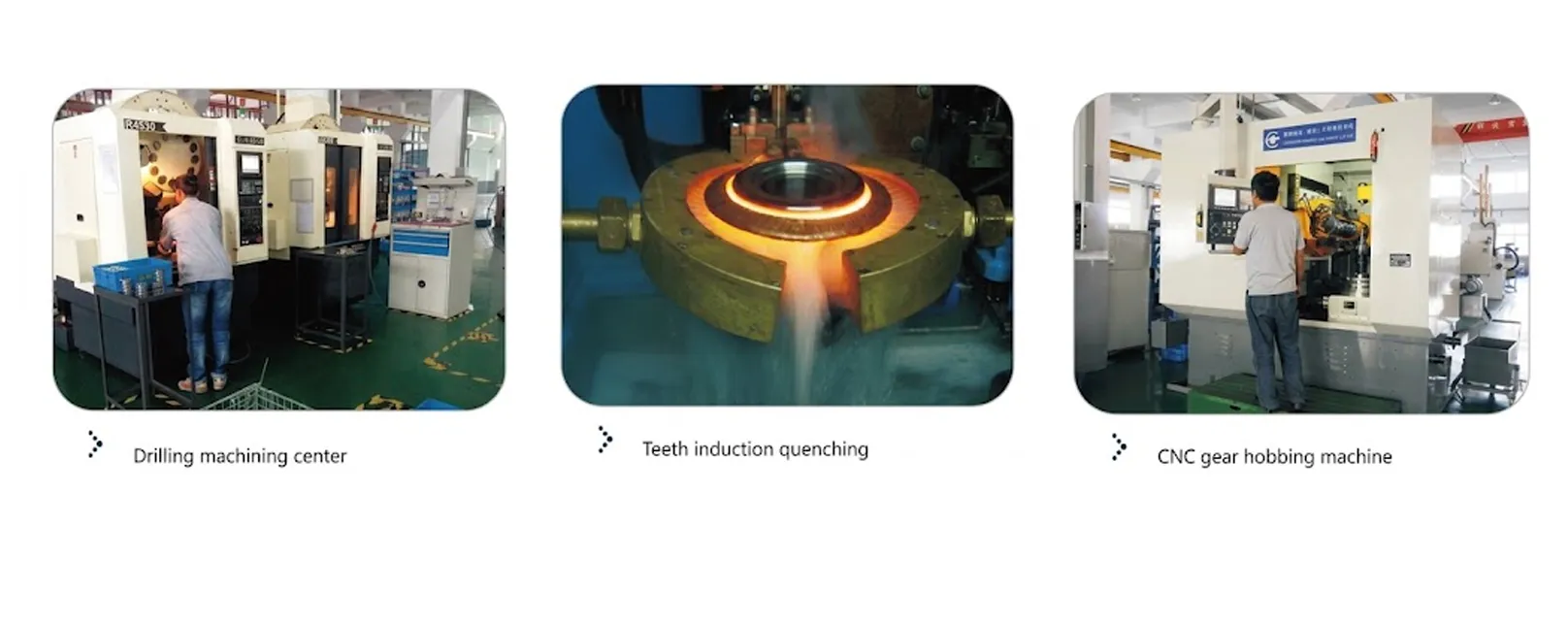
The aluminium alloy body of the pulley is machined by CNC gear hobbing to produce the tooth profile, followed by turning to produce the hub, flanges, and bore. The pilot bore is the initial bore state as machined — in the T2.5-16 series, most sizes from 12T to 44T are supplied with a pilot bore (shown as – in the d column), meaning the hub bore is machined to a small initial diameter that the user enlarges to the required shaft size. This pilot bore approach allows a single pulley part number to be adapted to multiple shaft diameters in the field, which is particularly useful for the diverse shaft sizes found across the stepper motor and servo motor products used with T2.5 drives in 3D printing, robotics, and automation. The 48T and 60T sizes are exceptions: the 60T size is supplied with an 8 mm pre-machined bore, and the 48T with a plain bore, reflecting the larger hub wall thickness available at these tooth counts where machining to a defined bore is practical without compromising structural integrity at the hub wall.
Correct belt pre-tension is more critical in T2.5 timing pulley drives than in larger-pitch belt drives because the small tooth height of the T2.5 profile provides a shallow engagement depth that is more susceptible to tooth jumping under overload or under-tensioned conditions. When the T2.5 timing belt is correctly pre-tensioned, the static tension on the slack side of the drive is sufficient to maintain full tooth engagement throughout the wrap arc of the smaller pulley even under the dynamic loads of rapid acceleration. Under-tensioned T2.5 drives are the most common cause of early belt failure in miniature drive applications — the belt teeth jump over the pulley teeth under the shock of rapid acceleration, damaging both the belt teeth and the pulley tooth tips in a failure mode that requires replacement of both components. Machine designers and maintenance technicians working with T2.5 aluminium timing pulleys should verify that the specified minimum belt tension is achievable with the tensioner or centre distance adjustment available in their machine design before finalising the drive layout.
5. Materials and Manufacturing Quality
The aluminium alloy used in the EP-T2.5-16 timing pulley series is a free-machining aluminium alloy equivalent to 6061-T6 or 2024-T4, selected for its combination of machinability, strength, and surface treatment compatibility. The alloy provides a yield strength of approximately 275–324 MPa (for 6061-T6), which is more than adequate for the tooth root bending stress levels encountered in T2.5 drive applications where the transmitted torque is inherently limited by the small belt width and shallow tooth engagement depth. The machining quality of the tooth profile is critical for the T2.5 series because the small tooth height (approximately 0.7 mm above the outside diameter) means that any tooth tip rounding, chatter marks, or pitch error has a proportionally larger effect on belt engagement quality than in larger-pitch pulleys where the tooth geometry has more dimensional margin. The YHK CNC gear hobbing process for the T2.5 aluminium timing pulley achieves tooth profile accuracy consistent with DIN 7 gear quality class or better, with pitch deviation controlled to within ±0.01 mm and tooth profile form error within the DIN 7721 tolerance band for the T2.5 profile.
After CNC machining, all aluminium T2.5 timing pulleys in the T2.5-16 series receive a deburring and cleaning process to remove the sharp edges and aluminium swarf that would otherwise be present at the tooth tips and bore entry chamfer from the machining operation. The bore of pilot bore variants is finished to a smooth internal surface to facilitate the bore enlargement operation that the end user performs with a drill or reamer in the field. For pulleys supplied with a pre-machined bore (the 60T size with 8 mm bore), the bore is precision-reamed to H7 tolerance to provide a close-running fit with standard shafts at the nominal bore diameter. The external surfaces of the pulley — the hub outside diameter, flange faces, and tooth tips — are left in the natural machined aluminium condition as standard, appearing as bright silver. For applications where anodising, hard anodising, or chemical conversion coating is required for corrosion protection or cleanroom suitability, these surface treatments are available as custom options and must be specified at the time of order as they change the surface finish and slightly alter the tooth tip and bore dimensions.
6. Regulatory and Standards Compliance
The T2.5 metric timing belt pulley standard is defined by DIN 7721 Part 1 (Zahnriemenscheiben — Abmessungen), the German standard for metric trapezoidal timing belt pulleys. This standard specifies the tooth pitch, tooth profile geometry, and the dimensional envelope for each belt width code, and it is the reference used by all global manufacturers of T2.5 timing pulleys and belts. The EP-T2.5-16 series complies with the DIN 7721 dimensional requirements for the T2.5 pitch and 6 mm belt width, ensuring meshing compatibility with DIN 7721-compliant T2.5 timing belts from all major global belt manufacturers.
For machinery incorporating T2.5 timing pulleys and sold into the European Union, the EU Machinery Directive 2006/42/EC (to be superseded by the EU Machinery Regulation 2023/1230 from January 2027) requires that the machine builder document the power transmission component specifications, including the pulley material, tooth standard, and design load, as part of the CE marking technical file. The EP-T2.5-16 aluminium timing pulleys are manufactured under ISO 9001:2015 quality management, and material certificates and dimensional inspection records are available to support CE marking technical file preparation for European OEM machine builders. In North America, OSHA 29 CFR 1910.219 requires guarding of power transmission components, which applies to T2.5 timing pulley belt drives as to all to all rotating power transmission equipment. In Japan, the equivalent metric timing pulley standard is JIS B 1856, which aligns with DIN 7721 for the T-profile metric series, making the EP-T2.5-16 pulleys compatible with T2.5 timing belts and machinery designed to Japanese standards. For the global 3D printer aftermarket and hobbyist CNC market, the EP-T2.5-16 pulleys conform to the de facto community standard for T2.5 pulleys established through the widespread use of this tooth form in RepRap-derived and commercial 3D printer designs, where the 20T2.5 and 36T2.5 sizes are the most frequently specified pulleys for X and Y axis stepper motor drives.

7. Application Scenarios
The T2.5 aluminium timing pulley is the standard synchronous drive component for compact, high-speed, low-torque synchronous belt drives across a diverse range of precision equipment categories. The following application areas represent the primary market segments for the EP-T2.5-16 series.
3D Printer Axis Drives
FDM (Fused Deposition Modelling) 3D printers use T2.5 and GT2 timing belt pulleys on their X and Y axis stepper motor shafts. The 20T2.5-16 is the most commonly used pulley for the motor shaft (driving pulley) in Cartesian 3D printers, paired with an idler pulley of the same or similar tooth count. The compact pitch diameter of 15.92 mm for the 20-tooth pulley minimises the motor shaft overhang and keeps the belt drive within the tight dimensional constraints of desktop 3D printer frames. The 36T and 40T variants are used as larger driven pulleys for compound drive configurations and in CoreXY printer designs where a specific tooth count ratio determines the motion resolution of the print head positioning system.
Robotic Arm Joints and Collaborative Robot Drives
Small robotic arms, collaborative robots (cobots), and robotic end effectors use T2.5 aluminium timing pulleys for the compact joint drive mechanisms where a servo motor output must be reduced in speed and increased in torque within the tight dimensional envelope of a robot joint housing. The aluminium construction minimises the added inertia at the joint, which matters for dynamic performance of the robot arm during rapid path changes. T2.5 pulley pairs in the range of 20T to 40T are typical specifications for the secondary reduction stage in small cobot joint drives, where the primary reduction is achieved by a planetary or harmonic gear unit and the T2.5 belt drive provides fine adjustment of the overall reduction ratio to achieve the required joint speed.
Medical and Laboratory Automation Equipment
Automated liquid handling systems, sample preparation robots, laboratory centrifuge positioning drives, and medical diagnostic equipment use T2.5 aluminium timing pulleys in their positioning axis drives, where the timing pulley contributes no lubricant contamination. The combination of no-lubrication maintenance (unlike chain or gear drives), low particulate generation from the aluminium pulley surface, and precise synchronous positioning makes the T2.5 timing pulley drive the preferred mechanism for laboratory automation in controlled environments. Hard-anodised variants of the T2.5-16 aluminium pulleys are specified for cleanroom and ISO Class 5–7 applications where bare aluminium surface oxidation particles would contaminate the laboratory environment.
Office Automation and Document Handling
High-speed document scanners, laser printers, photocopiers, and currency counting machines use T2.5 aluminium timing pulleys for their paper transport and scanner carriage drives. The small pitch diameter of the T2.5 series allows the belt drive to fit within the slim profile of document handling equipment where typical body depths are 50 to 100 mm and the drive system competes for space with the optical system, paper path, and structural elements. T2.5 pulleys in the 18T to 30T range are the most common specifications in these drives, operating at shaft speeds of 1,000 to 4,000 RPM for the typical paper transport velocities of modern high-speed scanners.
CNC Engraving Machines and Laser Cutters
Desktop CNC engravers, laser cutters, and vinyl cutters use T2.5 aluminium timing pulleys for their X and Y axis stepper motor drives in the same configuration as 3D printers but with higher static belt tension to resist the cutting forces applied to the tool or beam during operation. The 20T2.5 and 25T2.5 sizes are the most common driver pulley specifications in desktop CNC machine axis timing pulley positions, and the 36T and 40T sizes are used as idler or driven pulleys in compound drive layouts. The compact T2.5 aluminium timing pulley allows the CNC machine frame to remain light and stiff, which directly benefits cutting accuracy by minimising the frame resonance that would otherwise cause ripple marks in engraved surfaces at certain cutting speeds.
8. About Us
Our timing pulley manufacturing group produces a comprehensive timing pulley range of metric and inch-pitch synchronous belt pulleys including the full DIN 7721 T-series (T2.5, T5, T10, T20), AT-series (AT5, AT10, AT20), HTD-series (3M, 5M, 8M, 14M), GT2/GT3 series, and the ANSI inch-pitch series (MXL, XL, L, H, XH, XXH). Pulleys are manufactured in aluminium alloy, steel, and cast iron, with surface treatment options including natural machined, anodised, hard anodised, and chemical conversion coating. The production facility operates CNC gear hobbing machines, precision turning centres, and CMM inspection equipment under ISO 9001:2015 quality management. We supply global OEM machine builders, distributors, and aftermarket buyers for 3D printing, robotics, automation, medical equipment, and industrial machinery applications. Dimensional drawings, material certificates, DIN 7721 conformance documentation, and bore dimension drawings are available for all standard range items. Custom T2.5 pulleys with non-standard tooth counts, wide belt widths, custom bore sizes, or special surface treatments are produced to drawing. Contact our technical team for product selection guidance, custom specification enquiries, or volume pricing.
WorkShop


9. Related Products — Complete T2.5 Synchronous Drive System
The EP-T2.5-16 aluminium timing pulley is the core component of a complete T2.5 synchronous belt drive. We supply the complementary components needed to build a complete T2.5 drive system from a single supplier, ensuring dimensional compatibility across all drive elements.
ISO 5294 Timing Pulleys — L and H Series (Straight Bore)
For applications requiring higher torque than the T2.5 series can provide, our L series and H series straight bore timing pulleys offer the next steps up in belt pitch (9.525 mm L and 12.7 mm H) with significantly higher belt load capacity. When a T2.5 drive reaches its power limit — which occurs relatively quickly as the application grows beyond miniature-scale automation — the L series aluminium timing pulley in the same configuration provides approximately 14 times the torque capacity for the same drive speed, at the cost of a proportionally larger pitch diameter. Our range covers the complete transition from T2.5 miniature drives through to large H series industrial drives in a consistent product family with matched documentation standards.

V-Belt Pulleys
Our V-belt pulleys complement the T2.5 aluminium timing pulley range for machines that use both synchronous belt drives (for precision positioning axes) and V-belt drives (for auxiliary loads such as cooling fans or hydraulic pumps). Specifying both pulley types from the same supplier provides consistent quality documentation and surface finish standards across the full drive train of a multi-drive machine, simplifying the technical file for CE marking and reducing supplier management overhead for global OEM machine builders who source mechanical components through centralised procurement.

Frequently Asked Questions
Editor: PXY

