
Sobre
Nossa história
A China Timing Pulley existe porque muitos compradores estavam recebendo uma polia de sincronização que correspondia ao desenho no papel, mas não à peça real. Um diâmetro primitivo com uma diferença de alguns centésimos de milímetro não aparece na comparação da ficha técnica. Ele só aparece seis semanas depois, como uma correia que começou a subir no flange ou um furo que não encaixa perfeitamente na bucha cônica. Começamos a fabricar nossos próprios perfis de dentes internamente, justamente para eliminar essa discrepância entre o que o desenho indica e o que a máquina realmente produz.
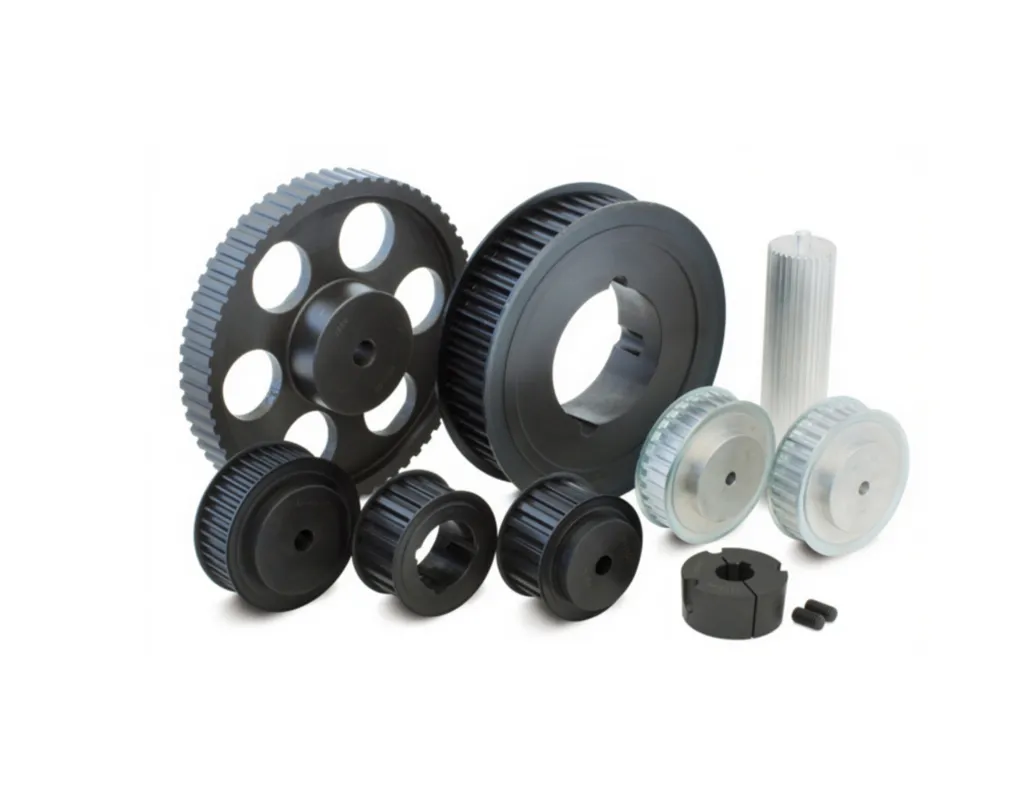
Essa decisão moldou tudo o que se seguiu. Em vez de oferecer um catálogo amplo e superficial com produtos fáceis de encontrar, nos especializamos em uma categoria específica: polias sincronizadoras, abrangendo os perfis de dentes que realmente importam para os fabricantes de máquinas industriais — dentes trapezoidais ISO 5294, série T métrica DIN 7721, o perfil AT reforçado e os padrões curvilíneos HTD e PC usados em transmissões mais robustas. Dez séries de produtos, cada uma delas fabricada, inspecionada e com a garantia que oferecemos.

Visão geral das atividades principais
| Linhas de produtos | Série de 10 polias |
| Tipos de furo | Trava reta e cônica |
| Padrões dentários | ISO 5294, DIN 7721, HTD |
| Materiais utilizados | Alumínio, aço, ferro fundido |
OEM / ODM
Capacidade de fabricação
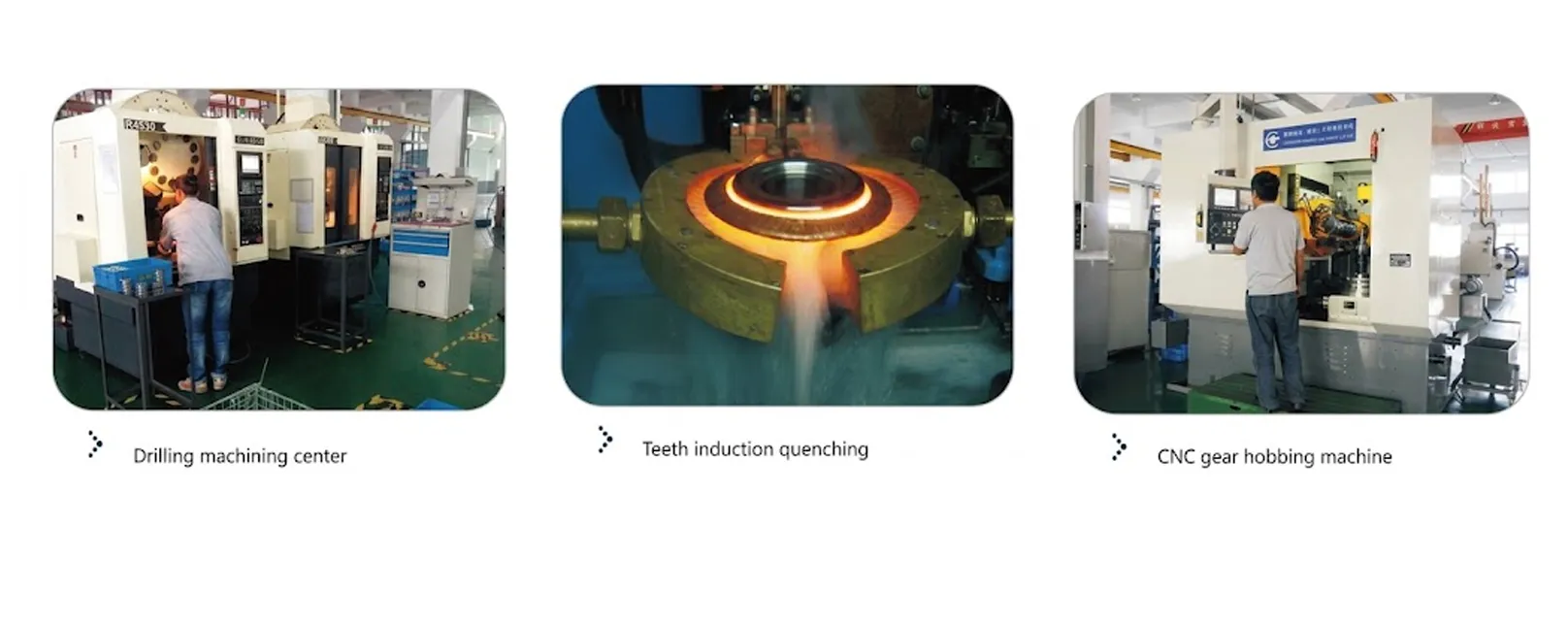
Nossa fábrica possui máquinas CNC para fresagem de engrenagens, tornos de precisão e equipamentos dedicados à retificação de dentes, lado a lado com centros de usinagem tipo pórtico para peças maiores das séries HTD e PC. O tratamento térmico — têmpera por indução nas raízes dos dentes, revenimento nas peças com eixo — é realizado internamente, em vez de em uma empresa terceirizada que teríamos que cobrar para obter prazos de entrega mais rápidos.
Controle de qualidade
Cada lote de produção passa por projetores de perfil e instrumentos de medição de imagem para geometria dos dentes, um testador de microdureza para peças tratadas termicamente e um metaloscópio para verificação da estrutura do material. Operamos sob um sistema de gestão da qualidade ISO 9001, com certificados de materiais arquivados para cada lote.
Engenharia e personalização
Os tamanhos padrão do catálogo atendem à maioria das solicitações, mas nossa equipe de engenharia trabalha regularmente com desenhos de clientes e peças de amostra desgastadas para produzir polias de sincronização personalizadas fora da faixa publicada — furos modificados, perfis de flange especiais ou número de dentes entre os passos padrão.

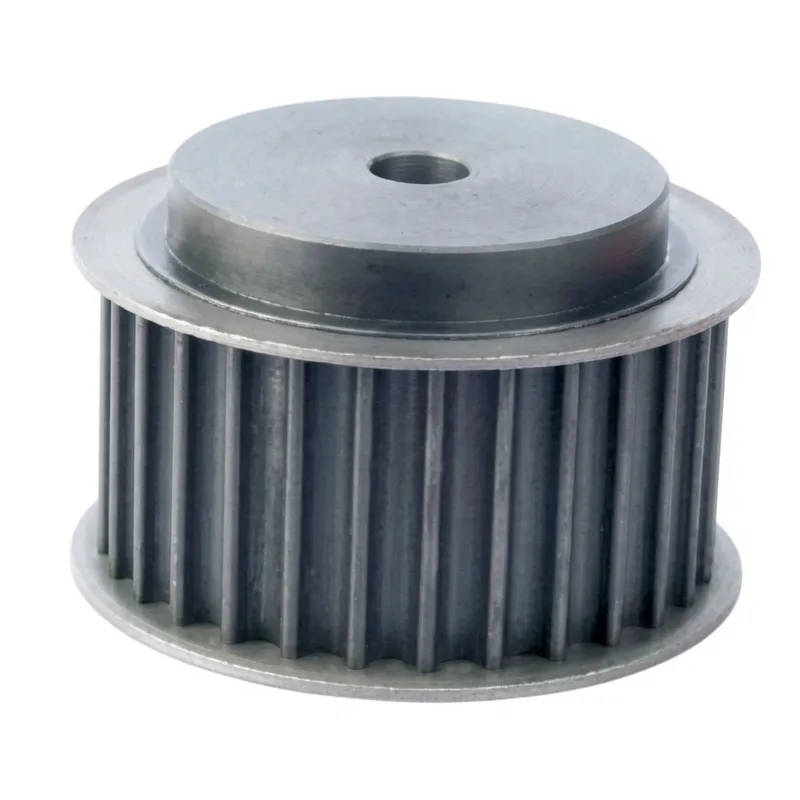

Fabricante profissional de polias de sincronização na China | Aceitamos personalização de parâmetros
Da polia usinada à polia em caixa
Cada polia de sincronização percorre a mesma sequência verificada, independentemente da série à qual pertence.
Material em
Tarugos de alumínio, aço ou ferro fundido verificados em relação aos certificados da usina.
Usinagem CNC
Torneamento, fresagem de engrenagens e retificação do formato dos dentes até o perfil desejado.
Tratamento térmico
Têmpera e revenimento por indução, quando a aplicação assim o exigir.
Inspeção
Projeção de perfil e verificação de microdureza em comparação com o desenho original.
Os três padrões que utilizamos como referência — ISO 5294, DIN 7721 e o perfil curvilíneo HTD — existem porque as correias e polias de distribuição precisam ser intercambiáveis entre fabricantes, e não apenas internamente consistentes dentro do catálogo de uma mesma fábrica. A ISO 5294 rege as famílias mais antigas de dentes trapezoidais: MXL, XL, L, H e XH, dimensionadas em passos derivados de polegadas que remontam ao início da adoção industrial de correias de distribuição. A DIN 7721 abrange a série T métrica — T2.5, T5 e T10 — que domina as máquinas fabricadas na Europa e é especificada tanto pela largura da correia quanto pelo passo. As polias de distribuição métricas fabricadas segundo este padrão são dimensionadas de forma que uma correia T5 de 10 mm de largura de um fornecedor se encaixe corretamente em uma polia T5 de outro, desde que ambas as partes respeitem a faixa de tolerância do padrão.
O perfil HTD e seu irmão mais robusto da série PC não são regidos por um único documento ISO universal da mesma forma — eles se originaram como um perfil curvilíneo proprietário e se tornaram um padrão de fato da indústria por meio da adoção, em vez de uma padronização formal. Essa história é importante na prática: uma polia de transmissão por correia dentada fabricada segundo o perfil HTD 8M por uma empresa ainda deve encaixar corretamente com uma correia HTD 8M de outra, mas a margem para a variação do perfil do dente é menor do que nos padrões trapezoidais mais antigos, já que a raiz arredondada do dente foi projetada especificamente para reduzir a concentração de tensão sob alto torque. Uma polia ligeiramente fora dessa curva não falha imediatamente — ela apenas desgasta a correia mais rapidamente do que a vida útil nominal sugeriria, o que é o tipo de problema difícil de diagnosticar posteriormente.
É por isso que uma polia guia e uma polia tensora da correia de distribuição, embora nenhuma delas transmita torque da mesma forma que uma polia motora principal, ainda precisam ter a mesma tolerância de perfil de dente que as polias motorizadas do sistema. Uma polia guia ou tensora com um perfil ligeiramente fora do padrão não apresentará sintomas imediatamente, mas introduz um pequeno erro de fase a cada passagem da correia — e em um circuito de correia suficientemente longo com várias polias guias, esses pequenos erros se acumulam, resultando em folga mensurável. A mesma lógica se aplica a uma polia da corrente de distribuição usada com corrente de rolos em vez de correia dentada: a geometria da engrenagem é diferente, mas o requisito fundamental é idêntico, mantendo uma relação mecânica fixa sem desvio cumulativo. Tratamos todas as polias de um conjunto, motorizadas ou não, de acordo com esse mesmo padrão, porque um sistema é tão preciso quanto seu componente menos verificado.
Do que é feita cada polia, na realidade.
Os perfis de passo menor — MXL, XL, T2.5, T5 e AT5 — são predominantemente usinados como polias de distribuição de alumínio, e por um bom motivo: com um número reduzido de dentes, a peça realiza um trabalho rápido e com pouca carga, geralmente de posicionamento em vez de transmissão de potência, e a menor massa rotativa do alumínio mantém a inércia baixa em ciclos rápidos de partida e parada. Uma polia de distribuição de alumínio também resiste bem à corrosão sem revestimento, o que é importante em ambientes de grau alimentício e sujeitos a lavagem.
Os tamanhos intermediários L, H, T10, AT10 e os menores HTD passam a ser fabricados em aço quando a tensão na raiz do dente e a carga lateral no furo ultrapassam a capacidade de resistência do alumínio em ciclos repetidos. O aço também permite um acabamento mais preciso e durável do furo, fator decisivo em qualquer componente com furo cônico: uma bucha de fixação cônica precisa de uma superfície de contato consistente e resistente ao desgaste para manter a força de aperto ao longo de anos de serviço, e um material mais macio perderia essa aderência gradualmente.
Na extremidade maior da gama — polias HTD 14M, PC8M e PC14M com cerca de cinquenta a quase duzentos dentes — fundimos e usinamos em ferro. A maior massa do ferro fundido em relação ao seu custo amortece a vibração e absorve o impacto de forma mais eficaz do que uma peça de aço ou alumínio de tamanho comparável, o que é importante em acionamentos de esteiras transportadoras e elevadores pesados, onde a polia também atua, em parte, como um volante que suaviza os pulsos de torque a cada rotação.
