
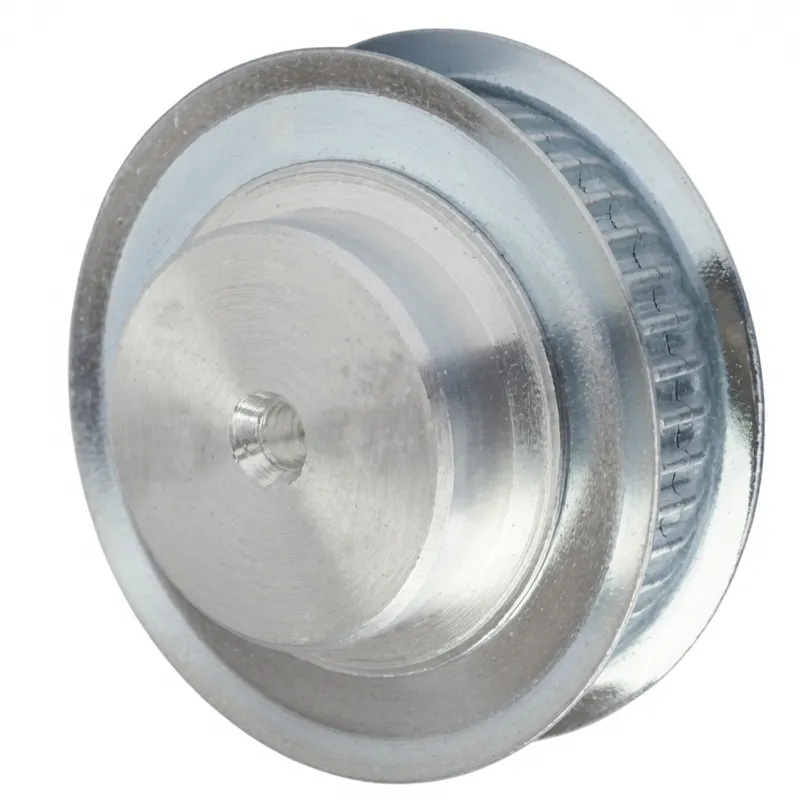
EP-T 5-mm-Aluminium-Zahnriemenscheibe mit gerader Bohrung – Riemenbreite 25 mm
The EP-T5 5mm Aluminum Timing Pulley for 25mm Belt Width are engineered for robust power transmission using 25mm wide belts with a 5mm pitch. Available in tooth counts from 10 to 60, these pulleys feature a substantial face width (F) of 30mm and a consistent length (L) of 36mm to accommodate wider loads. Bore diameters (Dm) range from 8mm to 65mm, supporting diverse shaft requirements, while outer diameters (De) span 15.05mm to 94.65mm. Most models include flanges (Type 6F) for secure belt tracking, with specific flange numbers provided for compatibility. Constructed from lightweight aluminum, this series is ideal for industrial automation and heavy-duty machinery requiring precise synchronization and high torque capacity without excessive rotational inertia.
EP-T 5MM Aluminum Straight Bore Timing Pulley — Belt Width 25MM
DIN 7721 Compliant | T5 Metric Pitch | 6F Flanged Type | Aluminum (AL) Material | Best Aluminum Straight Bore Timing Pulley
The EP-T 5MM series is an industry-standard straight bore timing pulley engineered to DIN 7721 specifications. Precision-machined from high-grade aluminum alloy, this metric timing pulley delivers dependable synchronous power transmission across a wide range of industrial and automation applications. With a 5 mm pitch and 25 mm belt width compatibility, it serves as a go-to replacement component or OEM timing pulley choice for engineers, procurement specialists, and systems integrators worldwide.
1. Technical Specifications — EP-T5-36 Series (Pitch 5mm, Belt Width 25mm)
All dimensions in millimeters (mm). Dp = Pitch Diameter; De = Outside Diameter; Df = Flange Diameter; Dm = Hub Bore Diameter; F = Belt Width; L = Hub Length; d = Bore Diameter. Hub length (L) = 36 mm and belt width (F) = 30 mm are constant across the full T5-36 range. Material: Aluminum Alloy (AL). Type: 6F (flanged) for tooth numbers 10–42; Type 6 (unflanged) for 44, 48, 60 teeth.
| Teilenummer | Zähne | Typ | Material | Dp (mm) | De (mm) | Df (mm) | Dm (mm) | F (mm) | L (mm) | d (mm) | Flansch Nr. |
|---|---|---|---|---|---|---|---|---|---|---|---|
| 10T5-36 | 10 | 6F | AL | 15.92 | 15.05 | 19.5 | 8 | 30 | 36 | — | 3 |
| 12T5-36 | 12 | 6F | AL | 19.10 | 18.25 | 23 | 11 | 30 | 36 | — | 1 |
| 14T5-36 | 14 | 6F | AL | 22.29 | 21.45 | 25 | 13 | 30 | 36 | — | 2 |
| 15T5-36 | 15 | 6F | AL | 23.88 | 23.05 | 28 | 16 | 30 | 36 | — | 4 |
| 16T5-36 | 16 | 6F | AL | 25.47 | 24.60 | 32 | 18 | 30 | 36 | — | 5 |
| 18T5-36 | 18 | 6F | AL | 28.65 | 27.80 | 32 | 10 | 30 | 36 | — | 6 |
| 19T5-36 | 19 | 6F | AL | 30.25 | 29.40 | 36 | 20 | 30 | 36 | — | 8 |
| 20T5-36 | 20 | 6F | AL | 31.83 | 31.00 | 36 | 22 | 30 | 36 | — | 8 |
| 22T5-36 | 22 | 6F | AL | 35.02 | 34.15 | 38 | 23 | 30 | 36 | — | 9 |
| 24T5-36 | 24 | 6F | AL | 38.21 | 37.40 | 42 | 24 | 30 | 36 | 8 | 13 |
| 25T5-36 | 25 | 6F | AL | 39.80 | 38.95 | 44 | 26 | 30 | 36 | 8 | 12 |
| 26T5-36 | 26 | 6F | AL | 41.39 | 40.60 | 44 | 26 | 30 | 36 | 8 | 12 |
| 27T5-36 | 27 | 6F | AL | 42.98 | 42.20 | 48 | 30 | 30 | 36 | 8 | 11 |
| 28T5-36 | 28 | 6F | AL | 44.58 | 43.75 | 48 | 32 | 30 | 36 | 8 | 11 |
| 30T5-36 | 30 | 6F | AL | 47.76 | 46.95 | 51 | 34 | 30 | 36 | 8 | 16 |
| 32T5-36 | 32 | 6F | AL | 50.94 | 50.10 | 54 | 38 | 30 | 36 | 8 | 18 |
| 36T5-36 | 36 | 6F | AL | 57.31 | 56.45 | 64 | 38 | 30 | 36 | 8 | 23 |
| 40T5-36 | 40 | 6F | AL | 63.66 | 62.85 | 66.5 | 40 | 30 | 36 | 8 | 24 |
| 42T5-36 | 42 | 6F | AL | 66.86 | 66.00 | 70 | 40 | 30 | 36 | 8 | 26 |
| 44T5-36 | 44 | 6 | AL | 70.05 | 69.20 | — | 45 | 30 | 36 | 8 | — |
| 48T5-36 | 48 | 6 | AL | 76.42 | 75.55 | — | 50 | 30 | 36 | 8 | — |
| 60T5-36 | 60 | 6 | AL | 95.52 | 94.65 | — | 65 | 30 | 36 | 8 | — |
Note: Dm values represent typical maximum bore. Custom bore sizes available on request. All tolerances to DIN 7721. Flange Number references correspond to standard flange ring configurations.
10MM Belt Width Aluminium Timing Pulley
2. Five Key Product Advantages
Every aluminum timing pulley in this series is manufactured to DIN 7721 dimensional tolerances, ensuring dimensional accuracy, reliable meshing, and interchangeability with global timing belt systems. Consistent tooth profile geometry means minimal backlash and smooth motion transfer even at elevated speeds.
Manufactured from aerospace-grade aluminum alloy, this aluminium timing pulley achieves an excellent strength-to-weight ratio. The reduced rotational inertia improves response times in servo-driven and high-cycle automation equipment, while also lowering overall system weight — a critical factor in packaging, robotics, and precision motion platforms.
Available from 10 teeth up to 60 teeth within the T5-36 series, this metric timing pulley stock range gives engineers flexibility to achieve precise gear ratios without custom machining. Whether you need a small-diameter drive pulley for compact equipment or a larger driven pulley for slower shaft speeds, the series covers your requirements from a single product family.
The straight bore configuration simplifies shaft mounting, allowing direct insertion onto standard metric or imperial shafts. Compared to taper-lock or split hub designs, a straight bore timing pulley reduces installation time and tooling requirements — ideal for high-volume production lines, maintenance-critical environments, and applications requiring frequent disassembly or timing adjustment.
Designed around the internationally recognized T5 metric pitch (5 mm pitch, 2.2 mm tooth height), this T5 aluminum timing pulley replacement pairs seamlessly with standard T5 timing belts available from any major supplier. This cross-compatibility makes it ideal for global procurement teams in Europe, North America, Southeast Asia, and Australia who require reliable timing pulley replacement parts that meet both OEM and aftermarket specifications.
3. How a Straight Bore Timing Pulley Works
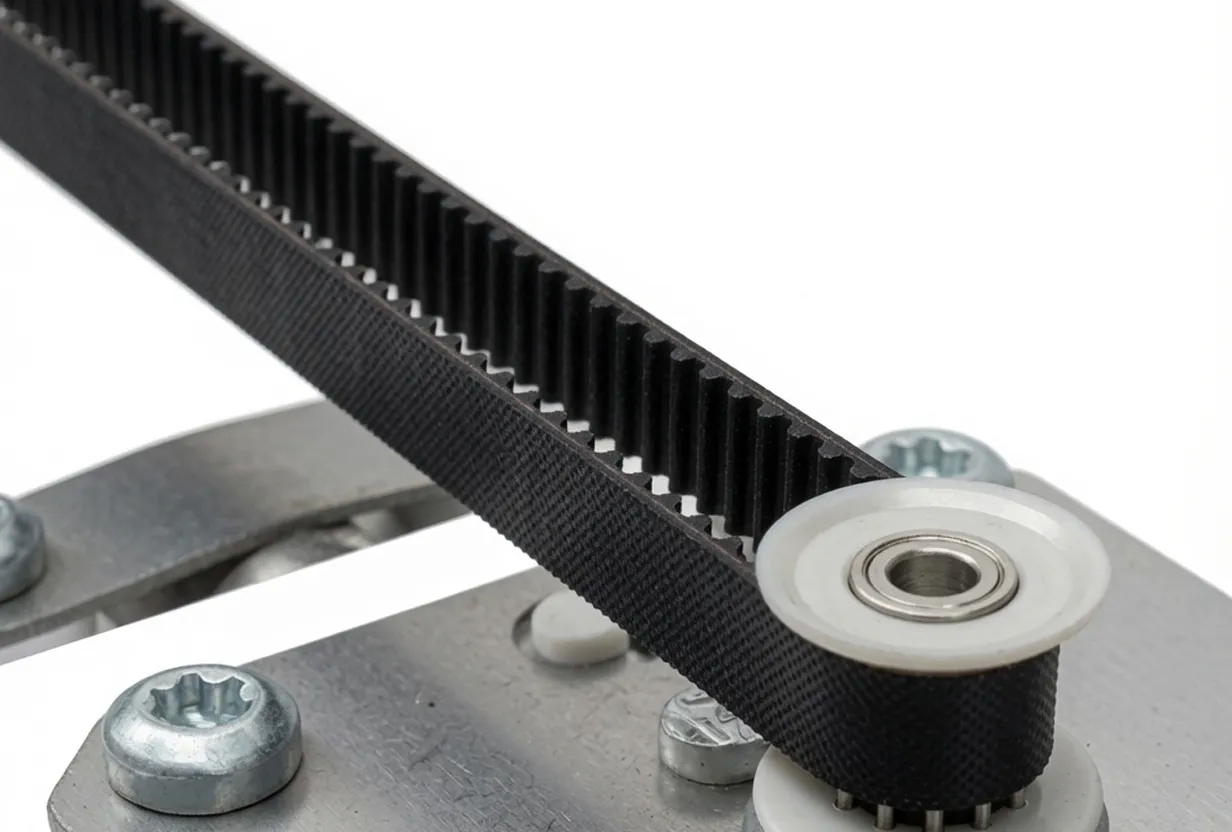
A timing belt pulley operates on the principle of positive engagement between the machined tooth profile of the pulley and the corresponding tooth geometry of a synchronous timing belt. Unlike friction-based V-belt drives, the interlocking teeth prevent slippage, guaranteeing a constant velocity ratio between driving and driven shafts at all load conditions.
In the EP-T 5MM straight bore timing pulley, the 5 mm pitch teeth are precision-cut into the pulley body to match the T5 belt profile as defined under DIN 7721. The flanged design (Type 6F) guides the belt laterally, preventing axial walk-out during operation — a common challenge in high-speed or vertically oriented timing belt drives. The straight bore accepts standard keyed or keyless shafts, and the hub length of 36 mm provides sufficient engagement for secure set-screw or key locking across the full tooth number range.
Power is transmitted when the belt meshes sequentially with each pulley tooth, distributing the load across multiple teeth simultaneously. This load-sharing characteristic is what enables timing belt drive pulleys to handle significant torque in a compact envelope. The aluminum alloy body reduces rotational inertia, allowing faster acceleration and deceleration cycles — critical performance attributes in servo motion, indexing tables, and pick-and-place automation.
The belt wrap angle, center distance, and tooth count relationship collectively determine drive efficiency. For optimal performance, a minimum of 6 teeth in mesh on the small pulley is recommended. With the EP-T 5MM series offering tooth counts from 10 to 60, engineers can design drives that maintain this mesh condition across a wide ratio range, ensuring quiet, low-vibration operation throughout the service life of the timing pulley and belt assembly.
4. Material & Surface Treatment
This EP-T 5MM metric timing pulley is precision-machined from high-quality aluminum alloy (EN AW-6061 / EN AW-7075 equivalent grades). Aluminum is the preferred material for metric timing belt pulleys in the light-to-medium duty power transmission segment for several well-established engineering reasons.
Its density is roughly one-third that of steel, which translates directly into lower rotational inertia and reduced bearing loads — important considerations for servo motor drives, stepper-driven positioners, and any application where frequent speed changes are involved. The machinability of aluminum also allows for finer tooth profile tolerances than cast iron or mild steel, contributing to the quieter operation and reduced belt wear that characterize well-designed aluminium timing pulley systems.
Standard surface finish is natural anodized or clear anodized, which provides a uniform oxide layer that increases surface hardness, improves corrosion resistance, and reduces the risk of aluminum-belt fretting — a known failure mode in aluminum pulleys running under heavy preload. For corrosive or salt-spray environments (marine, offshore, coastal industrial facilities), hard anodizing to a minimum 25-micron layer thickness is available on request.
Where higher load capacity, elevated temperature resistance, or food-grade compliance is required, stainless steel timing pulley variants are available within our broader product range. However, for the majority of automation, packaging, textile, and conveying applications where this metric timing belt pulley is specified, the aluminum alloy construction provides the optimal balance of performance, weight, and cost efficiency.
5. Application Scenarios
The T5 aluminum straight bore timing pulley is one of the most versatile timing belt drive pulleys in industrial use. Below are the primary sectors where this metric timing pulley sees regular deployment.
In automated assembly lines, Cartesian robots, and gantry systems, this T5 metric timing pulley drives linear actuators, belt-driven Z-axes, and rotary indexers. Its low inertia helps servo drives achieve faster acceleration profiles, and the metric pitch timing pulley standard ensures interchangeability with global automation components from European, Japanese, and North American suppliers. This makes it the timing pulley of choice for OEM machine builders across Germany, Italy, Japan, and the United States.
Packaging equipment demands high cycle rates and synchronization between multiple conveying, sealing, cutting, and labelling stations. The T5 timing belt drive pulley provides the zero-slip synchronization required to maintain product positioning through each stage of the packaging process. The straight bore mounting allows rapid changeover of drive ratios during format changes, while the aluminum alloy construction keeps machine weight down and reduces the load on servo motors — directly lowering energy consumption across the production shift.
Desktop and industrial 3D printers, as well as smaller CNC routers and laser cutters, rely on T5 and similar metric pitch timing pulleys to convert rotary stepper motor output into precise linear motion. The aluminum timing pulley is a standard motion control component in CoreXY, H-bot, and Cartesian printer architectures worldwide. Its light weight reduces the moving mass of print heads and gantries, directly improving print speed and dimensional accuracy. Hobbyists and professional equipment manufacturers in the EU, US, and Australia frequently source T5 aluminum timing pulleys as replacement or upgrade parts.
Textile manufacturing equipment — including warp beam drives, yarn winding machines, and fabric feed systems — requires consistent tension and velocity control. A well-specified aluminum timing pulley in the T5 series handles these moderate-load, medium-speed applications reliably. Similarly, wide-format inkjet printers and UV flatbed printers use T5 metric timing belt pulleys to drive print carriage assemblies and media feed rollers, where both positional accuracy and belt life are engineering priorities.
Automated laboratory instruments — liquid handling robots, diagnostic imaging positioning systems, and sample preparation platforms — increasingly specify aluminum timing pulleys for their motion sub-assemblies. The anodized surface finish meets general cleanliness requirements, and the dimensional precision of the DIN 7721 T5 aluminum timing pulley supports the tight positional tolerances that laboratory automation demands. In markets such as Germany, the UK, and the United States, medical device manufacturers sourcing timing pulley and belt components must ensure traceability and material certification — both of which we provide on request.
In grain handling, seed processing, and light food conveying lines, this T5 timing belt pulley provides a cleaner and more controllable drive solution than roller chain. The absence of chain lubrication eliminates contamination risk in open food-contact zones. Several international food safety frameworks — including EU Regulation (EC) No 1935/2004 on food-contact materials and the FDA's 21 CFR requirements in the United States — encourage the use of materials and mechanical designs that do not introduce contaminants into food processing environments. The anodized aluminum construction of this timing belt pulley aligns with these principles, making it a practical choice for food-adjacent drive applications.
6. Regulatory Compliance & International Standards
When sourcing an aluminum straight bore timing pulley for use in machinery or industrial equipment, buyers in regulated markets should be aware of the following applicable standards and regulations:
European Union — Machinery Directive 2006/42/EC: Machinery sold within the EU must comply with the Machinery Directive, which sets essential health and safety requirements for mechanical transmission components. Timing pulleys used in CE-marked machines must meet the torque transmission and fatigue life requirements relevant to their application. The DIN 7721 standard that governs this T5 timing pulley series is harmonized with European practice and recognized under this regulatory framework.
ISO 5294 & ISO 5296: These international standards specify the dimensional requirements for synchronous belt drives. ISO 5294 covers pulleys for trapezoidal-tooth synchronous belts, while ISO 5296 addresses associated belt dimensions. T-pitch timing pulleys — including the T5 series — are designed to conform with the principles established in these standards, ensuring interchangeability with belts and pulleys sourced from any ISO-compliant global supplier.
United States — ANSI/RMA IP-24: The Rubber Manufacturers Association standard IP-24 governs synchronous belt drives in North America. While the T5 metric pitch is primarily a DIN/ISO European standard, it is widely used in US automation applications, and the components align with the engineering principles defined in ANSI/RMA guidelines. Buyers integrating this metric timing belt pulley replacement into ANSI-governed equipment should verify dimensional compatibility at the design stage.
Japan — JIS B 1856: Japan Industrial Standard JIS B 1856 defines dimensions for synchronous belt pulleys in the Japanese market. The T-pitch series is used in Japanese automation markets, and dimensional compatibility should be confirmed when sourcing metric timing pulleys for Japanese OEM equipment.
RoHS Compliance: The aluminum alloy used in these timing pulleys is fully compliant with EU Directive 2011/65/EU (RoHS 2) restricting hazardous substances. No lead, cadmium, hexavalent chromium, or regulated flame retardants are present in the base material or surface treatment. This is a mandatory requirement for mechanical components incorporated into electrical and electronic equipment sold within EU member states and increasingly required by procurement policies in Australia, South Korea, and Canada.
7. About Us
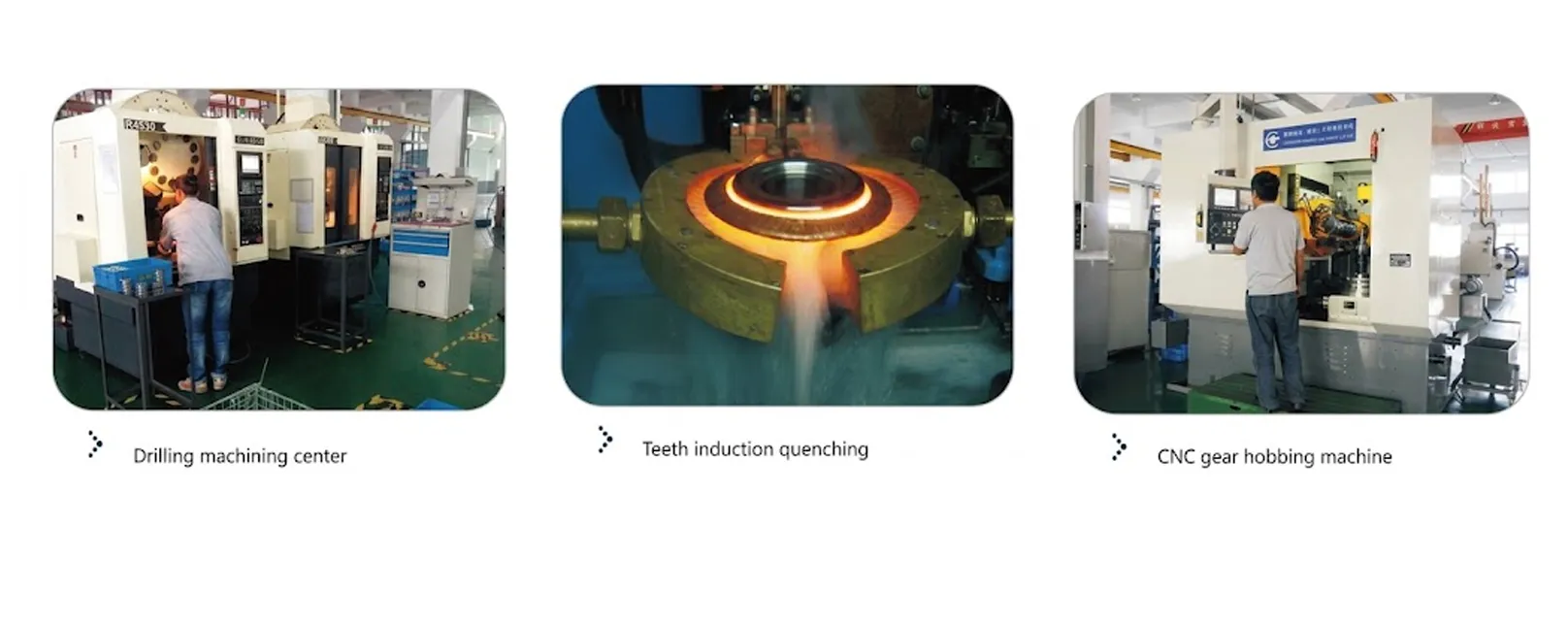
We are a professional timing belt pulley manufacturer with deep roots in mechanical power transmission components. Our production facility specializes in the design and manufacture of aluminum timing pulleys, metric pitch timing pulleys, custom timing pulleys, and related synchronous drive components for industrial customers across six continents. With dedicated CNC machining centers, precision gear hobbing equipment, and rigorous dimensional inspection processes, we maintain consistent product quality across high-volume production runs.
Our engineering team supports customers from component selection through to application validation, offering technical guidance on timing pulley standard sizes, belt selection, center distance calculation, and drive system optimization. Whether you need timing pulley stock from our standard range, or a custom aluminum timing pulley with non-standard bore, modified hub, or special tooth profile, our manufacturing capability covers it.
Werkstatt


8. Related Products — One-Stop Timing Drive Supply
We supply the complete timing drive system, not just individual pulleys. Below are two complementary product families that pair directly with our T5 aluminum timing pulley range — enabling you to source your entire belt drive assembly from a single, qualified supplier.
For linear drive applications, our Metric Pitch Standard Toothed Bars function as rack equivalents in belt-driven linear motion systems. Paired with the T5 aluminum timing pulley, they deliver precise, backlash-minimal linear positioning across the full travel length. Ideal for gantry systems, conveyor indexers, and belt-driven linear actuators where a continuous toothed belt run is not practical. System compatibility is guaranteed when paired with our T5 timing pulley and belt series.
For applications requiring higher torque transmission or belt drives where slippage is acceptable under overload conditions, our V-Pulley range complements the timing pulley product line. V-belt pulleys are widely used in industrial fan drives, pump drives, compressor systems, and agricultural equipment where cost-effective power transmission at moderate speeds is the primary design criterion. Combining our timing belt drive pulleys for precision positioning stages with V-Belt pulleys on ancillary drives is a common machine design approach. View our full V-Pulley product range for specifications and availability.

Häufig gestellte Fragen
Q1. What size T5 metric timing pulley do I need for a belt with 25mm width?+
For a T5 belt with 25 mm width, you need a T5 series timing pulley with a belt width parameter of F = 30 mm (this is the standard pulley body width that accommodates a 25 mm T5 belt). The EP-T5-36 series straight bore timing pulley is precisely this configuration. Your tooth count selection depends on your drive ratio requirement — available options run from 10 to 60 teeth in this series. If you are unsure which tooth count suits your application, share your center distance, drive ratio, and shaft diameter, and our technical team will recommend the correct part code.
Q2. Which industries in Europe commonly use aluminum metric timing pulleys for automation equipment?+
In Europe, aluminum metric timing pulleys are heavily used across packaging machinery (Germany, Italy), printing and labelling equipment (Netherlands, UK), textile machines (Spain, Portugal), and pharmaceutical automation (Switzerland, Germany). The DIN 7721 standard that governs T-series timing pulleys originated in Germany and is widely adopted across EU member states. Engineers in these sectors typically specify aluminum timing pulleys for light-to-medium duty synchronous drives where low inertia and corrosion resistance are important. CE marking requirements under Machinery Directive 2006/42/EC apply to the finished machines, and DIN 7721 pulleys are compliant inputs for CE-marked equipment.
Q3. How do I find a reliable straight bore timing pulley supplier with fast delivery to Australia?+
When sourcing a straight bore timing pulley supplier for Australian customers, look for manufacturers that hold dedicated finished-goods inventory in the T5 series, can issue material certificates and dimensional inspection reports, and have a track record of exporting to Australia with appropriate customs documentation. Air freight from our facility typically reaches Australian capital cities (Sydney, Melbourne, Brisbane, Perth) within 5 to 7 business days for in-stock items. Sea freight for larger orders generally takes 18 to 25 days. We ship DDP, DAP, and FOB depending on customer preference — contact us with your quantity and delivery destination for a precise lead time and freight quote.
Q4. What is the difference between a straight bore timing pulley and a taper lock timing pulley for industrial use?+
A straight bore timing pulley has a cylindrical bore machined directly through the pulley hub, intended to fit over a shaft and be secured with a key, set screw, or interference fit. This is the simpler and more economical design, well-suited for light-to-medium duty applications and shafts up to approximately 40 mm diameter. A taper lock timing pulley uses a separate tapered bushing that is clamped onto the shaft by tightening bolts — this allows higher torque transmission, easier removal after years of service, and accommodation of a wider range of shaft sizes with the same pulley body. For most T5-series metric timing pulley applications in automation, packaging, and precision machinery, the straight bore configuration is the standard choice due to its simplicity and lower cost.
Q5. Where can I get a custom aluminum straight bore timing pulley with a non-standard bore diameter for a UK project?+
We offer custom timing pulleys with non-standard bore diameters, keyway profiles, and hub modifications for customers in the UK and across Europe. For T5-36 series pulleys, custom bore sizes up to the maximum Dm listed for each tooth count are achievable without design modification. For larger bores, extended hub versions can be machined to order. A typical custom timing belt pulley order for the UK market requires 2 to 3 weeks lead time depending on specification complexity. Please submit your dimensional drawing or written specification with required quantities and we will provide a quotation and lead time within 24 hours.
Q6. How do I calculate the correct timing belt length when replacing a worn T5 aluminum timing pulley on a packaging machine?+
Timing belt length is calculated using the formula: Belt Length = 2C + (π/2)(D1 + D2) + (D2 − D1)² / (4C), where C is center distance and D1, D2 are the pitch diameters of the small and large pulleys respectively. For a timing pulley replacement on an existing machine, the easiest approach is to count the number of belt teeth on the old belt and order the same tooth count in the T5 pitch — belt length in mm = teeth count × 5 mm pitch. If the old belt is no longer available, measure the center distance and pitch diameters from the installed pulleys and apply the formula. We can assist with belt selection calculations if you provide your pulley part codes and center distance.
Q7. Are there minimum order quantities when buying metric timing pulleys from a manufacturer for a North American distributor?+
For standard T5 series aluminum metric timing pulleys from stock, our minimum order quantity is typically 10 pieces per part code for distributor orders, though we do accept smaller sample quantities for engineering evaluation. For North American distributors establishing stocking programs, we offer blanket order arrangements with scheduled releases, which can significantly reduce per-unit cost and ensure consistent availability. Prices are provided in USD and include standard packaging for long-haul freight. We do not publish price lists publicly — please contact us with your annual volume estimate per part code and we will provide a detailed quotation.
Q8. Which timing belt types are compatible with an aluminum T5 metric timing pulley for a food industry conveyor application?+
The T5 aluminum timing pulley is designed to work with T5 synchronous belts — trapezoidal tooth profile, 5 mm pitch, available in polyurethane (PU) with steel or aramid tension members, and in neoprene rubber with fiberglass cords. For food industry conveyor applications, polyurethane T5 timing belts are generally preferred as PU resists oil, fat, and mild cleaning chemicals better than neoprene, and PU belts can be manufactured with food-grade compliant plasticizers. The belt should be selected from a manufacturer that can provide FDA and/or EU 10/2011 food-contact compliance documentation for the belt compound. The aluminum pulley itself does not require special certification for most food-adjacent (non-contact) applications, but hard anodizing can be specified for environments where direct food contact is possible.
Q9. What is the maximum RPM rating for an aluminum straight bore timing pulley in the T5 25mm belt width series?+
The maximum operating speed for an aluminum T5 timing pulley depends on tooth count, bore configuration, dynamic balance, and the specific belt being used. As a general engineering guideline for unbalanced straight bore aluminum pulleys in the T5 25 mm belt width series, peripheral speeds up to 25–30 m/s are achievable for pulleys with 20 or more teeth. Smaller pulleys (10–15 teeth) are typically limited to lower peripheral speeds due to the increased polygonal effect at small tooth counts. For applications running above 3,000 RPM, we recommend specifying pulleys that have been dynamically balanced to G6.3 or better (ISO 1940-1). Contact us with your RPM requirement and pulley tooth count for a specific application recommendation.
Herausgeber: PXY
Ähnliche Produkte
-

EP-T 5-mm-Aluminium-Zahnriemenscheibe mit 16 mm Riemenbreite | Zahnriemenscheibe mit gerader Bohrung
-
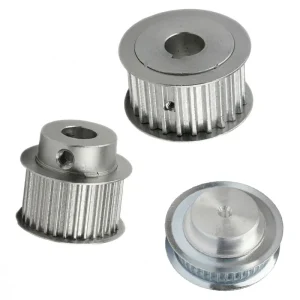
EP-T 10-mm-Zahnriemenscheibe aus Aluminium mit gerader Bohrung – Riemenbreite 50 mm
-
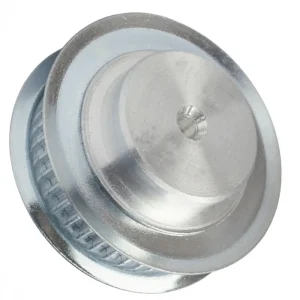
EP-T 10-mm-Zahnriemenscheibe aus Aluminium mit gerader Bohrung – Riemenbreite 16 mm
-
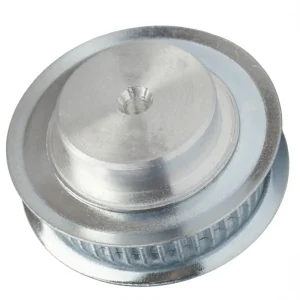
EP-T 10-mm-Zahnriemenscheibe aus Aluminium mit gerader Bohrung – Riemenbreite 25 mm