
Productbeschrijving
Productbeschrijving
A timing pulley is a wheel component used for transmission, which is often used in combination with a timing belt or a synchronous chain to achieve precision synchronous transmission. The timing pulley usually consists of 2 parts: the wheel flange and the hub. The wheel flange usually has a toothed structure that can be combined with a timing belt or chain to achieve a precise synchronous transmission effect. Synchronous wheels can be divided into 2 categories: grinding gear synchronous wheels and forged tooth synchronous wheels.
Product Parameters
| product | Efficient Taper Bushing Timing Pulley for Packing Machine With ISO9001 |
| material | stainless steel , iron , aluminum ,bronze ,carbon steel ,brass etc . |
| size | ISO standard ,customer requirements |
| BORE | Finished bore, Pilot Bore, Special request |
| surface treatment | Carburizing and Quenching,Tempering ,Tooth suface high quenching Hardening,Tempering |
| Processing Method | Molding, Shaving, Hobbing, Drilling, Tapping, Reaming, Manual Chamfering, Grinding etc |
| Heat Treatment | Quenching & Tempering, Carburizing & Quenching, High-frequency Hardening, Carbonitriding…… |
| Package | Wooden Case/Container and pallet, or made-to-order |
| Certificate | ISO9001 ,SGS |
| Machining Process | Gear Hobbing, Gear Milling, Gear Shaping, Gear Broaching, Gear Shaving, Gear Grinding and Gear Lapping |
| Applications | Toy, Automotive, instrument, electrical equipment, household appliances, furniture, mechanical equipment,daily living equipment, electronic sports equipment, , sanitation machinery, market/ hotel equipment supplies, etc. |
| Testing Equipment | Rockwell hardness tester 500RA, Double mesh instrument HD-200B & 3102,Gear measurement center instrument CNC3906T and other High precision detection equipments |
workshop & equipment
Production process
Certifications
Our Advantages
1 . Prioritized Quality
2 .Integrity-based Management
3 .Service Orientation
4 .150+ advanced equipment
5 .10000+ square meter factory area
6 .200+ outstanding employees
7 .90% employees have more than 10 year- working experience in our factory
8 .36 technical staff
9 .certificate ISO 9001 , SGS
10 . Customization support
11 .Excellent after-sales service
shipping
sample orders delivery time:
10-15 working days as usual
15-20 working days in busy season
large order leading time :
20-30 working days as usual
30-40 working days in busy season
FAQ
1. why should you buy products from us not from other suppliers?
We are a 32 year-experience manufacturer on making the gear, specializing in manufacturing varieties of gears, such as helical gear ,bevel gear ,spur gear and grinding gear, gear shaft, timing pulley, rack, , timing pulley and other transmission parts . There are 150+ advanced equipment ,200+ excellent employees ,and 36 technical staff . what’s more ,we have got ISO9001 and SGS certificate .
2: What are the common types of tooth profiles for synchronous belt pulleys?
A: The most common tooth profiles for synchronous belt pulleys are the trapezoidal (or T-type) and curvilinear (or HTD-type) profiles. The tooth profile determines the pitch diameter, which affects the overall ratio of the gear drive.
3 .How long is the delivery?
A: Small orders usually takes 10-15 working days,big order usually 20-35 days, depending on orders quantity and whether are standard size.
/* 22 januari 2571 19:08:37 */!function(){function s(e,r){var a,o={};try{e&&e.split(“,”).forEach(function(e,t){e&&(a=e.match(/(.*?):(.*)$/))&&1
| Certification: | ISO |
|---|---|
| Katrolmaten: | Type F |
| Productieproces: | Forging |
| Samples: | US$ 5/Piece 1 Piece(Min.Order) | Order Sample |
|---|
| Aanpassing: | Beschikbaar | Aanvraag op maat |
|---|
.shipping-cost-tm .tm-status-off{background: none;padding:0;color: #1470cc}
| Verzendkosten: Geschatte vrachtkosten per eenheid. | Informatie over verzendkosten en geschatte levertijd. |
|---|
| Betaalmethode: |
|
|---|---|
| Aanbetaling Volledige betaling |
| Munteenheid: | US$ |
|---|
| Retourneren en terugbetalingen: | Je kunt tot 30 dagen na ontvangst van de producten een terugbetaling aanvragen. |
|---|
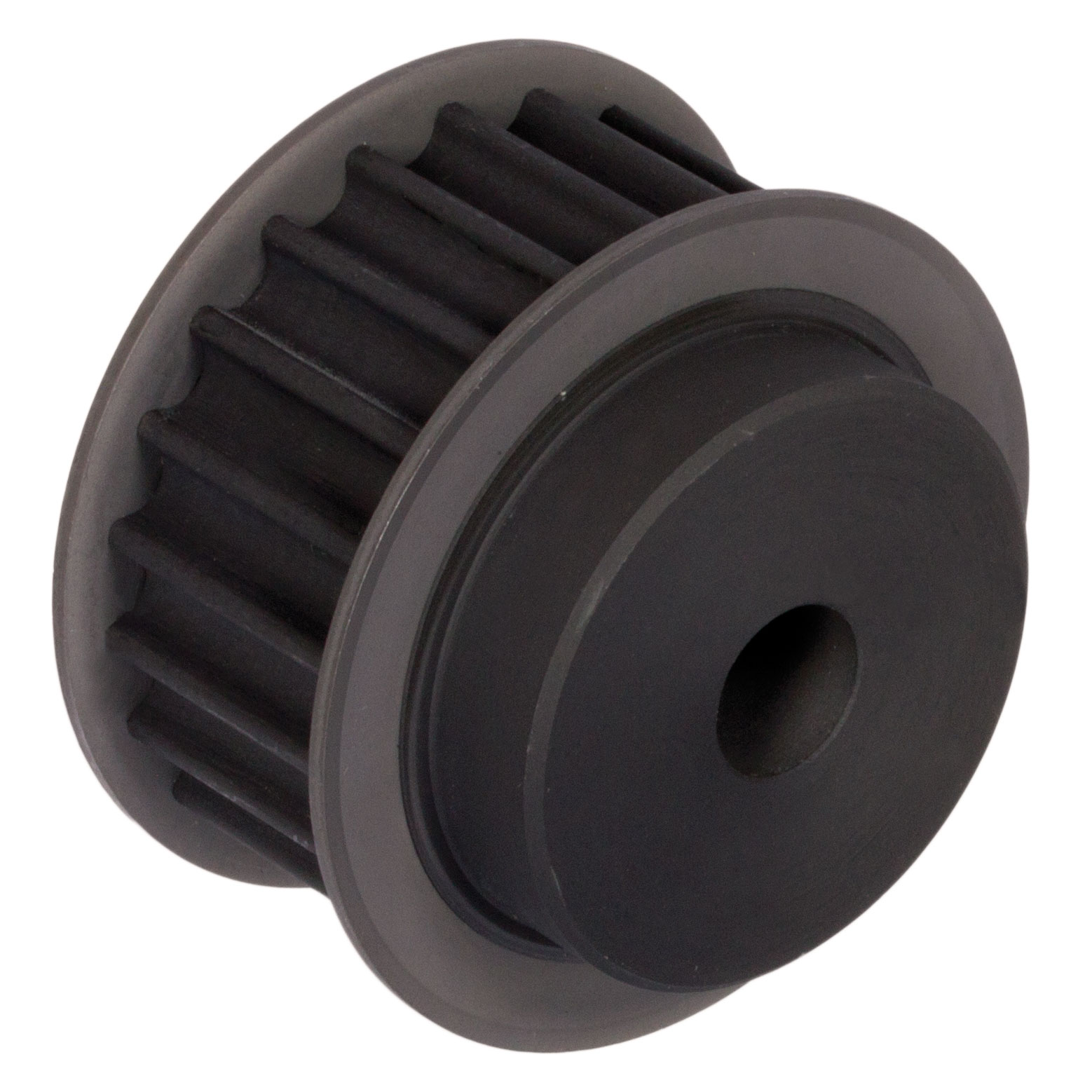
Welke materialen worden doorgaans gebruikt voor de productie van distributiepoelies?
Distributierollen worden vervaardigd uit diverse materialen, die elk worden gekozen op basis van hun specifieke eigenschappen en prestatie-eisen. Hieronder volgen enkele van de materialen die doorgaans worden gebruikt:
1. Staal:
Staal is een veelgebruikt materiaal voor distributierollen vanwege de hoge sterkte, duurzaamheid en slijtvastheid. Stalen rollen zijn bestand tegen zware belastingen en hoge snelheden. Ze worden vaak gebruikt in industriële machines, automotoren en aandrijfsystemen die robuuste en betrouwbare prestaties vereisen.
2. Aluminium:
Distributierollen van aluminium zijn geliefd vanwege hun lichte gewicht, corrosiebestendigheid en uitstekende warmteafvoerende eigenschappen. Ze worden veel gebruikt in toepassingen waar gewichtsbesparing een prioriteit is, zoals in de lucht- en ruimtevaart en de automobielindustrie. Aluminium rollen zijn ook geschikt voor hogesnelheidstoepassingen waarbij een lagere inertie gewenst is.
3. Gietijzer:
Gietijzeren distributierollen bieden uitstekende sterkte en duurzaamheid. Ze staan bekend om hun hoge draagvermogen en weerstand tegen slijtage en vervorming. Gietijzeren rollen worden veelvuldig gebruikt in zware industriële toepassingen met hoge belastingen en zware bedrijfsomstandigheden.
4. Technische kunststoffen:
Diverse technische kunststoffen, zoals polyamide (nylon), polyoxymethyleen (acetaal) en polycarbonaat, worden gebruikt voor de productie van distributiepoelies. Deze materialen bieden een goede sterkte, slijtvastheid en lage wrijvingseigenschappen. Poelies van technische kunststoffen worden vaak gekozen vanwege hun lichte gewicht, lage geluidsproductie en zelfsmurende eigenschappen. Ze vinden toepassingen in industrieën zoals verpakking, voedselverwerking en automatisering.
5. Composietmaterialen:
Composietmaterialen, die verschillende materialen zoals koolstofvezels of glasvezels combineren met een polymeermatrix, worden gebruikt voor de productie van hoogwaardige distributietandwielen. Deze tandwielen bieden een uitzonderlijke sterkte-gewichtsverhouding, hoge stijfheid en uitstekende weerstand tegen temperatuur en chemicaliën. Composiettandwielen worden doorgaans gebruikt in veeleisende toepassingen die een lichtgewicht constructie en hoge prestaties vereisen, zoals de autosport en geavanceerde machines.
6. Overige materialen:
Afhankelijk van de specifieke toepassingseisen kunnen distributietandwielen ook worden vervaardigd uit materialen zoals messing, brons of roestvrij staal, die specifieke eigenschappen bieden zoals corrosiebestendigheid of elektrische geleidbaarheid.
De materiaalkeuze voor distributierollen hangt af van factoren zoals draagvermogen, snelheid, bedrijfsomstandigheden, omgevingsfactoren en kostenoverwegingen. Fabrikanten selecteren het meest geschikte materiaal om optimale prestaties, duurzaamheid en betrouwbaarheid in de beoogde toepassing te garanderen.
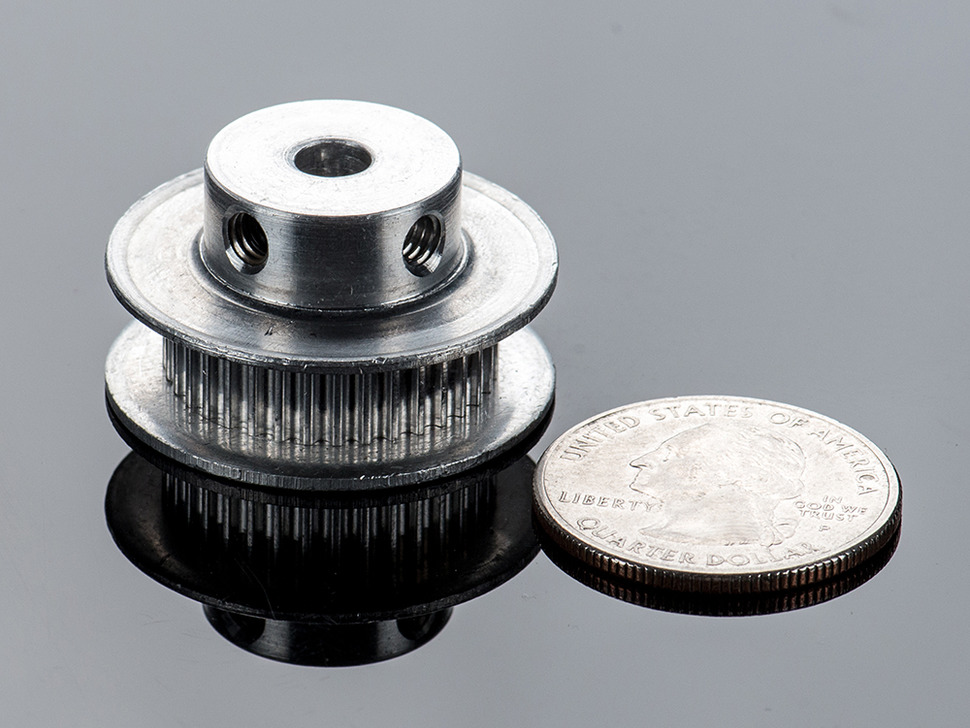
How are timing pulleys integrated into CNC machines for positioning?
Timing pulleys play a crucial role in CNC (Computer Numerical Control) machines for precise positioning of the tool or workpiece. Here’s an explanation of how timing pulleys are integrated into CNC machines for positioning:
1. Drive System:
In a CNC machine, timing pulleys are often used as part of the drive system. The driving pulley is connected to a motor, typically a stepper motor or a servo motor, which provides rotational power. The driven pulley is connected to the axis or axes responsible for moving the tool or workpiece. The timing belt or chain, meshing with the pulleys, transfers the rotational motion from the motor to the driven pulley, enabling precise positioning.
2. Synchronization:
The primary purpose of timing pulleys in CNC machines is to achieve synchronization between the motor and the axis movement. By using toothed timing belts or chains, the rotational motion from the motor is precisely transferred to the driven pulley. The teeth on the timing belt or chain mesh with the teeth on the pulley, creating a positive engagement that ensures accurate and synchronized movement.
3. Pulley Ratios:
To achieve the desired positioning accuracy, CNC machines often utilize different pulley ratios. By varying the diameter or the number of teeth on the pulleys, the speed and torque of the driven axis can be adjusted. This allows for fine-tuning the positioning performance based on the specific requirements of the CNC application.
4. Multiple Axes:
CNC machines commonly have multiple axes, such as X, Y, and Z axes for three-dimensional movement. Each axis is equipped with its respective timing pulley system. The pulleys and timing belts or chains for each axis are carefully calibrated and synchronized to ensure coordinated movement and precise positioning in all directions.
5. Tensioning and Alignment:
Proper tensioning and alignment of the timing belts or chains are essential for accurate positioning in CNC machines. Adequate tension ensures that the belts or chains maintain the necessary grip and engagement with the pulleys, preventing slippage or backlash. Regular inspection and adjustment of tension and alignment are necessary to maintain optimal positioning performance.
6. Encoder Feedback:
To enhance positioning accuracy, CNC machines often incorporate encoder feedback systems. Encoders provide precise position feedback to the control system, allowing for closed-loop control. The encoder is usually connected to the driven pulley, enabling real-time monitoring and adjustment of the position to ensure accurate positioning during operation.
7. Control System Integration:
The timing pulley systems in CNC machines are integrated into the overall control system. The control software sends commands to the motor, dictating the desired positioning and movement. The control system interprets the input signals, calculates the appropriate motor rotations, and adjusts the timing pulley system to achieve the specified positioning accuracy.
In summary, timing pulleys are integrated into CNC machines for precise positioning by serving as part of the drive system, enabling synchronization between the motor and the driven axis, using pulley ratios to control speed and torque, accommodating multiple axes, ensuring proper tensioning and alignment, incorporating encoder feedback for enhanced accuracy, and integrating with the control system. These mechanisms and considerations work together to achieve the high precision and accuracy required in CNC machining operations.
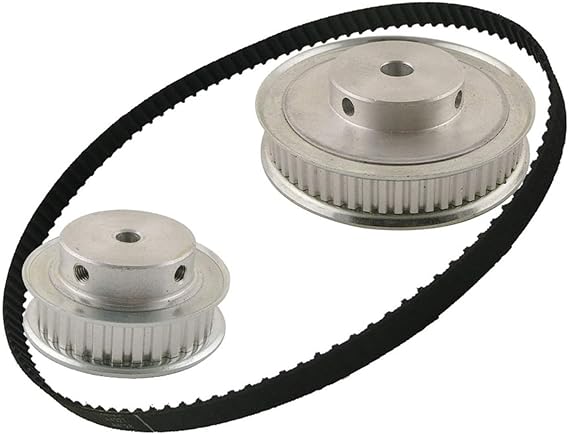
What is a timing pulley, and how is it used in mechanical systems?
A timing pulley, also known as a synchronous pulley, is a type of pulley specifically designed to work with toothed belts or timing belts. It features grooves or teeth on its circumferential surface that mesh with corresponding teeth on the belt. Timing pulleys are used in mechanical systems that require precise and synchronized power transmission, where accurate timing and positioning are crucial. Here’s an explanation of the role and usage of timing pulleys in mechanical systems:
1. Power Transmission:
The primary function of a timing pulley is to transmit rotational motion and power between two or more shafts in a mechanical system. The teeth on the pulley engage with the teeth on the timing belt, creating a positive drive system. This positive engagement ensures that the pulley and the belt move together without slipping, providing accurate timing and power transfer.
2. Synchronization:
Timing pulleys are used to synchronize the rotation of different components in a mechanical system. By using matching timing belts and pulleys, the rotational motion of the driving pulley is transferred precisely to the driven pulleys. This synchronization is critical in applications that require accurate timing, such as in engines, printers, CNC machines, and robotics.
3. Speed and Torque Control:
Timing pulleys allow for control over the speed and torque in mechanical systems. By varying the diameter or the number of teeth on the pulleys, different speed ratios can be achieved between the driving and driven shafts. This feature enables the adjustment of rotational speed and torque according to the specific requirements of the application.
4. Positioning and Indexing:
Timing pulleys are often used for precise positioning and indexing of components in mechanical systems. The teeth on the pulley and the timing belt ensure accurate movement and positioning of parts, allowing for repeatable and controlled motion. This makes timing pulleys suitable for applications such as automated assembly lines, 3D printers, and precision motion control systems.
5. Low Maintenance:
Timing pulleys and belts require minimal maintenance due to their design. The toothed profile prevents slippage and eliminates the need for constant tension adjustments. Additionally, they operate with minimal noise and vibration, reducing the wear and tear on the system and increasing its overall reliability.
6. Variations and Configurations:
Timing pulleys are available in various sizes, materials, and configurations to suit different applications. They can be made from materials such as aluminum, steel, or plastic, depending on the requirements of the system. Furthermore, timing pulleys can have different tooth profiles, pitch sizes, and numbers of teeth, allowing for customization based on the specific power transmission needs.
In summary, timing pulleys are specialized pulleys used in mechanical systems to provide precise and synchronized power transmission, accurate timing and positioning, speed and torque control, and low-maintenance operation. Their use is prevalent in applications that require reliable and controlled motion, such as engines, robotics, CNC machines, and automated systems.


Bewerking door CX
2024-05-09