Productbeschrijving
Productbeschrijving
Product Type | XL, H, HTD8M,5M,3M, AT3, AT5 standard gear, or according customer drawing to make. |
Materiaal: | Carbon Steel, Brass, Aluminium, Stainless steel, Plastic, POM, Delrin, Titanium Alloy etc. |
Process method | CNC Turning, hobbing gear |
Surface finish: | Chrome plating, Anodization, Powder coating, blackening, Sand blasting, Brushing & ploshing,Electrophoresis etc. |
OEM & ODM Service | Beschikbaar |
Design Software | PRO/E, Auto CAD, Solid Works |
Trade Terms: | FOB,,CIF,EXW |
Payment Terms: | T/T, L/C, |
Packing: | Foam, Carton, Standard Wooden boxes |
Capacity | 8,000~1,5000 pcs per month |
Delivery | 20-30 days after receiving PO |
Applications | Automotive Parts,hydraulics, compressors,Industrial equipments, transmission parts, etc. |
Our services: | CNC Machining, Milling, Stamping, Sheet metal fabricating, and Die-Casting |
Product show
Manufacture process
FAQ
Q1. What is your terms of packing?
A: Generally, we pack our goods in single color box. If you have special request about packing, pls negotiate with us in advance, we can pack the goods as your request.
Q2. What is your terms of payment?
A: T/T 30% as deposit, and 70% before delivery. We’ll show you the photos of the products and packages
before you pay the balance. Other payments terms, pls negotiate with us in advance, we can discuss.
Q3. What is your terms of delivery?
A: EXW, FOB, CFR, CIF.
Q4. How about your delivery time?
A: Generally, it will take 25 to 30 days after receiving your advance payment. The specific delivery time depends
on the items and the quantity of your order.
Q5. Can you produce according to the samples?
A: Yes, we can produce by your samples or technical drawings. We can build the molds and fixtures.
Q6. What is your sample policy?
A: We can supply the sample if we have ready parts in stock, but the customers have to pay the sample cost and
the courier cost.We welcome sample order.
Q7. Do you test all your goods before delivery?
A: Yes, we have 100% test before delivery
Q8: How do you make our business long-term and good relationship?
1. We keep good quality and competitive price to ensure our customers benefit ;
2. We respect every customer as our friend and we sincerely do business and make friends with them,
no matter where they come from.
/* March 10, 2571 17:59:20 */!function(){function s(e,r){var a,o={};try{e&&e.split(“,”).forEach(function(e,t){e&&(a=e.match(/(.*?):(.*)$/))&&1
| Certification: | CE, ISO |
|---|---|
| Katrolmaten: | Type C |
| Productieproces: | Cutting Tooth |
| Materiaal: | Aluminum Alloy |
| Surface Treatment: | Oxygenation |
| Application: | Chemical Industry, Grain Transport, Mining Transport, Power Plant |
| Samples: | US$ 2/Piece 1 Piece(Min.Order) | |
|---|
| Aanpassing: | Beschikbaar | Aanvraag op maat |
|---|
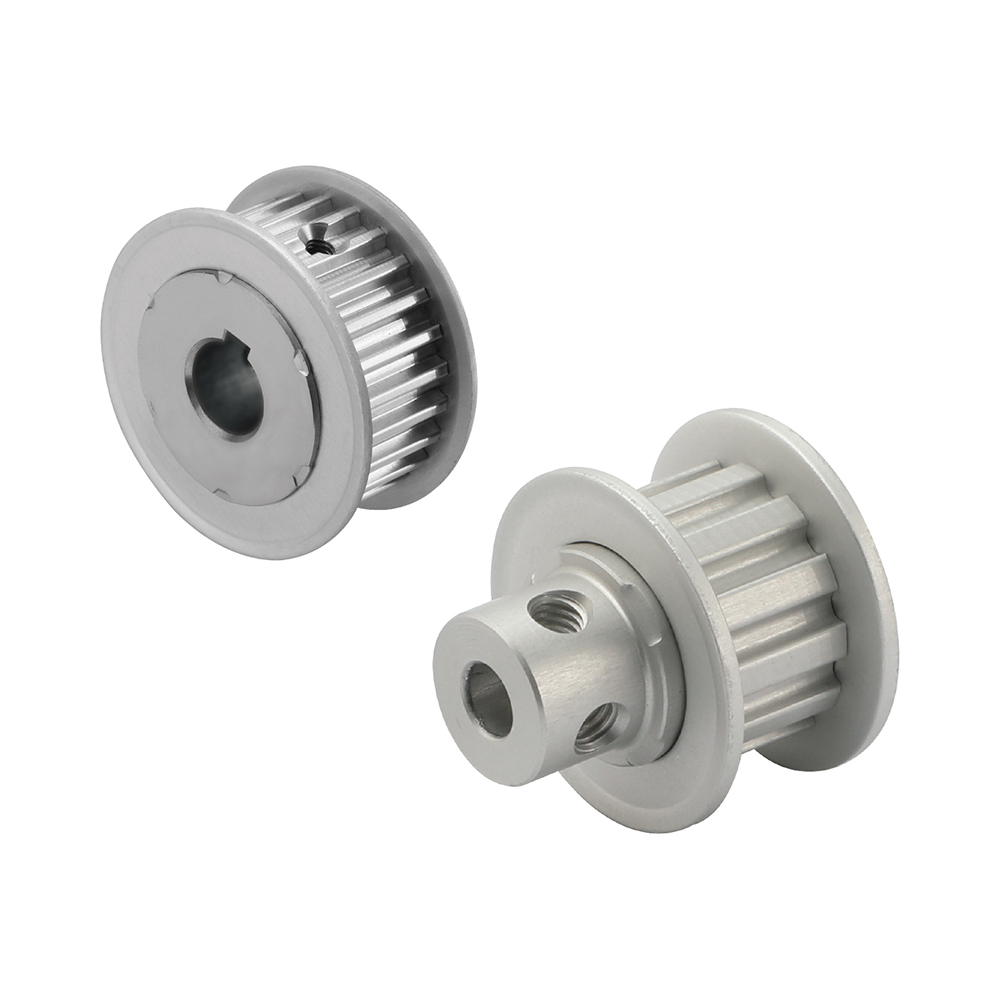
How do timing pulleys contribute to efficient power distribution?
Timing pulleys play a crucial role in ensuring efficient power distribution in various mechanical systems. Here’s how timing pulleys contribute to efficient power distribution:
1. Precise Timing and Synchronization:
Timing pulleys, in conjunction with timing belts or chains, synchronize the rotation of different components within a system. By maintaining precise timing between the input and output shafts, timing pulleys ensure that power is distributed accurately and efficiently. This synchronization prevents power loss due to misalignment or timing discrepancies.
2. Positive Drive System:
Timing pulleys create a positive drive system when paired with timing belts or chains. The teeth on the pulleys interlock with the teeth on the belt or chain, creating a firm grip that eliminates slippage. This positive drive ensures that power is efficiently transmitted from the driving pulley to the driven pulley without any energy loss.
3. Load Distribution:
Timing pulleys help distribute the load evenly across the system by transmitting power from the driving pulley to the driven pulley. The pulley’s design and tooth profile enable the load to be distributed over a larger contact area, reducing stress concentration on individual components. This even load distribution enhances the overall efficiency of power transmission.
4. Reduced Friction and Wear:
Timing pulleys, particularly those made of materials with low friction coefficients, minimize friction and wear during power transmission. The smooth engagement between the pulley teeth and the belt or chain reduces energy losses caused by friction. Additionally, materials with excellent wear resistance properties extend the lifespan of the pulleys, ensuring long-term efficiency.
5. Tension Control:
Timing pulleys, in combination with tensioner and idler pulleys, help maintain the appropriate tension in the timing belt or chain. Proper tension control ensures that the belt or chain remains securely engaged with the pulleys, preventing power loss due to slippage. By maintaining optimal tension, timing pulleys contribute to efficient power distribution throughout the system.
6. System Optimization:
Timing pulleys allow for system optimization by providing flexibility in gear ratios and power transmission configurations. By selecting pulleys with different diameters or tooth profiles, engineers can adjust the speed and torque distribution within the system. This optimization ensures that power is distributed efficiently, matching the requirements of the specific application.
Overall, timing pulleys ensure efficient power distribution by providing precise timing, creating a positive drive system, evenly distributing loads, reducing friction and wear, controlling tension, and enabling system optimization. These factors contribute to the overall efficiency, reliability, and performance of mechanical systems where timing pulleys are utilized.
Can timing pulleys be part of conveyor systems for material handling?
Yes, timing pulleys can indeed be part of conveyor systems for material handling. Here’s an explanation of how timing pulleys are utilized in conveyor systems:
Conveyor systems are commonly used in industries such as manufacturing, logistics, and packaging to transport materials or products from one location to another. Timing pulleys play a crucial role in these systems by facilitating the movement and control of the conveyor belts.
1. Power Transmission:
Timing pulleys are used in conveyor systems to transmit power from the motor to the conveyor belt. The motor drives the driving pulley, which is connected to the motor shaft, while the driven pulley is connected to the conveyor belt. The rotational motion of the motor is transferred to the driven pulley through a timing belt or chain, causing the conveyor belt to move. Timing pulleys ensure efficient power transmission, allowing the conveyor system to handle different loads and operate reliably.
2. Speed Control:
Timing pulleys allow for speed control in conveyor systems. By varying the diameter or the number of teeth on the driving and driven pulleys, different gear ratios can be achieved. This enables operators to adjust the speed of the conveyor belt according to the specific requirements of the material handling process. Speed control is important for optimizing production flow, ensuring proper material handling, and preventing damage or spillage of the transported items.
3. Synchronization:
Timing pulleys ensure precise and synchronized movement of the conveyor belt. The teeth on the timing belt or chain mesh with the teeth on the pulleys, creating positive engagement. This ensures that the conveyor belt moves in a coordinated manner and prevents slippage or misalignment. Synchronization is crucial for maintaining the integrity of the material handling process, especially when dealing with delicate or fragile items that require gentle handling.
4. Tensioning and Tracking:
Timing pulleys are used in conveyor systems to apply tension to the timing belt or chain and maintain proper tracking of the conveyor belt. Tensioning devices, such as idler pulleys or tensioners, are employed to adjust the tension and ensure the correct alignment of the timing belt or chain on the pulleys. Proper tensioning and tracking prevent belt or chain slippage, reduce wear and tear, and promote smooth and reliable operation of the conveyor system.
5. Diverse Conveyor Configurations:
Timing pulleys offer flexibility in designing conveyor systems for various material handling applications. They can be used in straight conveyor configurations, where the driving and driven pulleys are aligned on the same plane. Additionally, timing pulleys can be employed in curved conveyor systems, where the pulleys are designed to facilitate smooth and controlled changes in the conveyor belt’s direction. This allows for efficient material flow and adaptability to different layouts and spatial constraints.
By incorporating timing pulleys into conveyor systems, material handling processes can be optimized for efficiency, accuracy, and reliability. The precise movement, speed control, synchronization, and tensioning provided by timing pulleys contribute to smooth operation, reduced downtime, and improved productivity in industrial material handling applications.
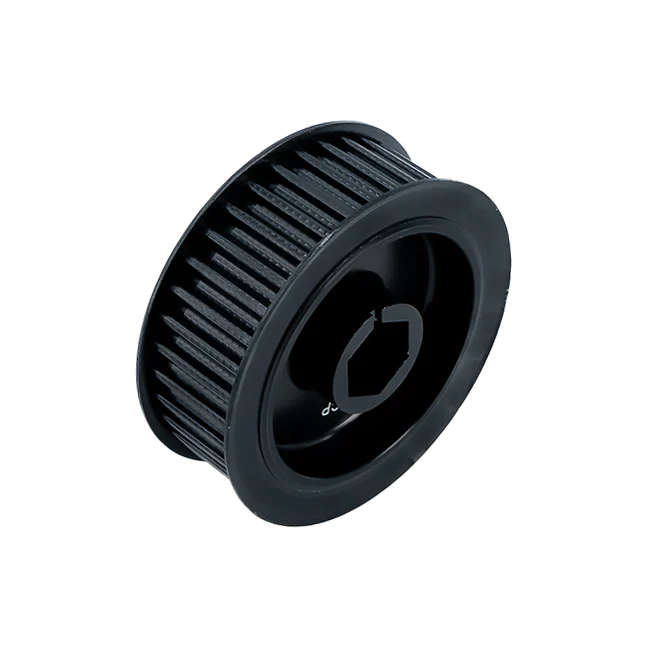
In welke industrieën worden distributietandwielen veelvuldig gebruikt?
Tandwieloverbrengingen vinden toepassing in diverse industrieën waar nauwkeurige bewegingscontrole, precieze timing en betrouwbare krachtoverbrenging cruciaal zijn. Hieronder volgen enkele voorbeelden van industrieën waar tandwieloverbrengingen veelvuldig worden gebruikt:
1. Productie en automatisering:
Tandwieloverbrengingen worden veelvuldig gebruikt in de productie- en automatiseringsindustrie. Ze spelen een essentiële rol in transportsystemen, robotarmen, pick-and-place machines, verpakkingsmachines en assemblagelijnen. Tandwieloverbrengingen zorgen voor nauwkeurige beweging, synchronisatie en positionering van componenten, waardoor efficiënte en geautomatiseerde productieprocessen mogelijk worden.
2. Automobielindustrie en transport:
De auto- en transportindustrie zijn afhankelijk van distributiepoelies voor de motortiming en krachtoverbrenging. Distributiepoelies worden in verbrandingsmotoren gebruikt om de rotatie van de nokkenas en de krukas te synchroniseren, waardoor een correcte kleptiming wordt gegarandeerd. Ze worden ook toegepast in diverse voertuigsystemen, zoals de besturing, airconditioning en aandrijflijncomponenten.
3. Lucht- en ruimtevaart:
In de lucht- en ruimtevaartindustrie worden distributietandwielen gebruikt in toepassingen die nauwkeurige bewegingscontrole en synchronisatie vereisen. Ze worden toegepast in vliegtuigmotoren, vluchtbesturingssystemen, landingsgestelmechanismen en vleugelklepsystemen. Distributietandwielen dragen bij aan de veiligheid, efficiëntie en betrouwbaarheid van vliegtuigoperaties.
4. Medische zorg en gezondheidszorg:
In de medische en gezondheidszorg worden timingrollen gebruikt in medische apparaten, diagnostische apparatuur, chirurgische robots en beeldvormingssystemen. Ze maken nauwkeurige beweging en positionering mogelijk in apparatuur zoals infuuspompen, robotchirurgiesystemen en CT-scanners. Timingrollen dragen bij aan nauwkeurige procedures, patiëntveiligheid en betere zorgresultaten.
5. Printen en papierverwerking:
Drukpersen en papierverwerkingsapparatuur maken gebruik van timingrollen om een nauwkeurige papieraanvoer, uitlijning en spanningsregeling te garanderen. Timingrollen maken een accurate en gesynchroniseerde beweging van papierrollen, vellen of etiketten mogelijk, wat zorgt voor drukwerk van hoge kwaliteit en efficiënte papierverwerkingsprocessen.
6. Textiel- en kledingindustrie:
In de textiel- en kledingindustrie worden tandwielen gebruikt in textielmachines, breimachines en naaimachines. Ze helpen bij het controleren van de beweging van stof, garen en draden, waardoor nauwkeurige en gesynchroniseerde processen worden gegarandeerd. Tandwielen dragen bij aan de efficiëntie en kwaliteit van de textiel- en kledingproductieprocessen.
7. Industriële automatisering en robotica:
Geleiderandrollen worden veelvuldig gebruikt in industriële automatisering en robotica. Ze worden toegepast in robotarmen, CNC-machines, geautomatiseerde voertuigen (AGV's) en materiaalbehandelingssystemen. Geleiderandrollen maken nauwkeurige en gesynchroniseerde bewegingen mogelijk, wat de productiviteit, nauwkeurigheid en efficiëntie van industriële automatiseringsprocessen verbetert.
8. Halfgeleiders en elektronica:
De halfgeleider- en elektronica-industrie gebruikt timingrollen in apparatuur zoals waferhandlingsystemen, pick-and-place-machines en halfgeleiderproductieapparatuur. Timingrollen zorgen voor een nauwkeurige positionering, uitlijning en synchronisatie van delicate componenten, wat bijdraagt aan de productie van hoogwaardige elektronische apparaten.
Dit zijn slechts enkele voorbeelden van industrieën waar distributierollen veelvuldig worden gebruikt. Hun veelzijdigheid en het vermogen om nauwkeurige bewegingscontrole te bieden, maken ze waardevolle componenten in diverse toepassingen in verschillende sectoren.


Bewerking door CX
2024-02-03