
Описание продукта
OEM ODM Customized High Torque Timing Pulley With Stainless Steel
Synchronous belt pulley transmission is composed of an annular belt with equidistant teeth on the inner peripheral surface and a belt pulley with corresponding teeth. During operation, the belt teeth mesh with the tooth slots of the belt pulley to transmit motion and power. It is a new belt transmission that integrates the respective advantages of belt transmission, chain transmission and gear transmission.
Параметры продукта
| Product | standard timing belt pulley & idler pulley |
| Customized | OEM, drawings or samples customized |
| Teeth type | Normal Torque Drive Type:MXL,XL,L,H,XH,XXH High Torque Drive Type:S2M,S3M,S5M,S8M,HTD2M,HTD3M,HTD5M,HTD8M,P2M,P3M,P5M,P8M High Precision Position Drive Type:2GT,3GT,5GT,8YU Light Load Drive Type:T5,T10,T20 Heavy Load Drive Type:AT5,AT10,AT20 |
| Basic shape | Type A,Type B,Type D,Type E,Type F,Type K |
| Adaption | Adapt to 1/4 inch,5/16 inch,1/2 inch, 3/8inch, 2/25inch, 1/5inch belt |
| surface treatment | Natural color anodizing,Black anodizing,Hard anodizing,Ni-plating,Blackening |
| Material | 6061(aluminum),S45C(45# steel),SUS304(Stainless steel) |
| Bore | Pilot bore, Taper bore and Customized bore. |
| Tolerance Control | Outer diameter ±0.005mm Length dimension ±0.05mm |
| Standard | DIN, ISO/GB, AGMA, JIS |
| Teeth Accuracy | DIN Class 4, ISO/GB Classs 4, AGMA Class 13, JIS Class 0 |
| Weight | Max 15Tons |
| testing equipment | projecting apparatus,salt spray test,durometer,and coating thickness tester,2D projector |
| producing equipment | CNC machine,automatic lathe machine,stamping machine,CNC milling machine,rolling machine,lasering,tag grinding machine etc. |
| Процесс обработки | Gear Hobbing, Gear Milling, Gear Shaping, Gear Broaching,Gear Shaving, Gear Grinding and Gear Lapping |
| Application industry | Robot industry,Medical industry,Making machine industry,Automation industry,3C industry equipment,Packaging industry,UAV industry,New energy industry. |
Company Profile
Packaging & Shipping
| lead time | 10-15 working days as usual,30days in busy season,it will based on the detailed order quantity |
| Delivery of samples | by DHL,Fedex,UPS,TNT,EMS |
Часто задаваемые вопросы
| Main markets | Southeast Asia, North America, Eastern Europe, Mid-East, West Europe |
| How to order | *You send us drawing or sample |
| *We carry through project assessment | |
| *We give you our design for your confirmation | |
| *We make the sample and send it to you after you confirmed our design | |
| *You confirm the sample then place an order and pay us 30% deposit | |
| *We start producing | |
| *When the goods is done,you pay us the balance after you confirmed pictures or tracking numbers | |
| *Trade is done,thank you! |
/* 22 января 2571 19:08:37 */!function(){function s(e,r){var a,o={};try{e&&e.split(“,).forEach(function(e,t){e&&(a=e.match(/(.*?):(.*)$/))&&1
| Сертификация: | CE, ISO |
|---|---|
| Размеры шкивов: | Type B |
| Производственный процесс: | Ковка |
| Материал: | Aluminum |
| Surface Treatment: | Electroplating |
| Application: | Chemical Industry, Grain Transport, Mining Transport, Power Plant, Printing Machinery |
| Образцы: | US$ 10/Piece 1 штука (минимальный заказ) | |
|---|
| Настройка: | Доступный | Индивидуальный запрос |
|---|
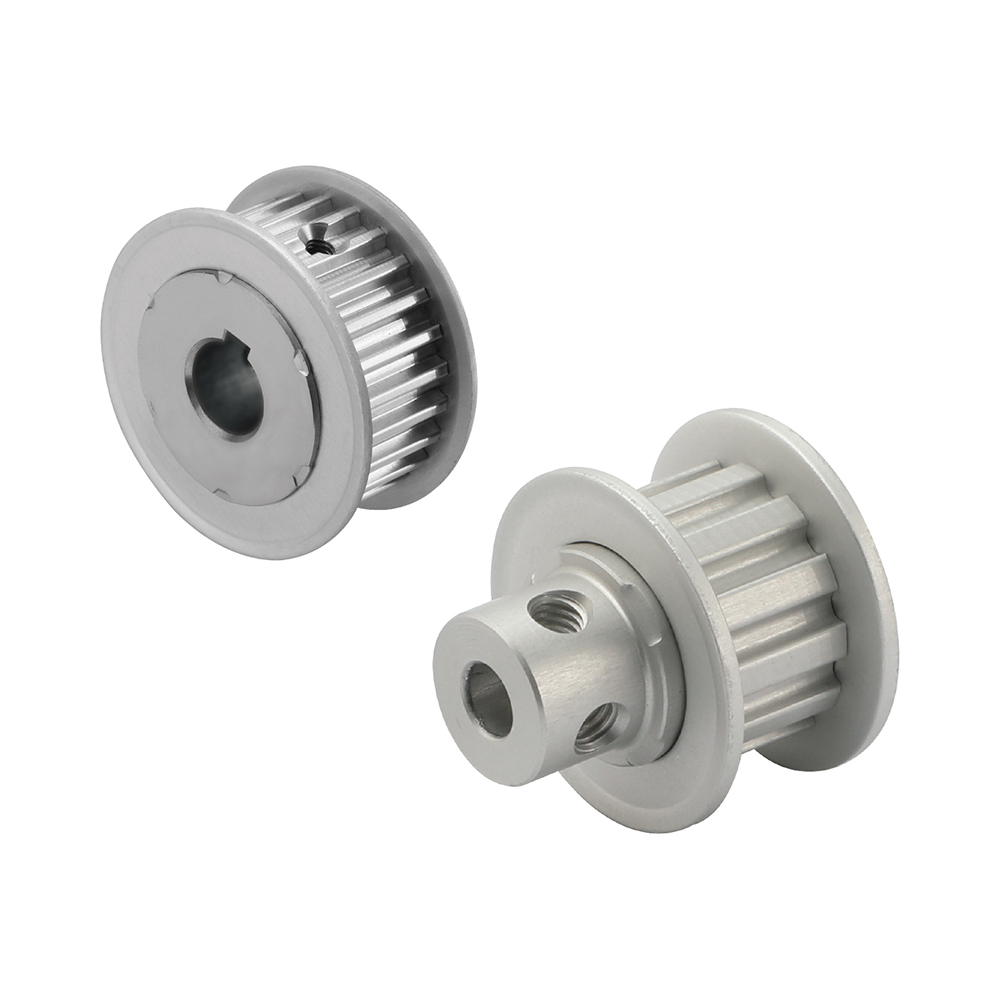
Каким образом зубчатые шкивы способствуют эффективному распределению мощности?
Шкивы механизма синхронизации играют решающую роль в обеспечении эффективного распределения мощности в различных механических системах. Вот как шкивы механизма синхронизации способствуют эффективному распределению мощности:
1. Точное время и синхронизация:
Шкивы синхронизации, в сочетании с зубчатыми ремнями или цепями, синхронизируют вращение различных компонентов в системе. Поддерживая точную синхронизацию между входным и выходным валами, шкивы синхронизации обеспечивают точное и эффективное распределение мощности. Эта синхронизация предотвращает потери мощности из-за смещения или расхождений во времени.
2. Система принудительного привода:
В сочетании с зубчатыми ремнями или цепями зубчатые шкивы создают надежную приводную систему. Зубья шкивов зацепляются с зубьями ремня или цепи, обеспечивая прочное сцепление, исключающее проскальзывание. Эта надежная передача обеспечивает эффективную передачу мощности от ведущего шкива к ведомому без потерь энергии.
3. Распределение нагрузки:
Шкивы с зубчатой передачей помогают равномерно распределять нагрузку по системе, передавая мощность от ведущего шкива к ведомому. Конструкция шкива и профиль зубьев позволяют распределять нагрузку по большей площади контакта, снижая концентрацию напряжений на отдельных компонентах. Такое равномерное распределение нагрузки повышает общую эффективность передачи мощности.
4. Снижение трения и износа:
Шкивы зубчатой передачи, особенно изготовленные из материалов с низким коэффициентом трения, минимизируют трение и износ при передаче мощности. Плавное зацепление зубьев шкива с ремнем или цепью снижает потери энергии, вызванные трением. Кроме того, материалы с превосходными износостойкими свойствами продлевают срок службы шкивов, обеспечивая долговременную эффективность.
5. Контроль натяжения:
Шкивы механизма газораспределения в сочетании с натяжными и направляющими шкивами помогают поддерживать надлежащее натяжение ремня или цепи газораспределения. Правильный контроль натяжения гарантирует надежное зацепление ремня или цепи со шкивами, предотвращая потери мощности из-за проскальзывания. Поддерживая оптимальное натяжение, шкивы механизма газораспределения способствуют эффективному распределению мощности по всей системе.
6. Оптимизация системы:
Шкивы с зубчатой передачей позволяют оптимизировать систему, обеспечивая гибкость в выборе передаточных чисел и конфигураций передачи мощности. Выбирая шкивы с различными диаметрами или профилями зубьев, инженеры могут регулировать распределение скорости и крутящего момента в системе. Такая оптимизация гарантирует эффективное распределение мощности в соответствии с требованиями конкретного применения.
В целом, зубчатые шкивы обеспечивают эффективное распределение мощности за счет точной синхронизации, создания надежной приводной системы, равномерного распределения нагрузок, снижения трения и износа, контроля натяжения и оптимизации системы. Эти факторы способствуют общей эффективности, надежности и производительности механических систем, в которых используются зубчатые шкивы.
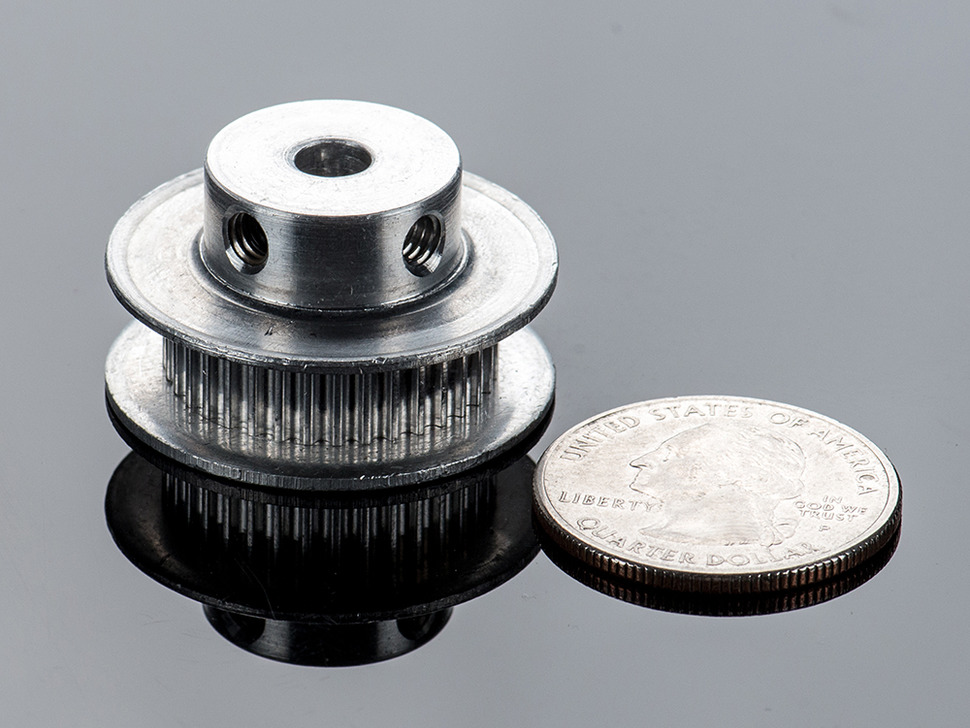
How are timing pulleys integrated into CNC machines for positioning?
Timing pulleys play a crucial role in CNC (Computer Numerical Control) machines for precise positioning of the tool or workpiece. Here’s an explanation of how timing pulleys are integrated into CNC machines for positioning:
1. Drive System:
In a CNC machine, timing pulleys are often used as part of the drive system. The driving pulley is connected to a motor, typically a stepper motor or a servo motor, which provides rotational power. The driven pulley is connected to the axis or axes responsible for moving the tool or workpiece. The timing belt or chain, meshing with the pulleys, transfers the rotational motion from the motor to the driven pulley, enabling precise positioning.
2. Synchronization:
The primary purpose of timing pulleys in CNC machines is to achieve synchronization between the motor and the axis movement. By using toothed timing belts or chains, the rotational motion from the motor is precisely transferred to the driven pulley. The teeth on the timing belt or chain mesh with the teeth on the pulley, creating a positive engagement that ensures accurate and synchronized movement.
3. Pulley Ratios:
To achieve the desired positioning accuracy, CNC machines often utilize different pulley ratios. By varying the diameter or the number of teeth on the pulleys, the speed and torque of the driven axis can be adjusted. This allows for fine-tuning the positioning performance based on the specific requirements of the CNC application.
4. Multiple Axes:
CNC machines commonly have multiple axes, such as X, Y, and Z axes for three-dimensional movement. Each axis is equipped with its respective timing pulley system. The pulleys and timing belts or chains for each axis are carefully calibrated and synchronized to ensure coordinated movement and precise positioning in all directions.
5. Tensioning and Alignment:
Proper tensioning and alignment of the timing belts or chains are essential for accurate positioning in CNC machines. Adequate tension ensures that the belts or chains maintain the necessary grip and engagement with the pulleys, preventing slippage or backlash. Regular inspection and adjustment of tension and alignment are necessary to maintain optimal positioning performance.
6. Encoder Feedback:
To enhance positioning accuracy, CNC machines often incorporate encoder feedback systems. Encoders provide precise position feedback to the control system, allowing for closed-loop control. The encoder is usually connected to the driven pulley, enabling real-time monitoring and adjustment of the position to ensure accurate positioning during operation.
7. Control System Integration:
The timing pulley systems in CNC machines are integrated into the overall control system. The control software sends commands to the motor, dictating the desired positioning and movement. The control system interprets the input signals, calculates the appropriate motor rotations, and adjusts the timing pulley system to achieve the specified positioning accuracy.
In summary, timing pulleys are integrated into CNC machines for precise positioning by serving as part of the drive system, enabling synchronization between the motor and the driven axis, using pulley ratios to control speed and torque, accommodating multiple axes, ensuring proper tensioning and alignment, incorporating encoder feedback for enhanced accuracy, and integrating with the control system. These mechanisms and considerations work together to achieve the high precision and accuracy required in CNC machining operations.
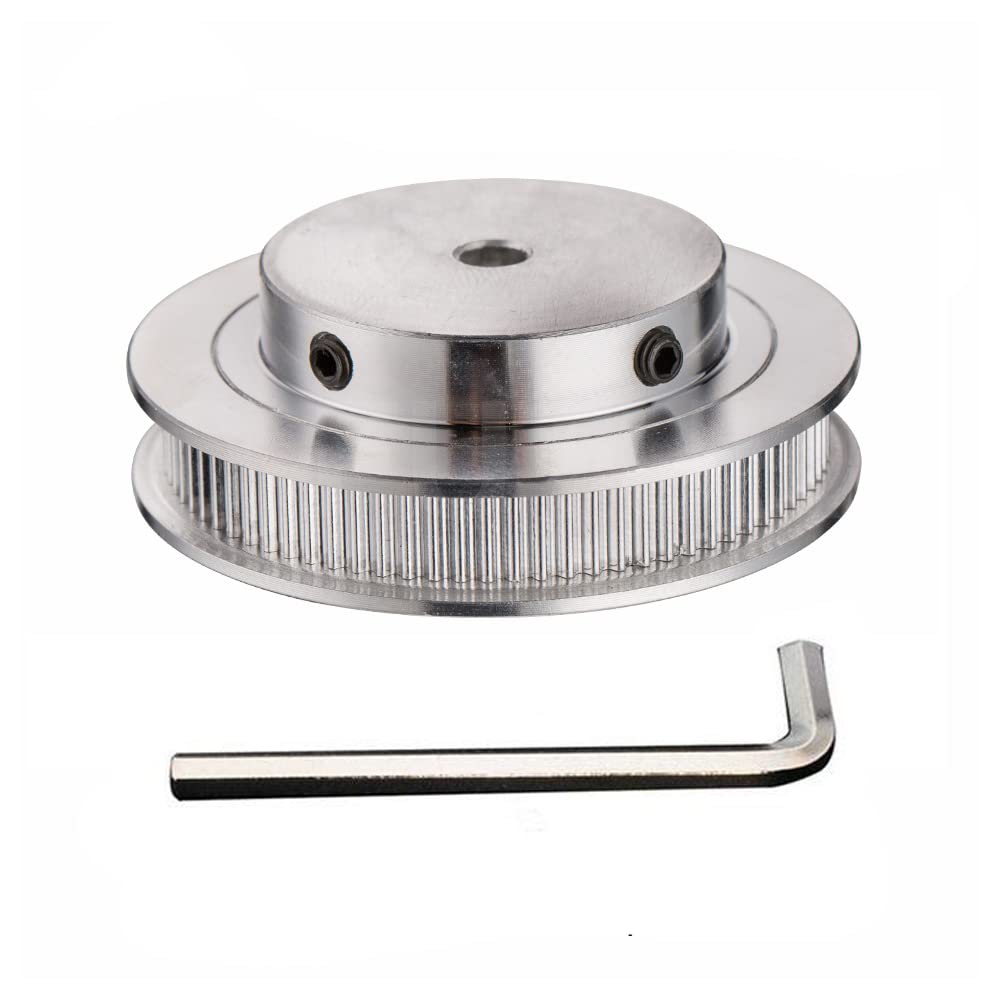
How does a timing pulley differ from a standard pulley?
A timing pulley differs from a standard pulley in design and functionality. While both types of pulleys are used in mechanical systems, they serve different purposes and have distinct features. Here’s an explanation of the key differences between a timing pulley and a standard pulley:
1. Toothed Profile:
The most significant difference between a timing pulley and a standard pulley is the presence of teeth on the timing pulley. Timing pulleys have grooves or teeth on their circumferential surface that mesh with corresponding teeth on timing belts. This toothed profile enables positive engagement between the pulley and the belt, providing precise motion and preventing slippage. In contrast, standard pulleys typically have a smooth or V-shaped groove that allows for the use of flat belts or V-belts, which rely on friction for power transmission.
2. Synchronization and Timing:
Timing pulleys are specifically designed for applications that require accurate timing and synchronization. The teeth on the timing pulley mesh with the teeth on the timing belt, creating a positive drive system. This ensures that the rotational motion of the driving pulley is transferred precisely to the driven pulleys, maintaining synchronization and accurate timing. Standard pulleys, on the other hand, do not provide this level of precise timing and are commonly used in applications where synchronization is not critical.
3. Power Transmission:
A timing pulley is primarily used for power transmission in applications that require precise motion control. The positive engagement between the teeth of the timing pulley and the timing belt ensures efficient power transfer without slippage. This is particularly important in applications where accurate speed ratios and torque transmission are necessary. Standard pulleys, while also used for power transmission, rely on friction between the pulley and the belt for power transfer, which may result in some slippage under heavy loads or high speeds.
4. Customization and Configurations:
Timing pulleys offer a wide range of customization options to meet specific application requirements. They can be manufactured with different tooth profiles, pitch sizes, and numbers of teeth to achieve the desired speed ratios and torque transmission. Standard pulleys, on the other hand, have fewer customization options and are generally available in standard sizes and configurations.
5. Maintenance and Reliability:
Timing pulleys and timing belts require less maintenance compared to standard pulleys and belts. The toothed profile of timing pulleys prevents slippage, reducing the need for frequent tension adjustments. Additionally, the positive engagement between the timing pulley and the timing belt ensures reliable power transmission with minimal wear and elongation of the belt.
Overall, the main differences between a timing pulley and a standard pulley lie in their toothed profile, synchronization capabilities, precise timing, customization options, and maintenance requirements. Timing pulleys are specifically designed for applications that demand accurate motion control and synchronization, while standard pulleys are more commonly used where precise timing is not critical.


редактор CX
2024-03-27