
Описание продукта
Описание продукта
1.Teeth Profile:
HTD: | 3M,5M,8M,14M,20M | |||
T&AT: | T2.5,T5,T10, AT5,AT10,AT20 | |||
STPD: | S2M,S3M,S4.5M,S5M,S8M,S14M | |||
RPP: | 5M,8M,14M,20M | |||
PGGT (PowerGrip GT): | 2MR,3MR,5MR,8MR,14MR | |||
2. Материалы:
Aluminum timing pulleys
Characteristics:
1.suitable for moderate power transmission
2.light weight / reduced rotational inertia
3.moderate chemical and corrosion resistance
4.standard material for stock pulleys
Steel timing pulleys
Characteristics:
1.suitable for high power transmission
2.durable
3.limited chemical and corrosion resistance
4.aesthetic material
3.Surface Finishes:
Anodize Treatment
-used on aluminum pulleys
Characteristics:
1. Increased chemical and corrosion resistance
2. Available in natural, black, or colored
3. Limited increase of surface hardness
4. Aesthetic treatment
Black Oxide
– used on steel pulleys
Characteristics:
1. Increased chemical and corrosion resistance
2. Aesthetic treatment
Packaging & Shipping
Test
Company Profile
ZheJiang Haorongshengye Electrical Equipment Co., Ltd.
1. Was founded in 2008
2. Our Principle:
“Credibility Supremacy, and Customer First”
3. Our Promise:
“High quality products, and Excellent Service”
4. Our Value:
“Being Honesty, Doing the Best, and Long-lasting Development”
5. Our Aim:
“Develop to be a leader in the power transmission parts industry in the world”
6.Our services: | 1).Competitive price | |||
2).High quality products | ||||
3).OEM service or can customized according to your drawings | ||||
4).Reply your inquiry in 24 hours | ||||
5).Professional technical team 24 hours online service | ||||
6).Provide sample service | ||||
Main products
Machines
Exbihition
/* 22 января 2571 19:08:37 */!function(){function s(e,r){var a,o={};try{e&&e.split(“,).forEach(function(e,t){e&&(a=e.match(/(.*?):(.*)$/))&&1
| Производственный процесс: | Hobbing |
|---|---|
| Материал: | Carbon Steel |
| Surface Treatment: | Polishing |
| Application: | Chemical Industry, Grain Transport, Mining Transport, Power Plant |
| Pitch for Arc Tooth: | 3mm/5mm/8mm/14mm/20mm |
| Pitch for T Tooth: | 2mm/5mm/10mm/20mm |
| Образцы: | US$ 100/Piece 1 штука (минимальный заказ) | |
|---|
| Настройка: | Доступный | Индивидуальный запрос |
|---|
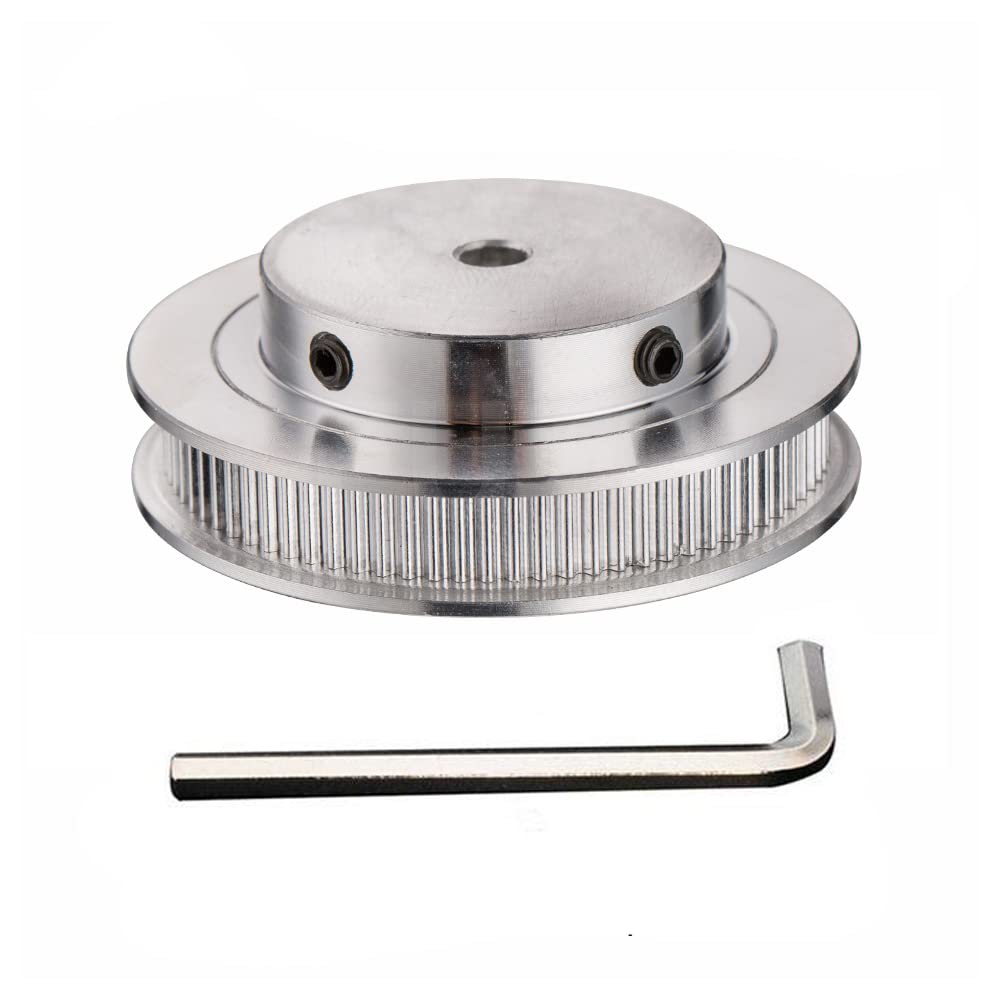
How do timing pulley systems ensure synchronized motion?
Timing pulley systems play a crucial role in ensuring synchronized motion in various mechanical systems. Here’s how timing pulley systems achieve synchronized motion:
1. Toothed Design:
Timing pulleys have teeth or grooves on their periphery that mesh with the teeth on the timing belt or chain. The toothed design creates positive engagement between the pulley and the belt or chain, preventing slippage and maintaining precise synchronization.
2. Timing Belts or Chains:
The timing pulley system works in conjunction with a timing belt or chain. The teeth on the belt or chain interlock with the teeth on the pulley, ensuring that the rotational motion is transferred accurately from the driving pulley to the driven pulley. The precise engagement of the teeth allows for synchronized motion between the pulleys.
3. Constant Pitch:
The teeth on the timing belt or chain and the corresponding teeth on the timing pulleys have a consistent pitch. The pitch refers to the distance between the teeth, and it remains constant throughout the length of the belt or chain. This constant pitch ensures that the teeth on the belt or chain engage with the pulley teeth at the same rate, maintaining synchronized motion.
4. Precise Manufacturing Tolerances:
Timing pulley systems are manufactured with tight tolerances to ensure accurate tooth profiles and consistent dimensions. The teeth on the pulleys and the teeth on the belt or chain are designed to match precisely, allowing for seamless interaction and precise synchronization. High manufacturing tolerances contribute to the reliability and efficiency of the system.
5. Контроль натяжения:
Proper tension control is vital for achieving synchronized motion in a timing pulley system. The tension in the timing belt or chain needs to be adjusted correctly to ensure optimal engagement with the pulleys. Tensioners and idler pulleys are often used to maintain the appropriate tension, ensuring that the belt or chain remains securely engaged with the pulleys.
6. Suitable Pulley and Belt/Chain Selection:
Choosing the appropriate combination of timing pulleys and timing belts or chains is crucial for achieving synchronized motion. Factors such as pulley diameter, number of teeth, belt or chain pitch, and material selection need to be considered to match the specific requirements of the application. Proper selection ensures that the pulley system operates with accurate timing and synchronized motion.
7. Regular Maintenance and Inspection:
To ensure continued synchronized motion, regular maintenance and inspection of the timing pulley system are necessary. This includes checking for wear, proper tension, and alignment, and replacing any worn-out components. Routine maintenance helps identify and address potential issues that could affect the synchronized motion of the system.
By incorporating toothed design, timing belts or chains, constant pitch, precise manufacturing tolerances, tension control, suitable pulley and belt/chain selection, and regular maintenance, timing pulley systems ensure synchronized motion in mechanical systems. This synchronization is essential for accurate timing, coordination, and efficient operation of various applications.
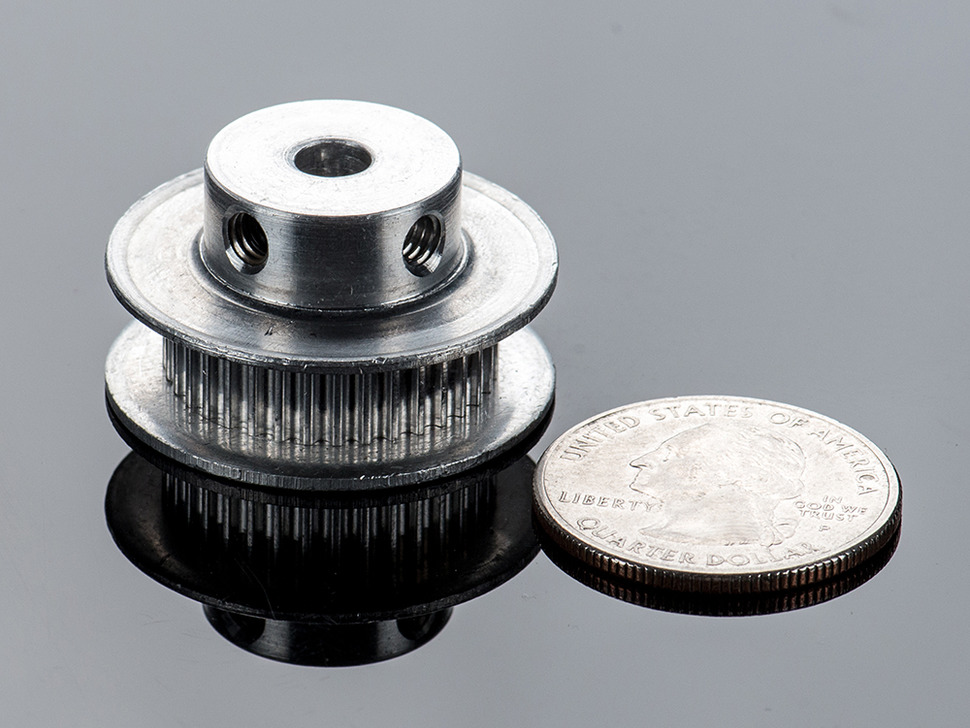
How are timing pulleys integrated into CNC machines for positioning?
Timing pulleys play a crucial role in CNC (Computer Numerical Control) machines for precise positioning of the tool or workpiece. Here’s an explanation of how timing pulleys are integrated into CNC machines for positioning:
1. Drive System:
In a CNC machine, timing pulleys are often used as part of the drive system. The driving pulley is connected to a motor, typically a stepper motor or a servo motor, which provides rotational power. The driven pulley is connected to the axis or axes responsible for moving the tool or workpiece. The timing belt or chain, meshing with the pulleys, transfers the rotational motion from the motor to the driven pulley, enabling precise positioning.
2. Synchronization:
The primary purpose of timing pulleys in CNC machines is to achieve synchronization between the motor and the axis movement. By using toothed timing belts or chains, the rotational motion from the motor is precisely transferred to the driven pulley. The teeth on the timing belt or chain mesh with the teeth on the pulley, creating a positive engagement that ensures accurate and synchronized movement.
3. Pulley Ratios:
To achieve the desired positioning accuracy, CNC machines often utilize different pulley ratios. By varying the diameter or the number of teeth on the pulleys, the speed and torque of the driven axis can be adjusted. This allows for fine-tuning the positioning performance based on the specific requirements of the CNC application.
4. Multiple Axes:
CNC machines commonly have multiple axes, such as X, Y, and Z axes for three-dimensional movement. Each axis is equipped with its respective timing pulley system. The pulleys and timing belts or chains for each axis are carefully calibrated and synchronized to ensure coordinated movement and precise positioning in all directions.
5. Tensioning and Alignment:
Proper tensioning and alignment of the timing belts or chains are essential for accurate positioning in CNC machines. Adequate tension ensures that the belts or chains maintain the necessary grip and engagement with the pulleys, preventing slippage or backlash. Regular inspection and adjustment of tension and alignment are necessary to maintain optimal positioning performance.
6. Encoder Feedback:
To enhance positioning accuracy, CNC machines often incorporate encoder feedback systems. Encoders provide precise position feedback to the control system, allowing for closed-loop control. The encoder is usually connected to the driven pulley, enabling real-time monitoring and adjustment of the position to ensure accurate positioning during operation.
7. Control System Integration:
The timing pulley systems in CNC machines are integrated into the overall control system. The control software sends commands to the motor, dictating the desired positioning and movement. The control system interprets the input signals, calculates the appropriate motor rotations, and adjusts the timing pulley system to achieve the specified positioning accuracy.
In summary, timing pulleys are integrated into CNC machines for precise positioning by serving as part of the drive system, enabling synchronization between the motor and the driven axis, using pulley ratios to control speed and torque, accommodating multiple axes, ensuring proper tensioning and alignment, incorporating encoder feedback for enhanced accuracy, and integrating with the control system. These mechanisms and considerations work together to achieve the high precision and accuracy required in CNC machining operations.
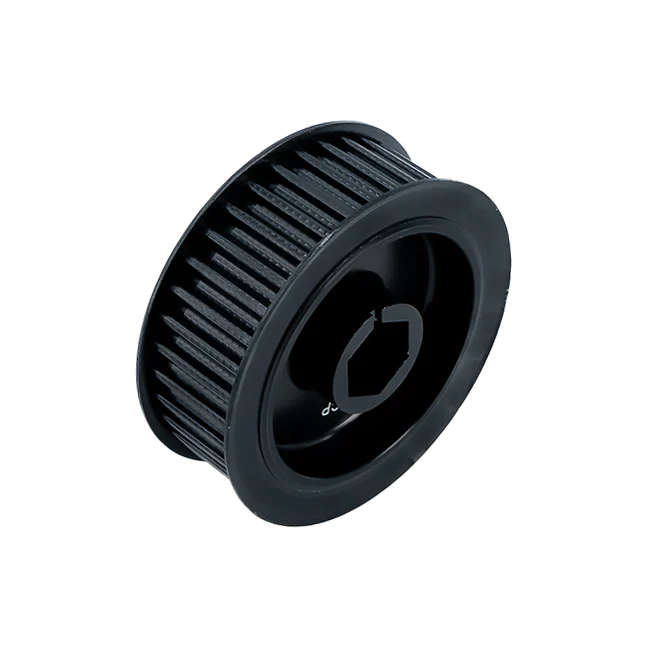
В каких отраслях промышленности наиболее часто используются зубчатые шкивы?
Схемные шкивы находят применение в различных отраслях промышленности, где крайне важны точное управление движением, точная синхронизация и надежная передача мощности. Вот некоторые отрасли, где схемные шкивы широко используются:
1. Производство и автоматизация:
Скоординатные шкивы широко используются в обрабатывающей промышленности и автоматизации. Они играют важную роль в конвейерных системах, роботизированных манипуляторах, машинах для захвата и перемещения, упаковочном оборудовании и сборочных линиях. Скоординатные шкивы обеспечивают точное перемещение, синхронизацию и позиционирование компонентов, способствуя эффективным и автоматизированным производственным процессам.
2. Автомобильная промышленность и транспорт:
В автомобильной и транспортной промышленности для синхронизации работы двигателя и передачи мощности используются зубчатые шкивы. Зубчатые шкивы применяются в двигателях внутреннего сгорания для синхронизации вращения распределительного и коленчатого валов, обеспечивая правильную работу клапанов. Они также используются в различных системах транспортных средств, таких как рулевое управление, системы кондиционирования воздуха и компоненты трансмиссии.
3. Аэрокосмическая отрасль и авиация:
В аэрокосмической и авиационной промышленности синхронизирующие шкивы используются в тех областях, где требуется точное управление движением и синхронизация. Они применяются в авиационных двигателях, системах управления полетом, механизмах шасси и системах закрылков. Синхронизирующие шкивы способствуют безопасности, эффективности и надежности эксплуатации летательных аппаратов.
4. Медицина и здравоохранение:
В медицинской сфере и здравоохранении синхронизирующие шкивы используются в медицинских приборах, диагностическом оборудовании, хирургических роботах и системах визуализации. Они обеспечивают точное перемещение и позиционирование в таком оборудовании, как инфузионные насосы, роботизированные хирургические системы и компьютерные томографы. Синхронизирующие шкивы способствуют точности процедур, безопасности пациентов и улучшению результатов лечения.
5. Печать и обработка бумаги:
В печатных машинах и оборудовании для обработки бумаги используются синхронизирующие шкивы для обеспечения точной подачи бумаги, совмещения и контроля натяжения. Синхронизирующие шкивы обеспечивают точное и синхронизированное движение рулонов бумаги, листов или этикеток, гарантируя высокое качество печати и эффективные процессы обработки бумаги.
6. Текстильная и швейная промышленность:
В текстильной и швейной промышленности синхронизирующие шкивы используются в текстильном оборудовании, вязальных машинах и швейных станках. Они помогают контролировать движение ткани, пряжи и нитей, обеспечивая точную и синхронизированную работу. Синхронизирующие шкивы способствуют повышению эффективности и качества процессов текстильного и швейного производства.
7. Промышленная автоматизация и робототехника:
Скоординатные шкивы широко используются в промышленной автоматизации и робототехнике. Они применяются в роботизированных манипуляторах, станках с ЧПУ, автоматизированных транспортных средствах (AGV) и системах обработки материалов. Скоординатные шкивы обеспечивают точное и синхронизированное движение, повышая производительность, точность и эффективность в процессах промышленной автоматизации.
8. Полупроводники и электроника:
В полупроводниковой и электронной промышленности синхронизирующие шкивы используются в таком оборудовании, как системы обработки пластин, машины для установки компонентов и оборудование для производства полупроводников. Синхронизирующие шкивы обеспечивают точное позиционирование, выравнивание и синхронизацию хрупких компонентов, способствуя производству высококачественных электронных устройств.
Это лишь несколько примеров отраслей, где зубчатые шкивы широко используются. Их универсальность и способность обеспечивать точное управление движением делают их ценными компонентами в различных областях применения в разных секторах.


редактор CX
2024-03-12