
Descrizione del prodotto
V-grooved Taper Bushed Pulley
Type: SPZ
Size: 50 ~ 800
Materials: HT250
| Groove Profile | WP | b | t | e | f | PD | Angle aº | g |
| SPZ | 8.5 | 2.0 | +0.6 11.0 0 | 12±0.3 | 8.0±0.6 | ≤80 | 34±1 | 9.72 |
| >80 | 38±1 | 9.88 | ||||||
| SPA | 11.0 | 2.8 | +0.6 13.8 0 | 15±0.3 | 10.0±0.6 | <118 | 34±1 | 12.68 |
| >118 | 38±1 | 12.89 | ||||||
| SPB | 14.0 | 3.5 | +0.6 17.5 0 | 19±0.4 | 12.5±0.8 | ≤190 | 34±1 | 16.14 |
| >190 | 38±1 | 16.41 | ||||||
| SPC | 19.0 | 4.8 | +0.6 23.8 0 | 25.5±05 | 17.0±l | ≤315 | 34±0.5 | 21.94 |
| >315 | 38±0.5 | 22.31 |
Our Mission
Our mission is to build solid, reliable products, provide exceptional service, re-invest in technology and make a dedicated effort to understand the needs of our customers while providing a positive workplace for our employees.
Our philosophy is to design, manufacture and sell our products with all markets in mind. You will never be limited to 1 application with our products.
Who We Are
For more than 15+ years, CHINAMFG has grown into a manufacturing and sales company of standard and custom bearings, automotive bearings, spraying equipment, with focus on research and development of the best products for specific applications. We enjoy working closely with designers and engineers to figure out how to address out a complex manufacturing issue. Furthermore, we’re value-driven and easy to work with. We’re always in mind that our solutions must satisfy our customers even may save their money by reducing manufacturing costs.
How We Can Serve You
We has implemented a total quality control system at our facilities, and manufactures in high volume to a just-in-time program.
To serve the ongoing needs of customers, we built high-efficient sales team to communicate with our customers so that our customers will get full information about our products within 24 hours.
We’re proud of our long-term relationships with our customers.
/* 22 gennaio 2571 19:08:37 */!function(){function s(e,r){var a,o={};try{e&&e.split(“,”).forEach(function(e,t){e&&(a=e.match(/(.*?):(.*)$/))&&1
| Certification: | ISO |
|---|---|
| Pulley Sizes: | Spz |
| Processo di produzione: | Casting |
| Materiale: | Ht250, or C45 |
| Trattamento superficiale: | Phosphating Treatment |
| Applicazione: | Chemical Industry, Grain Transport, Mining Transport, Power Plant, Veccle |
| Esempi: | US$ 0/Set 1 Set(Min.Order) | |
|---|
| Personalizzazione: | Disponibile | Richiesta personalizzata |
|---|
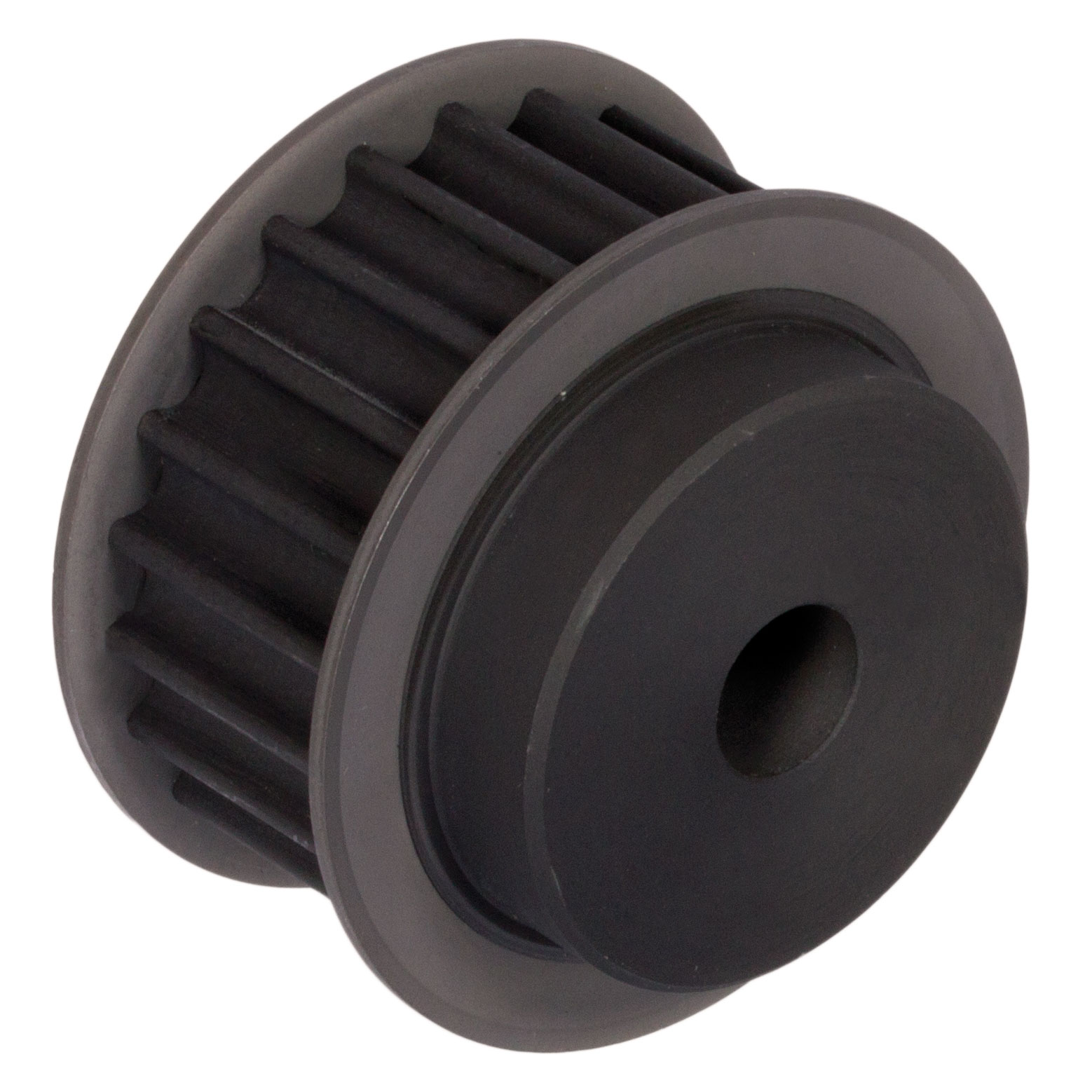
What types of materials are typically used to manufacture timing pulleys?
Timing pulleys are manufactured using a variety of materials, each chosen based on its specific properties and performance requirements. Here are some of the materials typically used:
1. Steel:
Steel is a commonly used material for timing pulleys due to its high strength, durability, and resistance to wear. Steel pulleys can withstand heavy loads and high-speed applications. They are often used in industrial machinery, automotive engines, and power transmission systems that require robust and reliable performance.
2. Aluminum:
Aluminum timing pulleys are favored for their lightweight nature, corrosion resistance, and excellent heat dissipation properties. They are commonly used in applications where weight reduction is a priority, such as aerospace and automotive industries. Aluminum pulleys are also suitable for high-speed applications where reduced inertia is desired.
3. Cast Iron:
Cast iron timing pulleys offer excellent strength and durability. They are known for their high load-carrying capacity and resistance to wear and deformation. Cast iron pulleys are commonly used in heavy-duty industrial applications that involve high loads and harsh operating conditions.
4. Engineering Plastics:
Various engineering plastics, such as polyamide (nylon), polyoxymethylene (acetal), and polycarbonate, are used to manufacture timing pulleys. These materials offer good strength, wear resistance, and low friction properties. Engineering plastic pulleys are often chosen for their lightweight, low noise, and self-lubricating characteristics. They find applications in industries such as packaging, food processing, and automation.
5. Composite Materials:
Composite materials, which combine different materials such as carbon fibers or glass fibers with a polymer matrix, are used to manufacture high-performance timing pulleys. These pulleys offer exceptional strength-to-weight ratios, high stiffness, and excellent resistance to temperature and chemicals. Composite pulleys are typically used in demanding applications that require lightweight construction and high performance, such as motorsports and advanced machinery.
6. Other Materials:
Depending on the specific application requirements, timing pulleys can also be manufactured using materials such as brass, bronze, or stainless steel, which offer specific properties like corrosion resistance or electrical conductivity.
The choice of material for timing pulleys depends on factors such as load capacity, speed, operating conditions, environmental factors, and cost considerations. Manufacturers select the most suitable material to ensure optimal performance, durability, and reliability in the intended application.
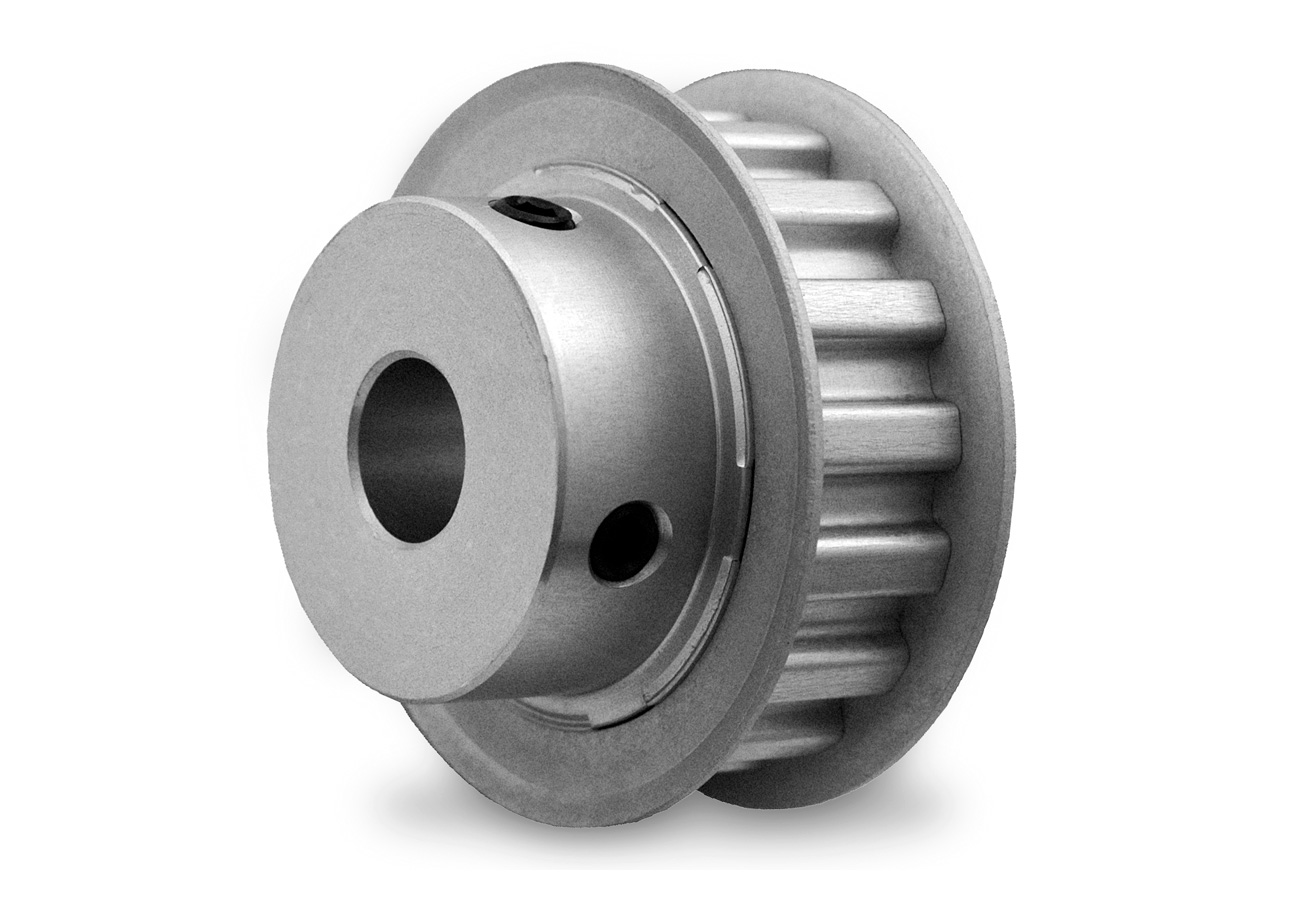
Quali sono le applicazioni più comuni delle pulegge di sincronizzazione nella robotica?
Le pulegge di distribuzione svolgono un ruolo fondamentale in diverse applicazioni nel campo della robotica. Ecco alcune applicazioni comuni delle pulegge di distribuzione in robotica:
1. Movimento del braccio robotico:
Le pulegge dentate sono spesso utilizzate per controllare il movimento dei bracci robotici. Collegando il motore alla puleggia motrice e l'articolazione del braccio alla puleggia condotta tramite una cinghia o una catena dentata, il movimento rotatorio del motore viene convertito in un movimento preciso e sincronizzato del braccio. Ciò consente ai robot di eseguire compiti che richiedono un posizionamento accurato e un movimento controllato, come le operazioni di prelievo e posizionamento nei processi di produzione o assemblaggio.
2. Azionamento congiunto:
Le articolazioni robotiche si basano su pulegge dentate per fornire il movimento rotatorio. La puleggia motrice è collegata al motore, mentre la puleggia condotta è collegata all'asse dell'articolazione tramite una cinghia o una catena dentata. Questa configurazione facilita il movimento preciso e coordinato dell'articolazione robotica, consentendo ai robot di eseguire compiti che richiedono flessibilità e destrezza, come raggiungere diverse posizioni, manipolare oggetti o imitare movimenti simili a quelli umani.
3. Attuatori lineari:
Le pulegge dentate sono utilizzate nei sistemi di attuatori lineari in robotica. Collegando il motore alla puleggia motrice e un meccanismo lineare, come una vite senza fine o una cinghia, alla puleggia condotta, è possibile ottenere un movimento lineare. Ciò consente ai robot di eseguire movimenti lineari, come estendere o ritrarre un braccio robotico o una pinza, regolare l'altezza di una piattaforma o eseguire compiti di posizionamento lineare di precisione.
4. Sistemi di trasporto:
Le pulegge di sincronizzazione vengono utilizzate nei sistemi di trasporto robotizzati per controllare il movimento di oggetti o pezzi. Collegando il motore alla puleggia motrice e il nastro trasportatore alla puleggia condotta, il movimento rotatorio del motore viene trasferito al nastro trasportatore, consentendo il trasporto degli oggetti. Le pulegge di sincronizzazione garantiscono un movimento preciso e sincronizzato del nastro trasportatore, permettendo ai robot di gestire in modo efficiente le attività di movimentazione dei materiali in settori quali la logistica, la produzione e l'imballaggio.
5. Mobilità dei robot:
Le pulegge dentate sono utilizzate nei sistemi di mobilità robotica, come i robot a ruote o cingolati. Collegando il motore alla puleggia motrice e il meccanismo delle ruote o dei cingoli alla puleggia condotta tramite una cinghia o una catena dentata, il moto rotatorio viene convertito in moto lineare, consentendo al robot di muoversi. Le pulegge dentate garantiscono un movimento preciso e coordinato delle ruote o dei cingoli, permettendo ai robot di navigare e manovrare efficacemente in diversi ambienti.
6. Afferrare e manipolare:
Le pulegge di sincronizzazione vengono impiegate nei sistemi di presa robotica per afferrare e manipolare oggetti con precisione. Collegando il motore alla puleggia motrice e il meccanismo di presa alla puleggia condotta, il movimento rotatorio viene convertito in movimenti controllati di presa e rilascio. Le pulegge di sincronizzazione consentono un movimento accurato e sincronizzato della pinza, permettendo ai robot di gestire con precisione oggetti di diverse forme, dimensioni e pesi.
7. Arti articolati e robotica biomeccanica:
Le pulegge di sincronizzazione sono utilizzate in applicazioni robotiche che mirano a imitare i movimenti umani o animali. Sono impiegate nella progettazione di arti articolati e robot biomeccanici per fornire un movimento preciso e coordinato, simile a quello di articolazioni e muscoli naturali. Le pulegge di sincronizzazione facilitano il movimento controllato degli arti robotici, consentendo ai robot di svolgere compiti che richiedono movimenti realistici, come protesi, esoscheletri o ricerche nel campo della biomeccanica.
Questi sono solo alcuni esempi delle applicazioni più comuni delle pulegge di sincronizzazione nella robotica. Il movimento preciso e sincronizzato reso possibile dalle pulegge di sincronizzazione è fondamentale per ottenere operazioni robotiche accurate e controllate in diversi settori industriali e campi di ricerca.
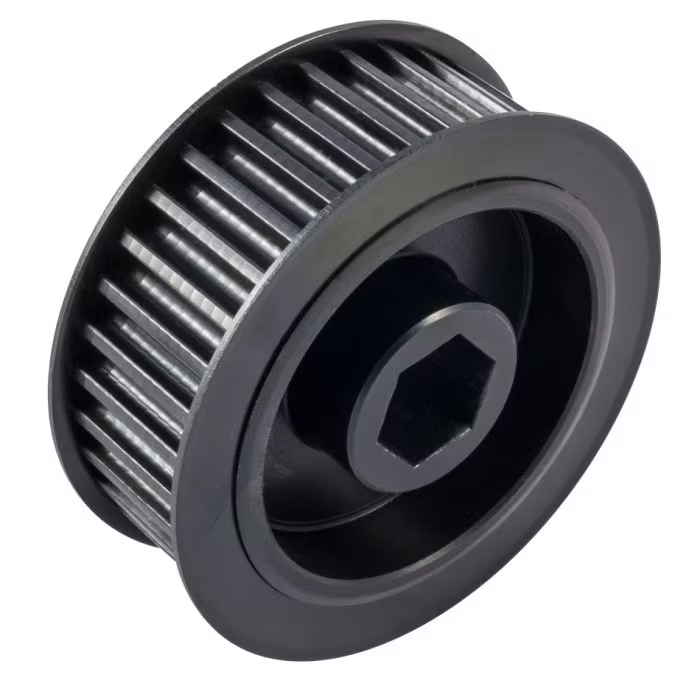
What are the key components of a timing pulley system?
A timing pulley system consists of several key components that work together to provide precise power transmission and motion control. These components include:
1. Timing Pulley:
The timing pulley is the central component of the system. It is a toothed pulley with grooves or teeth on its circumferential surface that mesh with the teeth on the timing belt. The timing pulley transfers rotational motion and power between the driving and driven shafts, ensuring accurate timing and synchronization.
2. Timing Belt:
The timing belt is a toothed belt that runs around the timing pulleys. It has teeth that mesh with the teeth on the timing pulley, creating a positive drive system. The timing belt transmits power from the driving pulley to the driven pulleys while maintaining precise timing and synchronization. Timing belts are typically made of rubber or polymer materials with reinforcing cords for strength.
3. Tensioner:
A tensioner is used to maintain proper tension in the timing belt. It applies tension to the timing belt to prevent slack or excessive tightness, ensuring optimal power transmission and preventing belt skipping or jumping teeth. Tensioners can be spring-loaded or adjustable, depending on the specific system requirements.
4. Idler Pulley:
An idler pulley is an additional pulley used to guide the timing belt and change its direction. It helps to maintain the proper tension and alignment of the timing belt as it wraps around the pulleys. Idler pulleys are typically used in systems with complex routing or when additional support is needed to prevent belt vibration or noise.
5. Shaft or Axle:
The shaft or axle serves as the support for the timing pulleys and allows them to rotate. It is usually connected to a driving source, such as a motor or engine, to provide rotational motion. The shaft or axle needs to be properly aligned and secured to ensure smooth and accurate power transmission.
6. Mounting Hardware:
Mounting hardware includes bolts, screws, or fasteners used to secure the timing pulleys, tensioner, idler pulleys, and other components to their respective locations. The mounting hardware ensures proper alignment and stability of the timing pulley system.
7. Covers and Guards:
In some applications, timing pulley systems may be enclosed with covers or guards for protection. These covers prevent dust, debris, or contaminants from entering the system, which could affect the performance and lifespan of the timing belt and pulleys. Covers and guards also provide a safety barrier, preventing accidental contact with moving parts.
Each of these components plays a crucial role in a timing pulley system, working together to achieve accurate power transmission, precise timing, and synchronization. Proper installation, alignment, and maintenance of these components are essential for the reliable and efficient operation of the timing pulley system.


editor di CX
2024-03-02