
Descrizione del prodotto
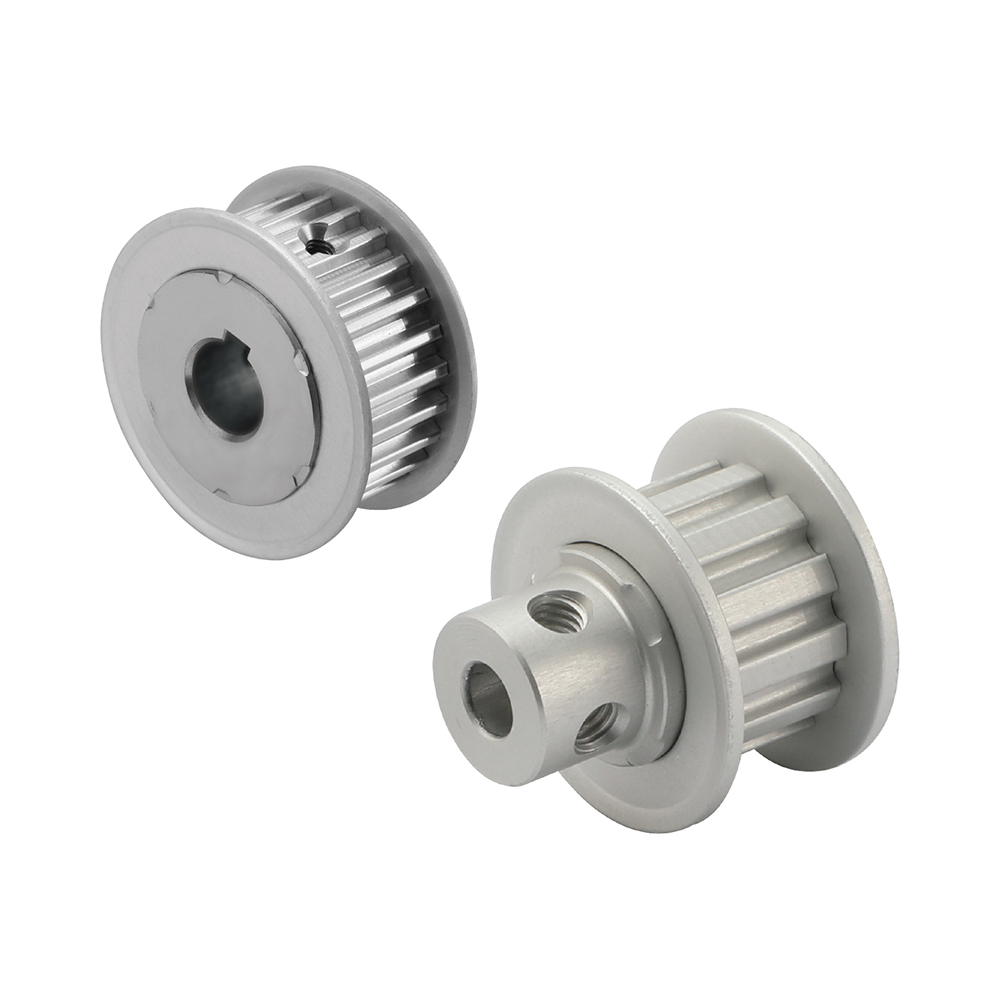
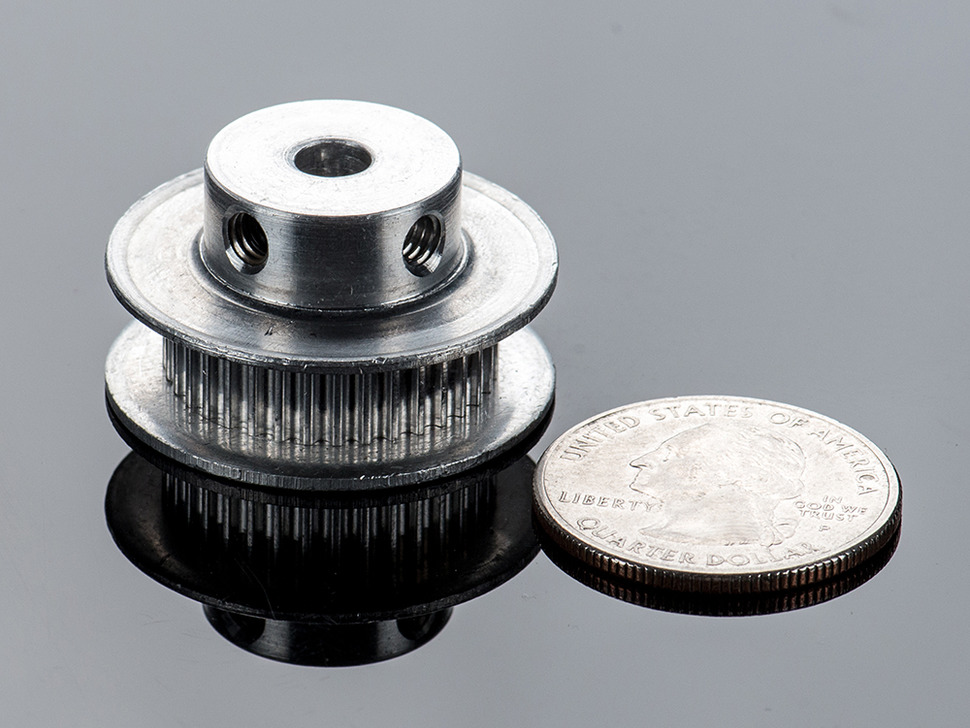
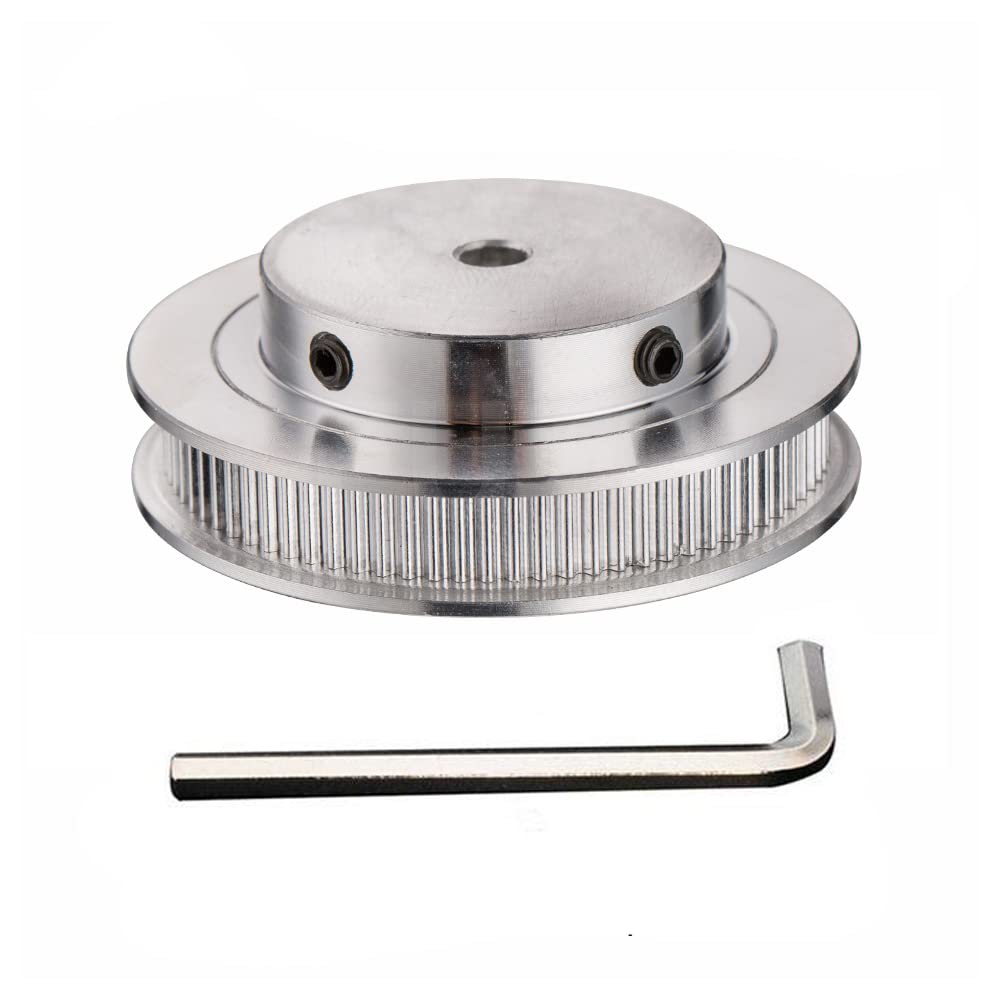
OEM ODM Customized High Torque Timing Pulley With Stainless Steel
Synchronous belt pulley transmission is composed of an annular belt with equidistant teeth on the inner peripheral surface and a belt pulley with corresponding teeth. During operation, the belt teeth mesh with the tooth slots of the belt pulley to transmit motion and power. It is a new belt transmission that integrates the respective advantages of belt transmission, chain transmission and gear transmission.
Product Parameters
| Product | standard timing belt pulley & idler pulley |
| Customized | OEM, drawings or samples customized |
| Teeth type | Normal Torque Drive Type:MXL,XL,L,H,XH,XXH High Torque Drive Type:S2M,S3M,S5M,S8M,HTD2M,HTD3M,HTD5M,HTD8M,P2M,P3M,P5M,P8M High Precision Position Drive Type:2GT,3GT,5GT,8YU Light Load Drive Type:T5,T10,T20 Heavy Load Drive Type:AT5,AT10,AT20 |
| Basic shape | Type A,Type B,Type D,Type E,Type F,Type K |
| Adaption | Adapt to 1/4 inch,5/16 inch,1/2 inch, 3/8inch, 2/25inch, 1/5inch belt |
| surface treatment | Natural color anodizing,Black anodizing,Hard anodizing,Ni-plating,Blackening |
| Materiale | 6061(aluminum),S45C(45# steel),SUS304(Stainless steel) |
| Bore | Pilot bore, Taper bore and Customized bore. |
| Tolerance Control | Outer diameter ±0.005mm Length dimension ±0.05mm |
| Standard | DIN, ISO/GB, AGMA, JIS |
| Teeth Accuracy | DIN Class 4, ISO/GB Classs 4, AGMA Class 13, JIS Class 0 |
| Weight | Max 15Tons |
| testing equipment | projecting apparatus,salt spray test,durometer,and coating thickness tester,2D projector |
| producing equipment | CNC machine,automatic lathe machine,stamping machine,CNC milling machine,rolling machine,lasering,tag grinding machine etc. |
| Machining Process | Gear Hobbing, Gear Milling, Gear Shaping, Gear Broaching,Gear Shaving, Gear Grinding and Gear Lapping |
| Application industry | Robot industry,Medical industry,Making machine industry,Automation industry,3C industry equipment,Packaging industry,UAV industry,New energy industry. |
Profilo Aziendale
Imballaggio e spedizione
| lead time | 10-15 working days as usual,30days in busy season,it will based on the detailed order quantity |
| Delivery of samples | by DHL,Fedex,UPS,TNT,EMS |
FAQ
| Main markets | Southeast Asia, North America, Eastern Europe, Mid-East, West Europe |
| How to order | *You send us drawing or sample |
| *We carry through project assessment | |
| *We give you our design for your confirmation | |
| *We make the sample and send it to you after you confirmed our design | |
| *You confirm the sample then place an order and pay us 30% deposit | |
| *We start producing | |
| *When the goods is done,you pay us the balance after you confirmed pictures or tracking numbers | |
| *Trade is done,thank you! |
/* 22 gennaio 2571 19:08:37 */!function(){function s(e,r){var a,o={};try{e&&e.split(“,”).forEach(function(e,t){e&&(a=e.match(/(.*?):(.*)$/))&&1
| Certification: | CE, ISO |
|---|---|
| Pulley Sizes: | Type B |
| Processo di produzione: | Forging |
| Materiale: | Aluminum |
| Trattamento superficiale: | Electroplating |
| Applicazione: | Chemical Industry, Grain Transport, Mining Transport, Power Plant, Printing Machinery |
| Esempi: | US$ 10/Piece 1 pezzo (ordine minimo) | |
|---|
| Personalizzazione: | Disponibile | Richiesta personalizzata |
|---|
How do timing pulleys contribute to efficient power distribution?
Timing pulleys play a crucial role in ensuring efficient power distribution in various mechanical systems. Here’s how timing pulleys contribute to efficient power distribution:
1. Precise Timing and Synchronization:
Timing pulleys, in conjunction with timing belts or chains, synchronize the rotation of different components within a system. By maintaining precise timing between the input and output shafts, timing pulleys ensure that power is distributed accurately and efficiently. This synchronization prevents power loss due to misalignment or timing discrepancies.
2. Positive Drive System:
Timing pulleys create a positive drive system when paired with timing belts or chains. The teeth on the pulleys interlock with the teeth on the belt or chain, creating a firm grip that eliminates slippage. This positive drive ensures that power is efficiently transmitted from the driving pulley to the driven pulley without any energy loss.
3. Load Distribution:
Timing pulleys help distribute the load evenly across the system by transmitting power from the driving pulley to the driven pulley. The pulley’s design and tooth profile enable the load to be distributed over a larger contact area, reducing stress concentration on individual components. This even load distribution enhances the overall efficiency of power transmission.
4. Reduced Friction and Wear:
Timing pulleys, particularly those made of materials with low friction coefficients, minimize friction and wear during power transmission. The smooth engagement between the pulley teeth and the belt or chain reduces energy losses caused by friction. Additionally, materials with excellent wear resistance properties extend the lifespan of the pulleys, ensuring long-term efficiency.
5. Controllo della tensione:
Timing pulleys, in combination with tensioner and idler pulleys, help maintain the appropriate tension in the timing belt or chain. Proper tension control ensures that the belt or chain remains securely engaged with the pulleys, preventing power loss due to slippage. By maintaining optimal tension, timing pulleys contribute to efficient power distribution throughout the system.
6. System Optimization:
Timing pulleys allow for system optimization by providing flexibility in gear ratios and power transmission configurations. By selecting pulleys with different diameters or tooth profiles, engineers can adjust the speed and torque distribution within the system. This optimization ensures that power is distributed efficiently, matching the requirements of the specific application.
Overall, timing pulleys ensure efficient power distribution by providing precise timing, creating a positive drive system, evenly distributing loads, reducing friction and wear, controlling tension, and enabling system optimization. These factors contribute to the overall efficiency, reliability, and performance of mechanical systems where timing pulleys are utilized.
How are timing pulleys integrated into CNC machines for positioning?
Timing pulleys play a crucial role in CNC (Computer Numerical Control) machines for precise positioning of the tool or workpiece. Here’s an explanation of how timing pulleys are integrated into CNC machines for positioning:
1. Drive System:
In a CNC machine, timing pulleys are often used as part of the drive system. The driving pulley is connected to a motor, typically a stepper motor or a servo motor, which provides rotational power. The driven pulley is connected to the axis or axes responsible for moving the tool or workpiece. The timing belt or chain, meshing with the pulleys, transfers the rotational motion from the motor to the driven pulley, enabling precise positioning.
2. Synchronization:
The primary purpose of timing pulleys in CNC machines is to achieve synchronization between the motor and the axis movement. By using toothed timing belts or chains, the rotational motion from the motor is precisely transferred to the driven pulley. The teeth on the timing belt or chain mesh with the teeth on the pulley, creating a positive engagement that ensures accurate and synchronized movement.
3. Pulley Ratios:
To achieve the desired positioning accuracy, CNC machines often utilize different pulley ratios. By varying the diameter or the number of teeth on the pulleys, the speed and torque of the driven axis can be adjusted. This allows for fine-tuning the positioning performance based on the specific requirements of the CNC application.
4. Multiple Axes:
CNC machines commonly have multiple axes, such as X, Y, and Z axes for three-dimensional movement. Each axis is equipped with its respective timing pulley system. The pulleys and timing belts or chains for each axis are carefully calibrated and synchronized to ensure coordinated movement and precise positioning in all directions.
5. Tensioning and Alignment:
Proper tensioning and alignment of the timing belts or chains are essential for accurate positioning in CNC machines. Adequate tension ensures that the belts or chains maintain the necessary grip and engagement with the pulleys, preventing slippage or backlash. Regular inspection and adjustment of tension and alignment are necessary to maintain optimal positioning performance.
6. Encoder Feedback:
To enhance positioning accuracy, CNC machines often incorporate encoder feedback systems. Encoders provide precise position feedback to the control system, allowing for closed-loop control. The encoder is usually connected to the driven pulley, enabling real-time monitoring and adjustment of the position to ensure accurate positioning during operation.
7. Control System Integration:
The timing pulley systems in CNC machines are integrated into the overall control system. The control software sends commands to the motor, dictating the desired positioning and movement. The control system interprets the input signals, calculates the appropriate motor rotations, and adjusts the timing pulley system to achieve the specified positioning accuracy.
In summary, timing pulleys are integrated into CNC machines for precise positioning by serving as part of the drive system, enabling synchronization between the motor and the driven axis, using pulley ratios to control speed and torque, accommodating multiple axes, ensuring proper tensioning and alignment, incorporating encoder feedback for enhanced accuracy, and integrating with the control system. These mechanisms and considerations work together to achieve the high precision and accuracy required in CNC machining operations.
In che cosa si differenzia una puleggia di distribuzione da una puleggia standard?
Una puleggia dentata si differenzia da una puleggia standard per design e funzionalità. Sebbene entrambi i tipi di puleggia siano utilizzati nei sistemi meccanici, svolgono funzioni diverse e presentano caratteristiche distinte. Ecco una spiegazione delle principali differenze tra una puleggia dentata e una puleggia standard:
1. Profilo dentellato:
La differenza più significativa tra una puleggia dentata e una puleggia standard risiede nella presenza di denti sulla prima. Le pulegge dentate presentano scanalature o denti sulla loro superficie circonferenziale che si innestano con i denti corrispondenti delle cinghie di distribuzione. Questo profilo dentato consente un innesto preciso tra la puleggia e la cinghia, garantendo un movimento accurato e prevenendo lo slittamento. Al contrario, le pulegge standard presentano in genere una scanalatura liscia o a V che permette l'utilizzo di cinghie piatte o trapezoidali, la cui trasmissione di potenza si basa sull'attrito.
2. Sincronizzazione e temporizzazione:
Le pulegge dentate sono progettate specificamente per applicazioni che richiedono una fasatura e una sincronizzazione precise. I denti della puleggia dentata si ingranano con i denti della cinghia di distribuzione, creando un sistema di trasmissione efficace. Ciò garantisce che il movimento rotatorio della puleggia motrice venga trasferito con precisione alle pulegge condotte, mantenendo la sincronizzazione e una fasatura accurata. Le pulegge standard, al contrario, non offrono questo livello di precisione nella fasatura e sono comunemente utilizzate in applicazioni in cui la sincronizzazione non è critica.
3. Trasmissione di potenza:
Una puleggia dentata viene utilizzata principalmente per la trasmissione di potenza in applicazioni che richiedono un controllo preciso del movimento. L'innesto preciso tra i denti della puleggia dentata e la cinghia di distribuzione garantisce un trasferimento di potenza efficiente senza slittamenti. Ciò è particolarmente importante in applicazioni in cui sono necessari rapporti di velocità e trasmissione di coppia accurati. Le pulegge standard, pur essendo anch'esse utilizzate per la trasmissione di potenza, si basano sull'attrito tra la puleggia e la cinghia per il trasferimento di potenza, il che può causare slittamenti sotto carichi pesanti o ad alte velocità.
4. Personalizzazione e configurazioni:
Le pulegge dentate offrono un'ampia gamma di opzioni di personalizzazione per soddisfare i requisiti specifici di ogni applicazione. Possono essere realizzate con diversi profili dei denti, passi e numero di denti per ottenere i rapporti di velocità e la trasmissione di coppia desiderati. Le pulegge standard, al contrario, offrono meno opzioni di personalizzazione e sono generalmente disponibili in dimensioni e configurazioni standard.
5. Manutenzione e affidabilità:
Le pulegge e le cinghie di distribuzione richiedono meno manutenzione rispetto alle pulegge e alle cinghie standard. Il profilo dentato delle pulegge di distribuzione impedisce lo slittamento, riducendo la necessità di frequenti regolazioni della tensione. Inoltre, l'innesto preciso tra la puleggia e la cinghia di distribuzione garantisce una trasmissione di potenza affidabile con minima usura e allungamento della cinghia.
Nel complesso, le principali differenze tra una puleggia dentata e una puleggia standard risiedono nel profilo dentato, nelle capacità di sincronizzazione, nella precisione della fasatura, nelle opzioni di personalizzazione e nei requisiti di manutenzione. Le pulegge dentate sono progettate specificamente per applicazioni che richiedono un controllo del movimento e una sincronizzazione accurati, mentre le pulegge standard sono più comunemente utilizzate dove la precisione della fasatura non è fondamentale.


editor di CX
2024-03-27