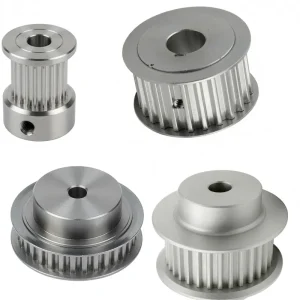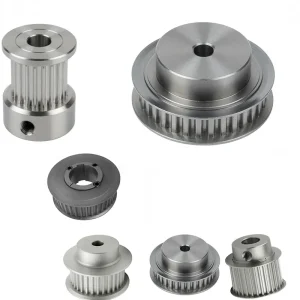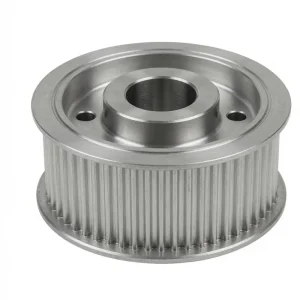
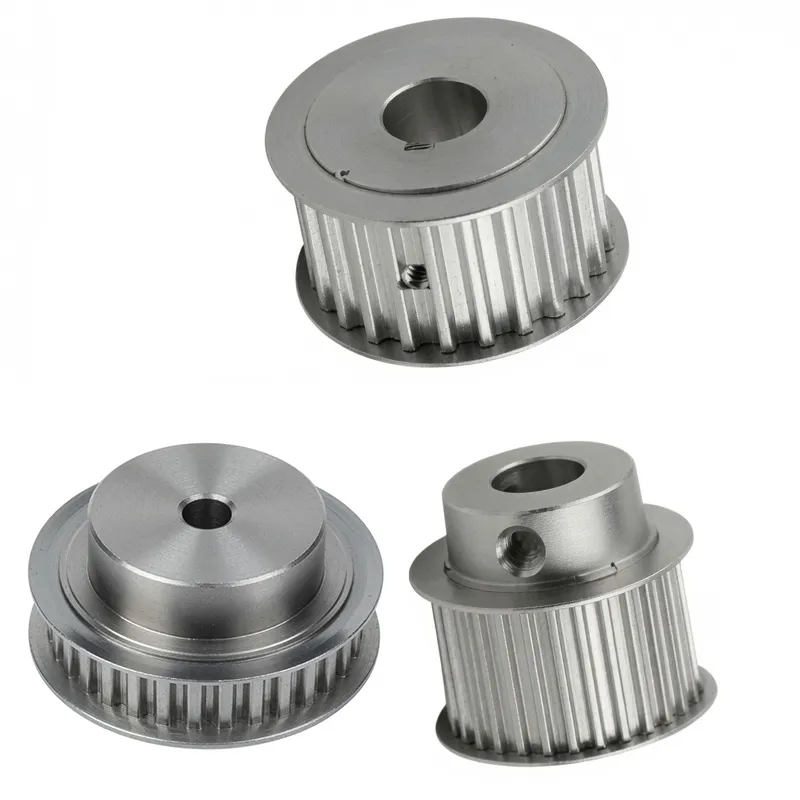
EP-H75 12.7mm スチール&鋳鉄製ストレートボアタイミングプーリー
EP-H75ストレートボアタイミングプーリーは、12.700 mm(0.500インチ)ピッチ規格に準拠したH(ヘビー)シリーズ同期ベルト駆動部品の一つです。Hシリーズは、標準的なタイミングベルトピッチの中間域に位置し、軽荷重用のXL 5.080 mmシリーズおよびMXL 2.032 mmシリーズより上位、重荷重用のXHおよびXXHシリーズより下位に位置づけられています。そのため、コンパクトなプーリー寸法と信頼性の高い同期駆動性能を備え、中~高トルク容量を必要とする幅広い産業機械用途において、主力製品として活躍します。 14Tから42Tまでの6F(6ボルトフランジ)タイプの鋼製構造と、44Tから50Tまでの鋳鉄製の6WF(溶接フランジ)および6Wタイプは、Hシリーズの設計アプローチを反映しています。重量と加工性が重要な場合は鋼製ボディを採用し、大径では鋳鉄に移行します。これは、質量減衰と鋳鉄の加工性が、このシリーズの大型プーリーに典型的なハブとウェブ構成において生産上の利点をもたらすためです。
Hシリーズ - 高耐久性ストレートボアタイミングプーリー
EP-H75 12.7mm スチール&鋳鉄製ストレートボアタイミングプーリー
頑丈な ストレートボアタイミングプーリー H 075シリーズは、中~高トルクの産業用同期ベルト駆動用途の標準規格である12.700 mmピッチを採用しています。歯数は14Tから50Tまでの27種類があり、材質は鋼(6Fタイプ、14T~42T)と鋳鉄(6WFおよび6Wタイプ、44T~50T)から選べます。コンベヤ駆動装置、工作機械、包装ライン、繊維機械、堅牢性が求められる産業オートメーションシステム向けに設計されています。 ストレートボアタイミングプーリー 世界中で建設が行われている。
主な技術的事実
2. H 075ストレートボアタイミングプーリーとは何ですか?
H 075 ストレートボアタイミングプーリー これは、ANSI/RMA台形歯タイミングベルト規格の一部であるH(ヘビー)シリーズの12.700 mmピッチ指定を使用する、標準ピッチのヘビーデューティー同期ベルト駆動プーリーのカテゴリです。12.700 mmピッチ(正確には0.5インチ)は、現代のアメリカの工業規格の遺産です。 タイミングベルトプーリー シリーズは進化を遂げ、世界中の中トルク産業機械分野で依然として主流のピッチであり続けている。 ストレートボアタイミングプーリー この設計では、プーリーの回転軸上に穴を中央に配置し、シャフトキーによるトルク伝達のための平行なキー溝を設けています。これは、ベルト交換や駆動比調整のためにプーリーを取り外すことが定期的なメンテナンス作業となる場合において、最もシンプルで直接的なプーリーの取り付け方法です。
H 075シリーズでは、075という表記はベルト幅を100分の1インチ単位で表しており、0.75インチまたは19.05mmであることを示しています。 ストレートボアタイミングプーリー このシリーズは、0.75インチのフェース幅のHピッチタイミングベルトで使用するように設計されています。H 075の実際の加工フェース幅F ストレートボアタイミングプーリー 全27歯数バリエーションにおいて、フランジ幅は26.4 mmで、必要なベルト面支持とベルト端からのフランジクリアランス幅を確保しています。全サイズでフランジ幅が26.4 mmで一貫しているため、ベルト幅の仕様を変更することなく、シリーズのどの歯数バリエーションでも同じHピッチタイミングベルト幅を使用でき、産業メンテナンスチームの調達と在庫管理が大幅に簡素化されます。 タイミングベルトプーリーの交換 混合比率コンベアおよび工作機械駆動システム用の部品。
44Tにおける鋼から鋳鉄への材料転換は、異なるプーリーサイズ範囲の生産経済性と機械的要件を反映している。44T未満では、鋼H 075 ストレートボアタイミングプーリー ユニットは、CNC旋盤およびホブ盤装置で鋼棒または精密ブランクから機械加工され、精密な歯形とハブ穴の同心度を実現します。44Tを超える大径(Dpが約178mm以上)は、鋳鉄ブランクとして製造され、粗鋳造された歯形を後から最終形状に機械加工することで、鋳鉄の材料密度と振動減衰性、および許容可能な加工精度に必要な加工精度を兼ね備えています。 タイミングベルトプーリー 歯の噛み合い品質。これらの材料と構造の違いを理解することで、OEM機械メーカーや産業調達エンジニアは適切なH 075を選択することができます。 ストレートボアタイミングプーリー 機械における各駆動回路の仕様。
3.製品の5つの主要な利点
12,700 mm Hピッチにより、標準同期駆動で高いトルク容量を実現
Hシリーズの12.700 mmピッチは、歯の断面積が大きいため歯が破損する前に大きなせん断力に耐えられることから、より小さなピッチ(XL 5.080 mm、MXL 2.032 mm)と比較して、ベルト幅あたりのトルク伝達能力が大幅に向上します。同じベルト幅の場合、Hピッチのタイミングベルトとプーリーシステムは、XLピッチシステムよりも約5~8倍のトルクを伝達します。 ストレートボアタイミングプーリー コンベヤ主駆動装置、工作機械軸送り装置、包装ラインインデックス機構、および10~200Nmのモータトルクレベルで動作する産業オートメーション駆動装置に適した仕様。ピッチの小さいシステムでは、非現実的なほど幅の広いベルトが必要となる。 ストレートボアタイミングプーリー このピッチではHシリーズとも直接接続できます タイミングベルトとプーリー 既に世界中の多くの産業施設に導入されているシステム。
14Tから50Tまでの27種類の歯数オプションで、幅広いギア比に対応
H 075シリーズは、14Tから50Tまでの27種類の標準歯数バリエーションを備え、カタログ在庫だけで1:1(歯数プーリーが等しい場合)から約3.57:1(14T駆動プーリーから50T被動プーリーまで)までの駆動比範囲をカバーします。特定の伝達比を必要とする産業機械設計において、この27段階の歯数バリエーションは、非標準のカスタム品を必要とせず、きめ細やかな比率選択を可能にします。 ストレートボアタイミングプーリー ほとんどの用途でユニット。産業調達チームの調達 タイミングプーリーストック メンテナンス用に、最も一般的に使用される歯数(通常18T、22T、24T、28T、30T、36T)のコンパクトな在庫を保持でき、一般的な工業プラントで発生する駆動比の要件の大部分をカバーできます。
全サイズ共通で26.4mmの均一な面幅により、ベルトの調達が容易になります。
H 075の27種類の歯数バリエーションすべてにおいて、F = 26.4 mmの一貫した顔幅が得られた。 ストレートボアタイミングプーリー このシリーズは、単一のHピッチタイミングベルト幅(ベルト面幅0.75インチ/19.05mm)が、14Tから50Tまでのすべての歯数に対応し、変更なしで互換性があることを意味します。この均一性は、異なる比率の複数の駆動回路を管理する産業施設にとって、実用上大きな利点となります。ベルトは、1つの仕様から再注文でき、 ストレートボアタイミングプーリー 歯数は同じですが、回路ごとに異なるのはベルトのピッチ長のみです。また、面幅が均一であるため、設置されたすべてのドライブでベルトのトラッキングとフランジクリアランスの形状が一貫しており、高サイクル駆動アプリケーションでベルトのエッジがプーリーフランジに接触してベルト側面の摩耗が加速するリスクが低減されます。
材質は2種類から選択可能 ― 小径プーリーには鋼、大径プーリーには鋳鉄
H 075 ストレートボアタイミングプーリー このシリーズは、重量、慣性、加工精度が主な基準となる歯数範囲向けに鋼製(14T~42T)を提供し、大径プーリー向けには鋳鉄製(44T~50T)を提供しています。鋳鉄製プーリーでは、ねずみ鋳鉄の材料減衰により、鋼製プーリーで発生する共振振動の増幅が低減されます。 ストレートボアタイミングプーリー 産業用駆動ベルトの回転速度に典型的な回転周波数において。この材料の選択は、数十年にわたる産業経験を反映している。 タイミングベルトプーリー Hシリーズ全範囲で生産コスト、性能、耐用年数のバランスを取る設計手法を採用しており、同じ材料転換点が確立されたヨーロッパおよび北米のメーカーで使用されています。 タイミングプーリーメーカー 同じANSI/RMA規格に準拠して製造している企業。
ANSI/RMA規格寸法によるグローバルな互換性とタイミングプーリー交換
ピッチ円直径 Dp、外径 De、フランジ直径 Df、ハブ直径 Dm、面幅 F、ハブ長さ L のすべての寸法データは、ANSI/RMA IP-24 および IP-26 H シリーズに準拠しています。 ストレートボアタイミングプーリー 寸法規格。つまり、当社のH 075 ストレートボアタイミングプーリー ユニットは、同じ規格で製造している他のサプライヤーの同等製品と寸法的に互換性があり、直接 タイミングベルトプーリーの交換 寸法の再計算や機械フレームの変更なしに、既存の機械にそのまま適用できます。ヨーロッパ、北米、東南アジア、オーストラリアのグローバルな産業バイヤーにとって、この標準化は、アフターマーケットの交換用プーリーが主要メーカーのOEM指定ドライブに適合するという調達上の安心感を提供します。 タイミングベルトプーリー 製造業者。
4. H 075シリーズ - 寸法仕様書
ピッチ:12.700 mm(Hシリーズ)。すべての寸法はmm単位です。Dp = ピッチ円直径、De = 外径、Df = フランジ直径、Dm = ハブ直径、Di = 穴径(顧客指定)、F = 面幅、L = ハブ長さ、d = キー幅、フランジ番号 = 嵌合フランジ参照。タイプ 6F = 6ボルト鋼フランジ、6WF = 溶接鋳鉄フランジ、6W = 一体鋳鉄ウェブ。
| 部品コード | 歯 | タイプ | 材料 | DP | デ | Df | ドム | ディ | F | L | d | フランジ番号 |
|---|---|---|---|---|---|---|---|---|---|---|---|---|
| 14 H 075 | 14 | 6F | スチール製(14T~42T)/鋳鉄製(44T~50T) | 56.60 | 55.22 | 64 | 40 | — | 26.4 | 40 | 8 | 59 |
| 15 H 075 | 15 | 6F | 60.64 | 59.27 | 66.5 | 45 | — | 26.4 | 40 | 8 | 60 | |
| 16 H 075 | 16 | 6F | 64.68 | 63.31 | 70 | 45 | — | 26.4 | 40 | 8 | 61 | |
| 17 H 075 | 17 | 6F | 68.72 | 67.35 | 75 | 45 | — | 26.4 | 40 | 8 | 62 | |
| 18 H 075 | 18 | 6F | 72.77 | 71.39 | 79 | 55 | — | 26.4 | 40 | 11 | 63 | |
| 19 H 075 | 19 | 6F | 76.81 | 75.44 | 82.5 | 60 | — | 26.4 | 40 | 11 | 64 | |
| 20 H 075 | 20 | 6F | 80.85 | 79.48 | 87 | 62 | — | 26.4 | 40 | 11 | 76 | |
| 21 H 075 | 21 | 6F | 84.89 | 83.52 | 91 | 65 | — | 26.4 | 40 | 11 | 66 | |
| 22 H 075 | 22 | 6F | 88.94 | 87.56 | 94 | 68 | — | 26.4 | 40 | 11 | 67 | |
| 23 H 075 | 23 | 6F | 92.98 | 91.61 | 97 | 72 | — | 26.4 | 40 | 11 | 68 | |
| 24時間075 | 24 | 6F | 97.02 | 95.65 | 102 | 72 | — | 26.4 | 40 | 11 | 70 | |
| 25 H 075 | 25 | 6F | 101.06 | 99.69 | 106 | 72 | — | 26.4 | 40 | 11 | 71 | |
| 26 H 075 | 26 | 6F | 105.11 | 103.73 | 112 | 80 | — | 26.4 | 40 | 11 | 72 | |
| 27 H 075 | 27 | 6F | 109.15 | 107.78 | 115 | 80 | — | 26.4 | 40 | 11 | 74 | |
| 28 H 075 | 28 | 6F | 113.19 | 111.82 | 120 | 80 | — | 26.4 | 40 | 11 | 75 | |
| 29 H 075 | 29 | 6F | 117.23 | 115.86 | 120 | 80 | — | 26.4 | 40 | 11 | 75 | |
| 30 H 075 | 30 | 6F | 121.28 | 119.90 | 128 | 80 | — | 26.4 | 40 | 11 | 78 | |
| 32 H 075 | 32 | 6F | 129.36 | 127.99 | 135 | 80 | — | 26.4 | 40 | 11 | 80 | |
| 33 H 075 | 33 | 6F | 133.40 | 132.03 | 142 | 80 | — | 26.4 | 40 | 11 | 81 | |
| 34 H 075 | 34 | 6F | 137.45 | 136.07 | 142 | 80 | — | 26.4 | 40 | 11 | 81 | |
| 35 H 075 | 35 | 6F | 141.49 | 140.12 | 150 | 80 | — | 26.4 | 40 | 11 | 85 | |
| 36 H 075 | 36 | 6F | 145.53 | 144.16 | 150 | 80 | — | 26.4 | 40 | 11 | 85 | |
| 38 H 075 | 38 | 6F | 153.62 | 152.24 | 158 | 80 | — | 26.4 | 40 | 11 | 86 | |
| 40 H 075 | 40 | 6F | 161.70 | 160.33 | 168 | 80 | — | 26.4 | 40 | 11 | 90 | |
| 42 H 075 | 42 | 6F | 169.79 | 168.41 | 180 | 80 | — | 26.4 | 40 | 11 | 94 | |
| 44 H 075 | 44 | 6WF | 177.87 | 176.50 | 184 | 80 | 150 | 26.4 | 40 | 14 | 95 | |
| 45 H 075 | 45 | 6WF | 181.91 | 180.54 | 192 | 80 | 154 | 26.4 | 40 | 14 | 96 | |
| 48 H 075 | 48 | 6WF | 194.04 | 192.67 | 200 | 90 | 166 | 26.4 | 45 | 14 | 100 | |
| 49 H 075 | 49 | 6W | 198.08 | 196.71 | — | 90 | 170 | 26.4 | 45 | 14 | — | |
| 50 H 075 | 50 | 6W | 202.13 | 200.75 | — | 90 | 174 | 26.4 | 45 | 14 | — |
Di(—)=顧客仕様の穴径。Df(—)は6Wタイプの場合、ボルトオンフランジなしを意味します。キー幅d=8mm(14T~17T)、11mm(18T~42T)、14mm(44T~50T)。すべての寸法はmm単位です。
4a. ストレートボアタイミングプーリー選定ガイド — H 075シリーズ
正しいH 075を選択する ストレートボアタイミングプーリー 新規または交換用ドライブアプリケーションの場合、注文前に次の4つのパラメータを確認する必要があります。必要な速度比の歯数、負荷と直径に基づく材質、シャフトに適合するボア径、および機械の設置に基づくフランジタイプ。既存のドライブを交換する必要があるエンジニアは、 ストレートボアタイミングプーリー 元の部品番号がなくても、FAQ Q4で説明されている5つの物理的測定値(測定されたピッチ円直径、ボア、キー溝幅、ハブ長さ、フランジタイプ)に基づいて作業すれば、正しいH 075を一意に識別できます。 ストレートボアタイミングプーリー 寸法表からの仕様。
駆動比の選択:速度比は従動比に等しい ストレートボアタイミングプーリー 歯の本数を運転する人の割合で割った値 ストレートボアタイミングプーリー 歯数。22歯のドライバーと44歯の被駆動部の組み合わせ。 ストレートボアタイミングプーリー 正確に2:1の減速比を実現します。特定の比率内で歯数を選択する際には、中心距離の制約、つまり各歯のピッチ直径も考慮する必要があります。 ストレートボアタイミングプーリー (表の Dp 列から)両方のプーリーで適切なベルト巻き角度を得るための最小中心距離を決定します。ほとんどの産業用駆動装置設計者は、小さい方のプーリーで最小巻き角度を 120 度にすることを目標としています。 ストレートボアタイミングプーリー あらゆる負荷条件下で複数の歯が確実に噛み合うようにするため。
H 075のボア仕様 ストレートボアタイミングプーリー シャフト径は、標準キー溝保持ドライブのH7/h6クリアランス嵌合に適合させる必要があります。 タイミングプーリーストック 販売業者にとって最も効率的なアプローチは、標準ボアサイズで事前に加工されたブランクを保持し、機械工場に到着したときにボアを仕上げることです。これはまさに ストレートボアタイミングプーリー これは、販売代理店やMRO調達チームに単一のツールから最大限の柔軟性を提供するように設計されています。 タイミングプーリーストック アイテム。専門家として タイミングプーリーメーカーまた、H 075も供給可能です。 ストレートボアタイミングプーリー 仕様に合わせて完成した穴(キー溝と止めねじを含む)を備えたユニットで、すぐに取り付け可能。メンテナンスチームにとって便利です。 タイミングベルトプーリーの交換 機械加工なしですぐに現場で使用できるユニット。シャフト径とキー仕様を添えて、当社の技術営業チームにお問い合わせいただければ、仕上げ穴加工済みのユニットの見積もりをご提示いたします。 ストレートボアタイミングプーリー 供給。
5. H 075ストレートボアタイミングプーリーの動作原理
H 075 ストレートボアタイミングプーリー 駆動軸からHピッチタイミングベルトに歯と溝の確実な噛み合いによって回転動力を伝達します。モーターシャフトはストレートボアを通り、平行キーがシャフトとベルトの両方の対応するキー溝に収まります。 ストレートボアタイミングプーリー ハブは、キー本体のせん断応力によってシャフトからプーリーに駆動トルクを伝達します。セットスクリュー(ハブ外径)は、 ストレートボアタイミングプーリー キーが担う主要なトルク伝達を行わずに、シャフト上で軸方向にスライドすることを防ぎます。このキーによるトルク伝達と止めねじによる軸方向保持の組み合わせが標準です。 ストレートボアタイミングプーリー H 075シリーズが設計されている中程度のトルクレベルまでの産業用同期ベルト駆動装置向けの構成。
として ストレートボアタイミングプーリー 回転すると、Hピッチのタイミングベルトの歯がプーリーの歯溝に順次噛み合います。溝に入るベルトの歯は、出る側の溝から前の歯を押し出し、滑りなく駆動力を伝達する同期したベルトのかみ合い動作を生み出します。12.700 mmのピッチは隣接する歯の中心間隔を定義し、1回転あたりのベルト歯ピッチ円周は歯数に12.700 mmを乗じた値になります。つまり、24 H 075です。 ストレートボアタイミングプーリー ピッチ円周は 24 × 12.700 = 304.8 mm で、寸法表の 97.02 mm ピッチ円直径に相当します。フランジプレート (スチールプーリーの 6F タイプ) は、ベルトが横方向にずれるのを防ぎます。 ストレートボアタイミングプーリー ミスアライメント力や横方向の荷重がかかった場合でも、駆動動作全体を通して、26.4 mmの面幅全体にわたってベルトの噛み合いを維持します。
44T以上の鋳鉄製プーリー(タイプ6WFおよび6W)では、ハブ部が鋼鉄から鋳鉄に移行する際に設計変更が加えられています。6WFタイプはボルトオンフランジ(Df指定、別個のフランジリングがプーリー本体にボルトで固定)を維持していますが、49Tおよび50Tの6Wタイプは、別個のフランジのない一体型のウェブとハブを使用しています(Dfは—で表示)。これは、より大きなハブ径Dmとより深いボア嵌合によって、より小さなプーリーでフランジがもたらすシャフト取り付けの安定性を確保しているためです。 ストレートボアタイミングプーリー ユニット。これらのサイズで利用可能なより大きな Di ボア (ハブ本体直径 Dm = 170~174 mm、最大 90 mm) は、49T および 50T H 075 の大きなピッチ直径に関連するより高いトルクを伝達する、より大きな産業用ドライブシャフトに対応します。 ストレートボアタイミングプーリー 定格Hピッチベルト張力でのユニット。
6. 材料と構造
H 075の各歯数範囲における材料選択 ストレートボアタイミングプーリー このシリーズは、対象となるプーリー径の構造上の要件と製造工程の経済性の両方を反映している。
スチールボディ(14T~42T)ストレートボアタイミングプーリー
14Tから42Tまでの鋼製H075の歯体とハブには、中炭素鋼(S45Cまたは同等品、最小降伏強度340MPa)が使用されています。 ストレートボアタイミングプーリー鋼材ブランクは外径に旋削加工され、その後、Hピッチの歯形にギヤホブ加工またはフライス加工され、6Fボルトオンフランジがベルト案内面となります。鋳鉄に比べて鋼は強度と被削性に優れているため、この歯数範囲の小径部でも精密な歯形が得られ、1回転あたりのベルト張力変動を最小限に抑える正確なピッチ円同心度を実現します。これは、コンベアのスムーズな動作と工作機械の軸送り位置決め精度において重要な要素です。
鋳鉄製ボディ(44T~50T)ストレートボアタイミングプーリー
44Tから50Tまでのモデルには、ねずみ鋳鉄(GG20またはHT200相当、引張強度200MPa以上)が使用されています。 ストレートボアタイミングプーリー バリエーション。直径 178 mm から 202 mm では、鋳造プロセスにより、歯本体、ウェブ、ハブを一体として製造する実用的な製造ルートが提供され、機械加工は穴、歯形、フランジ面の仕上げ切削のみに削減されます。鋳鉄は振動減衰特性を提供し、プーリー直径が大きくなるにつれてその有用性が高まります。駆動ベルト通過周波数での回転モード共振により、ベルトノイズが増幅され、ベルトの摩耗が加速される可能性があります。 ストレートボアタイミングプーリー 車体内部の減衰力が不十分である。
6F ボルトオンフランジ(スチール製プーリー)
6F型鋼の6ボルトフランジ ストレートボアタイミングプーリー ユニットはプレス加工された鋼板で、ベルトガイドエッジとなる隆起したリム形状を備えています。6本のボルトで固定する取り付けパターンにより、フランジを取り外してベルトを取り付けることができます。 ストレートボアタイミングプーリー シャフトからアクセスできるため、ガードや機械フレームによって駆動部へのアクセスが制限され、現場でベルト交換のためにプーリーを完全に取り外すことが困難な産業用コンベアや工作機械において、実用的なメンテナンス上の利点となります。仕様表のフランジ番号は、歯数ごとのバリエーションに対応する適切なフランジ部品を相互参照しています。
穴径およびキー溝の仕様
H 075のストレートボア ストレートボアタイミングプーリー シリーズは、精密なシャフト嵌合のためにH7公差で機械加工されており、平行キー溝は寸法表に指定されたキー幅d(14T-17Tの場合は8mm、18T-42Tの場合は11mm、44T-50Tの場合は14mm)に一致するDIN 6885 / ISO 773標準寸法にブローチ加工されています。各 ストレートボアタイミングプーリー 最大内径は、注文時に顧客の要求に応じて指定され、ハブ径Dmから定格ベルト張力におけるキーと内径壁の荷重に必要な最小ハブ壁厚を差し引いた値に制限されます。当社のエンジニアリングチームは、特定のシャフトとキーの仕様に基づいて、歯数ごとの最大許容内径についてアドバイスを提供できます。

7. アプリケーションシナリオ
H 075シリーズ ストレートボアタイミングプーリー 本製品は、12.700 mmピッチのHシリーズ同期ベルト駆動装置が適切な仕様となる、以下の主要な産業および商業用途向けに設計されています。
産業用コンベヤ駆動装置
世界中の製造工場、物流倉庫、配送センターでは、ベルトコンベヤヘッド駆動装置、ローラーコンベヤインデックス駆動装置、オーバーヘッドモノレール駆動装置にH 075が使用されています。 ストレートボアタイミングプーリー 主駆動回路用のユニット。Hピッチは、1.5~15kWの電動モーター駆動で、ベルト速度10~60m/分、コンベヤ荷重100~500kgに必要なトルク容量を提供します。6F着脱式フランジにより、アジア、ヨーロッパ、北米の自動車、電子機器、消費財製造施設における高サイクル産業用コンベヤ運転で一般的な頻繁なメンテナンス期間中に、シャフトを分解することなくベルトを交換できます。
工作機械軸駆動装置
CNC加工センターのスピンドル駆動システム、フライス加工センターおよび旋盤加工センターの軸ボールねじ駆動、およびツールチェンジャーカルーセル駆動にはH 075が指定されます。 ストレートボアタイミングプーリー 主駆動回路用のユニット。Hピッチの同期滑りなし特性 タイミングベルトプーリー このドライブは、CNC軸サーボ位置決めに必要な位置精度(通常±0.01mm以下)を実現しており、同じドライブで滑りやすいVベルトや平ベルトを使用した場合では達成できない精度です。 ストレートボアタイミングプーリー この構成は、追加のアダプタなしでモーターとボールねじのシャフトに直接取り付けられ、鋼鉄製の構造により、工作機械の主軸動作時の熱と振動の複合負荷下でも寸法安定性を維持します。
包装機械インデックス
Hシリーズは、成形充填シール包装機、カートニングライン、ラベリング装置に使用されています。 ストレートボアタイミングプーリー 同期ベルト駆動により、包装材料を機械サイクルごとに一定距離だけ前進させるために必要な精密な増分動作を提供するインデックス搬送および位置合わせ駆動装置。H 075 ストレートボアタイミングプーリー このシリーズは、毎分30~120個のパッケージを処理する中速包装ラインで使用される2~20kWの駆動モーターの標準仕様です。 タイミングベルトプーリー この駆動方式は、チェーン駆動に存在するバックラッシュと、摩擦ベルト駆動に固有の滑りを排除します。これらの問題は、フィルムシールの位置ずれやラベル貼付精度の誤差の原因となります。
繊維機械駆動システム
織機、編み機、糸巻き取り装置では、主クランクシャフト駆動および二次運動伝達回路にHピッチタイミングベルト駆動が使用されています。大径鋳鉄H 075 ストレートボアタイミングプーリー 44T~50Tのユニットは、織機のメインクランクシャフト駆動によく指定されます。プーリー径が大きいため、現代の高速織機の250~800rpmのクランクシャフト回転速度でも静かで低振動の運転が可能です。これらの大型の鋳鉄製ダンピング特性は、 ストレートボアタイミングプーリー この装置は、機械フレームを通して織物工場の床に伝わる構造伝播音を低減します。これは、ヨーロッパや東南アジアの繊維製造地域における繊維工場の騒音規制遵守において重要な要素です。
農業および食品加工機器
穀物搬送コンベア、種子処理装置、食品加工コンベアライン、製パン機械では、主駆動回路と補助回路にH 075タイミングベルト駆動装置が使用されています。衛生基準を満たすために潤滑油不要の駆動運転が求められる食品加工環境では、ドライHピッチタイミングベルト駆動装置を使用することで、食品接触ゾーンで鉱物油を潤滑するチェーンとスプロケット駆動装置から生じる油汚染のリスクを排除できます。スチール製のH 075 ストレートボアタイミングプーリー 本製品は、乾燥食品加工における穏やかな洗浄環境に適した耐腐食性を備えています。また、苛性または酸性の消毒剤を用いた徹底的な洗浄が必要な用途向けには、ご要望に応じてステンレス鋼製のオプションもご用意しております。
印刷機およびグラフィックアート機器
商業印刷機、大判インクジェットプリンター、デジタルカッティングプロッターはHシリーズを使用しています。 タイミングベルトプーリー メインシリンダー駆動回路と基板搬送回路用のシステム。同期ベルト駆動により、印刷シリンダー、圧胴、基板搬送ベルトはすべて、プーリーの歯数によって定義されるまったく同じ角速度関係で回転します。この駆動にスリップがあると、印刷ユニット間の位置ずれや画像の歪みが発生します。ストレートボアH 075 ストレートボアタイミングプーリー 追加のブッシング金具なしでプレスシャフトジャーナルに直接取り付けられるため、駆動部の組み立てが簡素化され、歯数の異なるプーリーに交換することで、プレス切り替え時の駆動比を迅速に調整できます。
8.規制および基準の枠組み
H 075 ストレートボアタイミングプーリー 製品は、主要なグローバル市場における製品寸法規格、機械安全要件、材料適合性などを網羅する規制環境下で製造および取引される。
ANSI/RMA IP-24およびIP-26規格準拠の台形歯タイミングベルトおよびプーリー: これらのゴム製造業者協会規格は、Hシリーズの12.700 mmピッチのタイミングプーリーの歯形、溝形状、および寸法公差を定義しています。H 075仕様表のすべての寸法データは、ANSI/RMA IP-26 Hシリーズに準拠しています。 ストレートボアタイミングプーリー 寸法は、同じ規格で製造しているあらゆるサプライヤーのHピッチプーリーとの互換性を保証します。この互換性は、グローバルな基盤となっています。 タイミングベルトプーリーの交換 北米、ヨーロッパ、アジア市場における調達およびOEM機械サービス。ANSI/RMA規格は、この分野における適用可能な技術標準として認められています。 ストレートボアタイミングプーリー 製品カテゴリー。
ISO 22458 — 同期ベルト駆動装置: 同期ベルト駆動に関するISO規格は、Hピッチを含む台形歯ピッチ系列のタイミングプーリーとベルトの寸法要件を規定しています。ISO 22458はANSI/RMA IP-24に準拠しており、EU、英国、日本、韓国など、産業機械部品の調達文書にEN参照ISO規格が求められるISO規制市場における調達仕様の国際標準基準となっています。 タイミングベルトとプーリー ISO 22458に準拠したシステムにより、さまざまなグローバル市場のバイヤーがH 075を指定することができます。 ストレートボアタイミングプーリー メーカー間の寸法互換性に自信を持っています。
EU機械指令2006/42/EC — 動力伝達装置用ガード: EUで販売される機械に組み込まれるタイミングベルトおよびプーリー駆動装置は、動力伝達部品の保護に関する機械指令附属書I第1.3.1項の要件に準拠しなければならない。H 075 ストレートボアタイミングプーリー 駆動アセンブリ(プーリーとベルト)は、完成した機械において固定または可動のガードで囲む必要がある露出した回転要素を構成します。H 075 を組み込んだ機械メーカー ストレートボアタイミングプーリー EU市場向け機器に組み込まれるユニットは、駆動ガードの設計が機械指令の技術ファイルおよび完成品のCE宣言に含まれていることを確認する必要があります。
RoHS指令への準拠: H 075に使用されている鋼鉄および鋳鉄材料 ストレートボアタイミングプーリー 本シリーズには、EU RoHS指令2011/65/EUまたは英国、台湾、韓国、日本の同等の法令に基づく規制物質は含まれていません。本製品を組み込んだRoHS要件の対象となる電気・電子機器を組み立てるお客様には、RoHS適合宣言書をご要望に応じて提供いたします。 ストレートボアタイミングプーリー 駆動システムにシリーズ化されている。
9. 当社について
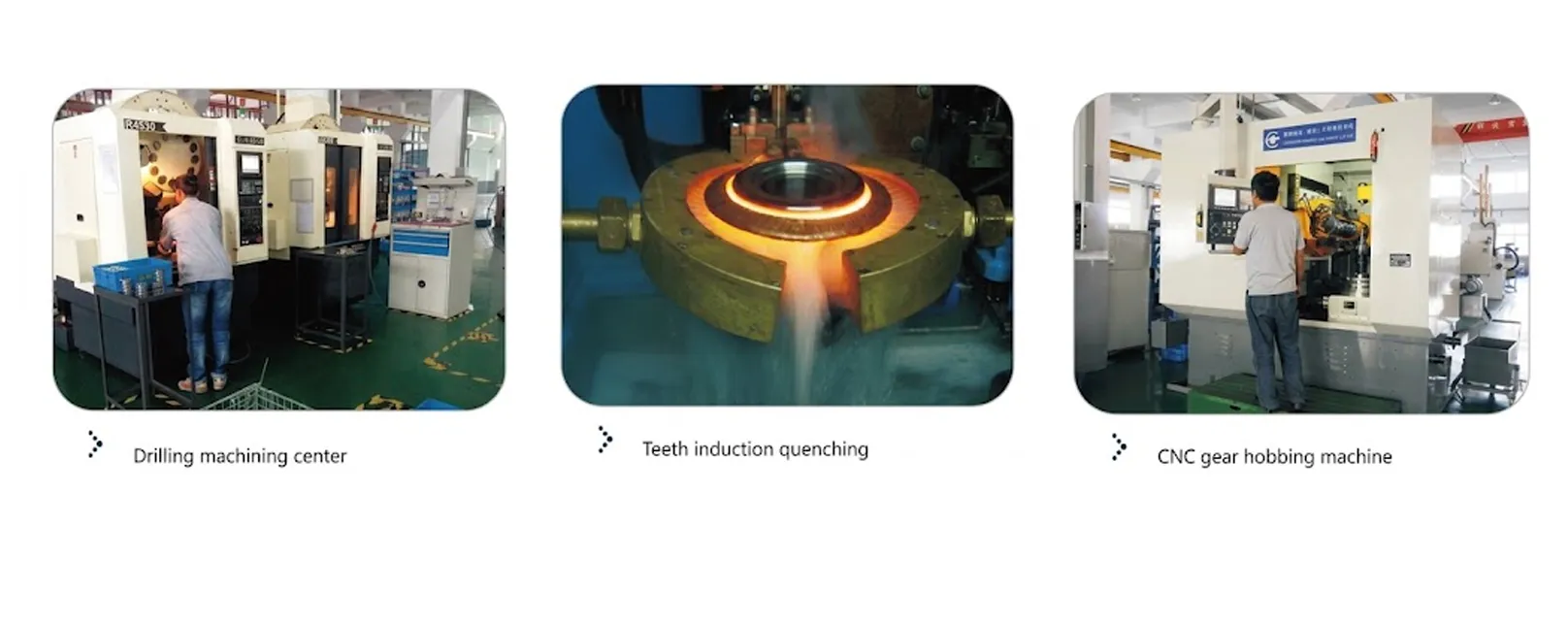
私たちはプロフェッショナルです タイミングプーリーメーカー H 075を含むあらゆる標準同期ベルト駆動プーリーを製造するグローバル輸出業者 ストレートボアタイミングプーリーMXL、XL、L、H、XH、およびHTD(3M、5M、8M、14M)シリーズは、アルミニウム、鋼、鋳鉄、ステンレス鋼製で、ストレートボアとテーパーボアの構成で、在庫品およびカスタム仕様に対応しています。当社の生産施設では、CNC歯車ホブ盤、プロファイルフライス盤、旋削盤、ボーリング盤を稼働させ、ANSI/RMAおよびISO規格に準拠した工程内寸法検査を実施しています。 タイミングプーリーメーカー グローバルな供給能力により、 タイミングプーリーストック 標準範囲とカスタム範囲 ストレートボアタイミングプーリー 世界中のOEMおよびMRO顧客向けに、検証済みのリードタイムで生産を行っています。
ワークショップ


10. 対応製品
H 075 ストレートボアタイミングプーリー これは、完全なHピッチ同期ベルト駆動システムの核となる部品です。当社は、駆動システム全体をワンストップで調達できるよう、互換性のあるコンポーネントを提供しています。
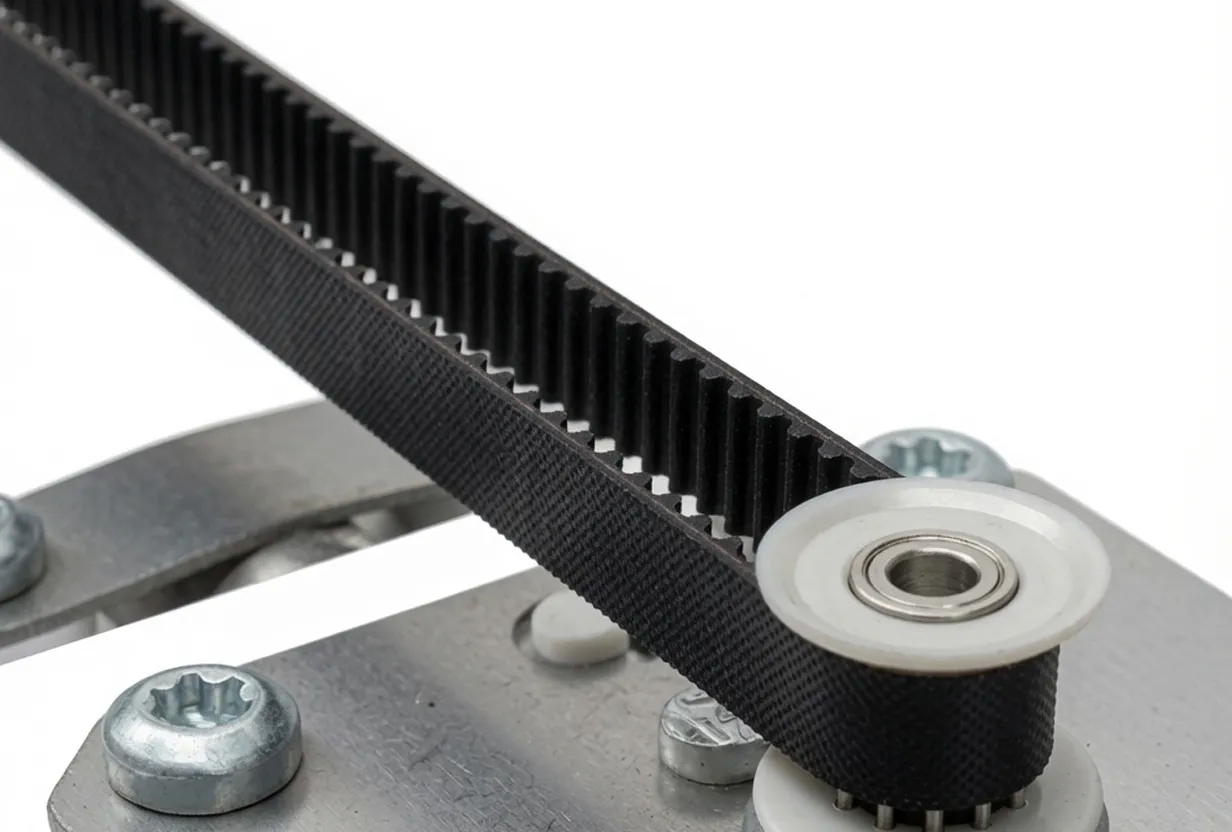
メートルピッチ標準歯付きバー
Hピッチリニアモーション駆動回路の場合、回転するH 075 ストレートボアタイミングプーリー リターンベルトループではなく、直線歯付きラックを駆動します。メトリックピッチ標準歯付きバーは、ラックコンポーネントに適合するHピッチ歯形状を提供します。用途には、連続閉ループベルトが実用的でないオープンループ直線コンベヤ駆動、往復スライド駆動、および長距離位置決めシステムなどがあります。Hピッチ歯付きバーは通常、H 075と組み合わせて使用されます。 ストレートボアタイミングプーリー 駆動回路の要件を満たす、直線速度と力伝達の実用的なバランスを提供する、歯数18T~30Tのユニット。
Vプーリー(Vベルトプーリー)
産業機械の駆動系において、主高トルク回路がVベルト駆動を使用し、二次同期位置決め回路がHピッチタイミングベルトを使用する場合には、 Vプーリー そしてH 075 ストレートボアタイミングプーリー 同じシャフトに取り付けることができます。当社のVベルトプーリーは、SPB、SPC、SPA断面で、H 075で使用されるシャフト寸法と互換性のあるボアサイズで提供されています。 ストレートボアタイミングプーリー ユニット(内径14mm~90mm)を取り揃えており、単一の供給元から駆動システム全体を供給できます。Vベルトとタイミングベルトを組み合わせた駆動構成は、繊維機械、印刷機、産業オートメーションなどでよく見られます。これらの機械では、同じシャフト上で異なる回路に異なるベルト技術が必要となるためです。

よくある質問
Q1. H 075シリーズのストレートボアタイミングプーリーとは何ですか?また、12.700 mmピッチは、ヨーロッパおよび北米の産業機械向けの他のタイミングベルトプーリーのピッチオプションと比較してどうですか?
H 075 ストレートボアタイミングプーリー は、歯ピッチが 12.700 mm (0.5 インチ) の中~重荷重用同期ベルト駆動プーリーです。XL 5.080 mm ピッチ (軽荷重、トルク範囲 2~10 Nm) および MXL 2.032 mm ピッチ (小型駆動、2 Nm 未満) と比較して、H ピッチは ストレートボアタイミングプーリー 26.4 mmのベルト幅で20~200 Nmのトルクに対応し、ヨーロッパおよび北米の工業プラントにおけるコンベヤ主駆動装置、工作機械送り回路、包装インデックス機構に適した仕様となっています。Hピッチを超えるXH(22.225 mm)およびXXH(31.750 mm)ピッチは、より広いベルトでより高いトルクに対応できますが、中心距離が大幅に大きくなるため、Hピッチが使用できる多くの機械フレームの制約から除外されます。 ストレートボアタイミングプーリー 実用的である。
Q2. 在庫品の納品とカスタムボア加工、およびANSI/RMA規格に準拠した文書を提供してくれる、信頼できるH 075タイミングベルトプーリーのサプライヤーはどこで見つけられますか?
私たちは維持します タイミングプーリーストック H 075の ストレートボアタイミングプーリー 標準ボア仕様の14Tから50Tまでのシリーズを取り揃えており、お客様のご要望の直径に合わせてCNCボア加工を7~15営業日で承ります。米国、英国、ドイツ、オーストラリア、日本、東南アジアのグローバルな産業バイヤーに、標準仕様と標準仕様の両方を提供しています。 タイミングプーリーストック プーリーとカスタム ストレートボアタイミングプーリー お客様の仕様に合わせて加工いたします。ANSI/RMA IP-26適合証明書、材料証明書、RoHS指令適合宣言書は、ご要望に応じてすべての注文に添付いたします。部品コード、必要な穴径、数量をお知らせいただければ、弊社営業チームまでご連絡いただければ、即日お見積もりいたします。
Q3. 30 H 075タイミングプーリーのピッチ円直径はどれくらいですか?また、特定の中心距離に対して適切なHピッチタイミングベルトの長さを計算するには、どのように使用すればよいですか?
30 H 075 ストレートボアタイミングプーリー ピッチ円直径は 121.28 mm です (寸法表より)。2 つのプーリー H 駆動のベルトピッチ長さは、次のように計算されます。L = 2C + π (D1 + D2) / 2 + (D2 − D1)² / 4C、ここで、C = 中心距離、D1 = 小さい方のプーリーの Dp、D2 = 大きい方のプーリーの Dp。中心距離 300 mm で 20 H 075 (Dp 80.85 mm) を 30 H 075 (Dp 121.28 mm) で駆動する場合: L = 2 × 300 + π × (121.28 + 80.85) / 2 + (121.28 − 80.85)² / (4 × 300) = 600 + 317.5 + 1.37 = 918.9 mm。この計算値より最も近い標準 H ベルト長さを選択します。当社のエンジニアリングチームは、お客様の特定の駆動要件に合わせて、ベルトの長さ、中心距離、ベルトの選定などを含む、駆動設計に関するあらゆる計算を無料で実施いたします。
Q4. ドイツまたは英国の機器メーカーから元の部品番号が不明な場合、H 075シリーズコンベヤ駆動装置のタイミングベルトプーリーの交換部品をどのように指定すればよいですか?
正しいものを指定するには タイミングベルトプーリーの交換 元の部品番号がない場合、測定対象は既存の部品のピッチ円直径 Dp です。 ストレートボアタイミングプーリー (ベルトピッチ×歯数から計算するか、歯数を数えて Dp = N × 12.700 / π を使用して測定)、ボア径(シャフトを取り外した後、内径マイクロメータで測定)、キー溝幅、ハブ長さ L、フランジが一体型かボルトオン型か。これらの 5 つの測定値を H 075 寸法表と照合して、適切な交換部品を特定します。 ストレートボアタイミングプーリー 部品コード。英国およびドイツの産業プラント保守チーム向けに、無料の寸法と仕様の照合サービスを提供しています。測定寸法をお送りいただければ、正しいH 075を確認いたします。 ストレートボアタイミングプーリー 部品コードをお知らせいただければ、24時間以内にお見積もりをご提示いたします。
Q5. 24 H 075ストレートボアタイミングプーリーの最大ボア径はどれくらいですか?また、包装機械用途では通常どのシャフトサイズと組み合わせて使用されますか?
24時間075 ストレートボアタイミングプーリー ハブ径 Dm は 72 mm です。キー付き標準ストレートボア構成の場合、最大ボア径は約 Dm の 60% で、最大ボア径は約 43 mm になりますが、実際の最大径は、キー溝の寸法と伝達トルクに必要なハブ壁厚にも依存します。包装機械用途では、24 H 075 ストレートボアタイミングプーリー 2.2~5.5kWの4極モーターの場合、標準的なモーター出力軸サイズにおいて、内径25mm、30mm、または35mmのものが最も一般的な仕様です。モーターフレームサイズと軸の仕様をお知らせいただければ、お客様の用途に適した内径とキーを確認させていただきますので、弊社のエンジニアリングチームまでお問い合わせください。
Q6. 6F型と6WF型のH 075タイミングベルトプーリーの主な違いは何ですか?また、オーストラリアや東南アジアの産業用駆動装置では、それぞれどのような場合に指定すればよいですか?
6F型 ストレートボアタイミングプーリー (スチール製プーリー、14T~42Tで使用)プーリー本体に取り付けられた別体の6ボルトプレス加工スチールフランジを使用します。フランジは、ベルトを取り外さずに取り付けることができます。 ストレートボアタイミングプーリー シャフトから、オーストラリアや東南アジアの製造工場の狭い産業機械設備において実用的なメンテナンス上の利点となる。6WF型(鋳鉄に使用) ストレートボアタイミングプーリー 44T~48Tユニットでは、鋳造品と一体化されているものの、メインプーリー本体とは別になっている溶接フランジが使用されています。49Tおよび50Tの6Wタイプでは、別個のフランジは取り付けられていません。ハブとウェブの形状により、より大きな直径のベルトに対して十分なガイドが提供されます。 ストレートボアタイミングプーリー 単位。現場でのメンテナンスベルト交換が頻繁に行われる小型プーリーには6Fを指定してください。44T以上の大径プーリーには6WFまたは6Wでも構いません。
Q7. 工作機械の送り駆動において、同じトルク用途の場合、H075鋼製ストレートボアタイミングプーリーはHTDタイミングベルトプーリーと比べてどうですか?
HTD(高トルク駆動)プーリーは、5M、8M、または14Mのメートルピッチの円形曲線歯形を採用しており、台形のHシリーズ歯形よりもベルト歯体全体に均一な荷重分布を実現します。トルクレベルと速度要件がH 075の容量範囲内にある工作機械の送り駆動には、Hシリーズが適しています。 ストレートボアタイミングプーリー 既存のHピッチベルトとの互換性や、確立された業界標準との互換性が求められる場合、HTD 5Mまたは8Mプロファイルは依然として有効な仕様です。最小ベルト幅で最大トルク密度を最重要視する新規機械設計においては、HTD 5Mまたは8Mプロファイルが効率面で優位性を発揮する可能性があります。当社のエンジニアリングチームは、お客様の特定の駆動回路パラメータに基づいて直接比較を行い、最適なベルトを特定することができます。 タイミングベルトプーリー タイプ選択。
Q8. 米国で新規機械設計を行う際に、非標準の歯数や穴径が必要な場合、H 075シリーズのカスタムタイミングプーリーオプションにはどのようなものがありますか?
専門家として タイミングプーリーメーカーカスタム生産 ストレートボアタイミングプーリー H ピッチシリーズのユニットで、カタログの 14T ~ 50T の範囲外の非標準歯数 (通常は最小 12T ~ 最大 60T) を持ち、同じ ANSI H ピッチ歯形に加工され、顧客指定のボア、ハブ長さ、フランジ構成を持つもの。構造上の制限内のカスタムボア径 ストレートボアタイミングプーリー ハブ本体は、シリーズのどの歯数にも対応可能です。新製品開発プログラムで非標準のH 075プーリーを必要とする米国のOEM機械メーカー向けに、確定図面から10~15営業日で試作品を製作し、出荷前に寸法検査レポートを提供します。歯数、ボア、ハブ仕様をお知らせいただければ、弊社の営業チームまでカスタム製作を承ります。 ストレートボアタイミングプーリー 引用。
Q9. 日本と韓国の工場で、メンテナンス用スペアパーツとして最も一般的に注文される歯数H 075ストレートボアタイミングプーリーはどれですか?
日本と韓国の産業プラントのメンテナンス用途で最もよく注文されるのはH 075です。 ストレートボアタイミングプーリー タイミングベルトプーリーの交換 歯数は22T、24T、28T、30T、36Tで、日本のOEM規格および韓国のOEM規格に基づいて製造されるコンベヤ、繊維機械、包装機械で最も頻繁に指定される駆動比範囲をカバーしています。22Tと24T ストレートボアタイミングプーリー ユニットは最も一般的な駆動装置(モーターシャフト上の小型プーリー)であり、28T、30T、および36Tは一般的な従動プーリーで、22Tまたは24Tの駆動装置から1.27:1、1.36:1、および1.5:1から1.64:1の比率を提供します。 タイミングプーリーストック これらの歯数と標準内径サイズの製品は、当社の地域貨物輸送パートナーを通じて、日本と韓国へ翌日発送いたします。
編集者: PXY