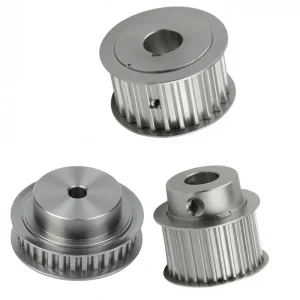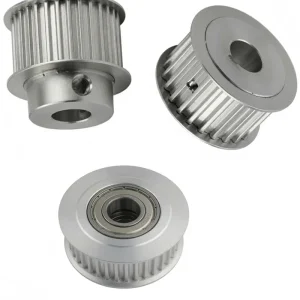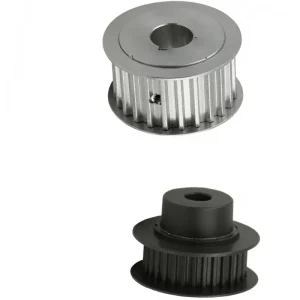

EP-H200 12.7MM எஃகு மற்றும் வார்ப்பிரும்பு நேரான துளை டைமிங் புல்லி
The EP-H200 12.7mm Steel & Cast Iron Timing Pulleys are designed for heavy-duty power transmission with a 12.7mm pitch. Available in tooth counts from 14 to 156, they are manufactured from high-strength Steel (types 6F, 6WF, 6W) or Cast Iron (type 6A) to withstand rigorous industrial loads.
Key specifications include a consistent flange width (F) of 58.7mm. Smaller models (14–42 teeth) feature a length (L) of 70mm, while larger sizes extend to 75mm. Bore diameters (Dm) range from 40mm to 120mm, accommodating diverse shaft requirements. With precise outer diameters (De) spanning 55.22mm to 629.26mm, the H200 series ensures accurate synchronization and durability for demanding machinery applications.
EP-H200 12.7MM Steel & Cast Iron Straight Bore Timing Pulley
Heavy-Duty H Pitch Wide Face Straight Bore Timing Belt Pulley — Steel and Cast Iron, 14 to 156 Teeth, F = 58.7 mm
1. H 200 (12.700 mm) — Full Dimensional Specification Table
All dimensions in millimeters. Dp = Pitch Diameter; De = Outside Diameter; Df = Flange Diameter; Dm = Body Diameter; Di = Inner Diameter; F = Face Width (58.7 mm throughout); L = Hub Length; d = Bore Reference. Material: STEEL for 14–52 teeth; CAST IRON for 58–156 teeth. Dash (—) indicates dimension not applicable for that structural type.
| பகுதி குறியீடு | பற்கள் | வகை | பொருள் | Dp | De | Df | Dm | Di | F | L | d | விளிம்பு எண். |
|---|---|---|---|---|---|---|---|---|---|---|---|---|
| 14 H 200 | 14 | 6F | எஃகு | 56.60 | 55.22 | 64 | 40 | — | 58.7 | 70 | 11 | 59 |
| 15 H 200 | 15 | 6F | எஃகு | 60.64 | 59.27 | 66.5 | 45 | — | 58.7 | 70 | 11 | 60 |
| 16 H 200 | 16 | 6F | எஃகு | 64.68 | 63.31 | 70 | 45 | — | 58.7 | 70 | 11 | 61 |
| 17 H 200 | 17 | 6F | எஃகு | 68.72 | 67.35 | 75 | 45 | — | 58.7 | 70 | 11 | 62 |
| 18 H 200 | 18 | 6F | எஃகு | 72.77 | 71.39 | 79 | 55 | — | 58.7 | 70 | 14 | 63 |
| 19 H 200 | 19 | 6F | எஃகு | 76.81 | 75.44 | 82.5 | 60 | — | 58.7 | 70 | 14 | 64 |
| 20 H 200 | 20 | 6F | எஃகு | 80.85 | 79.48 | 87 | 62 | — | 58.7 | 70 | 14 | 76 |
| 22 H 200 | 22 | 6F | எஃகு | 88.94 | 87.56 | 94 | 68 | — | 58.7 | 70 | 14 | 67 |
| 24 H 200 | 24 | 6F | எஃகு | 97.02 | 95.65 | 102 | 72 | — | 58.7 | 70 | 14 | 70 |
| 26 H 200 | 26 | 6F | எஃகு | 105.11 | 103.73 | 112 | 80 | — | 58.7 | 70 | 14 | 72 |
| 28 H 200 | 28 | 6F | எஃகு | 113.19 | 111.82 | 120 | 80 | — | 58.7 | 70 | 14 | 75 |
| 30 H 200 | 30 | 6F | எஃகு | 121.28 | 119.90 | 128 | 80 | — | 58.7 | 70 | 14 | 78 |
| 32 H 200 | 32 | 6F | எஃகு | 129.36 | 127.99 | 135 | 80 | — | 58.7 | 70 | 14 | 80 |
| 35 H 200 | 35 | 6F | எஃகு | 141.49 | 140.12 | 150 | 80 | — | 58.7 | 70 | 14 | 85 |
| 36 H 200 | 36 | 6WF | எஃகு | 145.53 | 144.16 | 150 | 80 | 118 | 58.7 | 70 | 14 | 85 |
| 38 H 200 | 38 | 6WF | எஃகு | 153.62 | 152.24 | 158 | 80 | 126 | 58.7 | 70 | 14 | 86 |
| 40 H 200 | 40 | 6WF | எஃகு | 161.70 | 160.33 | 168 | 80 | 134 | 58.7 | 70 | 14 | 90 |
| 42 H 200 | 42 | 6WF | எஃகு | 169.79 | 168.41 | 180 | 80 | 140 | 58.7 | 70 | 19 | 94 |
| 44 H 200 | 44 | 6WF | எஃகு | 177.87 | 176.50 | 184 | 80 | 150 | 58.7 | 70 | 19 | 95 |
| 45 H 200 | 45 | 6WF | எஃகு | 181.91 | 180.54 | 192 | 80 | 154 | 58.7 | 70 | 19 | 96 |
| 48 H 200 | 48 | 6WF | எஃகு | 194.04 | 192.67 | 200 | 90 | 166 | 58.7 | 75 | 24 | 100 |
| 49 H 200 | 49 | 6W | எஃகு | 198.08 | 196.71 | — | 90 | 170 | 58.7 | 75 | 24 | — |
| 52 H 200 | 52 | 6W | எஃகு | 210.21 | 208.84 | — | 90 | 182 | 58.7 | 75 | 24 | — |
| 58 H 200 | 58 | 6A | வார்ப்பு இரும்பு | 234.47 | 233.09 | — | 90 | 207 | 58.7 | 75 | 24 | — |
| 60 H 200 | 60 | 6A | வார்ப்பு இரும்பு | 242.55 | 241.18 | — | 90 | 215 | 58.7 | 75 | 24 | — |
| 70 H 200 | 70 | 6A | வார்ப்பு இரும்பு | 282.98 | 281.61 | — | 100 | 255 | 58.7 | 75 | 28 | — |
| 84 H 200 | 84 | 6A | வார்ப்பு இரும்பு | 339.57 | 338.20 | — | 100 | 312 | 58.7 | 75 | 28 | — |
| 96 H 200 | 96 | 6A | வார்ப்பு இரும்பு | 388.08 | 386.71 | — | 120 | 360 | 58.7 | 75 | 28 | — |
| 120 H 200 | 120 | 6A | வார்ப்பு இரும்பு | 485.10 | 483.73 | — | 120 | 458 | 58.7 | 75 | 28 | — |
| 150 H 200 | 150 | 6A | வார்ப்பு இரும்பு | 606.38 | 605.01 | — | 120 | 579 | 58.7 | 75 | 28 | — |
| 156 H 200 | 156 | 6A | வார்ப்பு இரும்பு | 630.64 | 629.26 | — | 120 | 603 | 58.7 | 75 | 28 | — |
Note: Additional tooth counts available including 21, 23, 25, 27, 29, 33, 34, 38, 42, 45, 50, 72, 82, 94, 106, 116, 118, 152, 154 — contact for complete 43-part H200 dimensional table. Bore diameter (d) reference reflects minimum standard bore; custom bores available on request.
2. H200 vs H100: Key Dimensional Differences
Engineers selecting between the H100 and H200 straight bore timing pulley series for a new or upgraded drive need to understand three key dimensional differences beyond the obvious face width change. These straight bore timing pulley differences affect shaft and machine design, belt sourcing, and physical clearance verification.
| Parameter | H100 Series | H200 Series | Design Implication |
|---|---|---|---|
| Face Width F | 31.8 mm (1.25") | 58.7 mm (2.31") | +84% — wider axial space needed |
| Hub Length L (small TC) | 45 mm (14–35 teeth) | 70 mm (14–47 teeth) | +25 mm longer hub — check shaft length |
| Hub Length L (large TC) | 50–60 mm (36–156 teeth) | 75 mm (48–156 teeth) | More consistent; longer engagement |
| Belt Width Required | H100 (1.000" = 25.4 mm) | H200 (2.000" = 50.8 mm) | Different belt ordering designation |
| Power Capacity Ratio | 1.0 (reference) | ≈ 1.85× | H200 transmits approximately 85% more power at same conditions |
| Bore Reference d (large TC) | 19 mm | 24–28 mm | Minimum bore larger — verify shaft diameter |
3. About Our H200 Series — H Pitch, 2-Inch Face Width
The EP-H200 series is a wide-face H pitch நேரான துளை டைமிங் புல்லி manufactured to the same 12.700 mm (0.500 inch) ANSI H tooth pitch specification as the H100 series but with a substantially wider face dimension of F = 58.7 mm — approximately 1.84 times the 31.8 mm face of the H100 series. The "200" suffix in the H200 designation refers to the 2.000-inch (50.8 mm nominal) face width belt class that this pulley is designed to accommodate, placing this straight bore timing pulley in the wide-belt segment of the H pitch product family. This wider face dimension directly translates to higher power transmission capacity for the straight bore timing pulley: because synchronous belt power rating scales in direct proportion to belt face width at a given pitch, center distance, and speed, the H200 straight bore timing pulley transmits approximately 85% more power than an equivalent tooth-count H100 pulley at the same operating conditions, using a 2-inch H belt instead of a 1-inch H belt.
The H200 நேரான துளை டைமிங் புல்லி is the natural choice when an H100 belt drive reaches its power capacity limit and the application cannot accept switching to a larger pitch (XH = 22.225 mm) or a higher-performance profile (HTD 14M) due to existing belt and pulley infrastructure or space constraints on the belt outer dimension. Rather than redesigning the entire drive system, using this straight bore timing pulley with a wider belt within the same H pitch standard provides proportional power increase with minimal machine modification — only the straight bore timing pulley set and belt need to change, not the drive centers, guards, or shaft dimensions. This incremental approach to power uprating is the primary engineering application of the H200 straight bore timing pulley series in industrial machine upgrade projects across the global H pitch user base.
Available in steel for tooth counts 14 through 52 and in cast iron for 58 through 156 teeth, this straight bore timing pulley series covers pitch diameters from 56.60 mm (14 teeth) through 630.64 mm (156 teeth) — the same dimensional range as the H100 straight bore timing pulley series at the pitch circle, since pitch circle diameter is determined by tooth count and pitch alone, not by face width. What changes between the H100 and H200 straight bore timing pulley at the same tooth count is the face dimension, the hub length (L increases from 45–60 mm in H100 to 70–75 mm in H200 to accommodate the wider belt), and the bore reference diameter (d increases accordingly). These changes must be verified when selecting H200 as a wide-belt replacement for H100 positions, to confirm that the wider pulley fits within the available axial clearance on the shaft.
4. Five Key Product Advantages
The 58.7 mm face dimension of the H200 நேரான துளை டைமிங் புல்லி enables the use of a 2-inch H pitch belt that transmits approximately 85% more power than the 1-inch H100 belt at the same tooth count, shaft speed, and center distance. This power increase is achieved without changing the tooth pitch on this straight bore timing pulley, so the belt-to-pulley engagement geometry and the kinematic ratio remain identical to an H100 drive at the same tooth counts. The only mechanical changes required for this power upgrade are the wider pulley set and belt — the shaft dimensions, bearings, and drive centers can remain unchanged, provided the shaft can carry the higher belt tension that the wider belt generates. This approach provides a more economical power upgrade path than switching to a larger pitch with all the associated design changes.
The H200 straight bore timing pulley series features hub lengths of L = 70 mm (for 14–48 teeth) and L = 75 mm (for 49–156 teeth), compared to L = 45–60 mm in the H100 series. The longer hub length provides a larger contact area between the pulley bore and the shaft surface, distributing the keyway torque over a wider axial span that reduces the peak pressure at the key ends and decreases the risk of fretting wear and corrosion at the bore-shaft interface under sustained cycling. The longer hub also gives the grub screw or end-plate retention fasteners a larger lever arm for clamping force, improving positional security of this straight bore timing pulley in reversing-load applications. For heavy industrial drives where the shaft torque transmitted through the H200 pulley is high, this extended hub engagement is a meaningful reliability improvement over shorter hub alternatives.
The H200 straight bore timing pulley tooth form, pitch circle geometry, and bore concentricity conform to ANSI/RMA IP-24 and ISO 5294 dimensional requirements for H pitch pulleys, ensuring that the 2-inch (50.8 mm nominal) H belt from any ANSI-compliant manufacturer meshes correctly with the H200 pulley. The H pitch is one of the most widely distributed synchronous belt pitch families globally, with belt stock held by industrial distributors in North America, Europe, East Asia, Australia, and Latin America. This global belt availability is a critical reliability factor for the straight bore timing pulley in remote industrial locations — mines, offshore platforms, agricultural processing plants — where the ability to source a replacement belt locally or via express freight determines the extent of unplanned production shutdown when a belt fails unexpectedly.
Like the H100 series, the H200 straight bore timing pulley uses steel (medium-carbon or alloy steel) for tooth counts 14–52 and grey cast iron for tooth counts 58–156. At the H200 face width, the cross-sectional area of each material is proportionally larger — the wider rim carries more belt tension load, and the wider hub distributes the shaft torque across more material. The steel pulleys at small tooth counts handle the higher centrifugal stress at the increased belt peripheral speed, while the cast iron large-diameter pulleys provide the vibration damping, machinability, and economic castability that make large cast iron timing pulleys the standard specification in heavy industrial drive engineering. The material transition at 52 to 58 teeth (approximately 210 to 234 mm pitch diameter) in this straight bore timing pulley aligns with the transition from higher-speed steel service to lower-speed cast iron service that characterizes H pitch drive system design for most industrial applications.
The bore reference dimension (d) in the H200 straight bore timing pulley series ranges from 11 mm (for 14–17 tooth steel pulleys) through 19 mm (for 42–52 tooth steel and small cast iron types) to 24 mm and 28 mm (for larger cast iron pulleys), reflecting the progressively larger minimum bore that the wider H200 hub can accommodate before the keyway depth infringes on the hub wall thickness minimum. This range covers the standard shaft diameter progression in industrial conveyor and process machinery from approximately 12–15 mm servo motor output shafts through the 25–50 mm shafts common in medium-duty industrial gearbox outputs. Custom bore machining above the standard reference diameter is available on request, accommodating non-standard shaft sizes encountered in retrofit and upgrade applications across the global industrial maintenance market.
5. Working Principle: H200 Wide-Face Synchronous Belt Drive
The H200 டைமிங் பெல்ட் புல்லி, which is a precision straight bore timing pulley, operates on the same synchronous engagement principle as all H pitch pulleys: the trapezoidal teeth of the H pitch belt engage with the tooth spaces machined into the pulley rim, transmitting torque through positive mechanical mesh rather than friction. The distinction of the H200 straight bore timing pulley from the H100 lies not in the engagement geometry — which is identical at both series because the pitch is the same — but in the load distribution across the wider belt-to-pulley contact. At 58.7 mm face width compared to 31.8 mm for the H100, the total belt-to-pulley contact area is approximately 85% greater, and the resultant belt tension per millimeter of face width at the same transmitted power is proportionally lower. This reduced specific belt load extends straight bore timing pulley belt service life, reduces the normal force on the pulley tooth flanks, and lowers the bending stress in the pulley rim at the root of each tooth space — all contributing to longer pulley service life in continuous heavy duty applications.
The power transmitted by this straight bore timing pulley drive is the product of the tangential belt force and the pitch circle peripheral speed. Tangential force is the difference between the tight-side and slack-side belt tensions, and this force is supported by the teeth in engagement — typically 6 to 12 teeth simultaneously for wrap angles between 90 and 180 degrees. At the H200 straight bore timing pulley face width, the per-tooth tangential load at any given drive power is approximately 54% of the per-tooth load at H100 width, providing a substantial reduction in the probability of tooth shear failure under shock loading. This makes the H200 நேரான துளை டைமிங் புல்லி series particularly well suited to applications with significant load variability — crusher drives that encounter hard material inclusions, mixers that start under full load, and conveyor drives that jam and unjam — where peak tangential loads may be 2 to 4 times the steady-state calculated value and belt tooth failure risk is the primary drive reliability concern.
தி timing belt drive pulley, as a straight bore timing pulley in the H200 series, functions identically to the H100 in terms of kinematic ratio: the output-to-input speed ratio is determined solely by the tooth count ratio, with zero slip, providing the precise velocity synchronization between drive and driven shafts that distinguishes timing belt systems from V-belt, chain, and friction-type drives. The arm-spoked Type 6A structure used in cast iron H200 straight bore timing pulley products at 58 teeth and above transmits torque from the hub through radial arms to the rim with a structural efficiency that minimizes material use while maintaining the fatigue life requirement for the pulley's rated service in continuous industrial drive service.
6. Materials for the H200 Series
The H200 straight bore timing pulley series uses the same material progression as the H100: medium-carbon or alloy steel for the small-tooth-count range (14–52 teeth) and grey cast iron for the large-tooth-count range (58–156 teeth). At the H200 straight bore timing pulley face width, the significance of this material selection is amplified — the steel rim at 58.7 mm face width carries the full tension of the wider H belt, and the yield strength and fatigue endurance of the steel material must be adequate for the higher total belt tension at rated power. Medium-carbon steel (45C equivalent) in the normalized or quench-and-tempered condition achieves 0.2% proof strength in the 295–440 MPa range, well above the calculated rim stress for H200 pulleys within the rated power range of the H pitch belt.
The cast iron H200 straight bore timing pulley products (58–156 teeth) use grey iron with a minimum tensile strength of approximately 200 MPa (HT200 class) and Brinell hardness in the HB 180–220 range. At the H200 belt width, the wider rim section has more material to carry the tooth root bending stress, and the grey iron strength is adequate for all tooth counts in the 6A arm-spoked range when operating within the rated power capacity of the H200 belt. The arm dimensions in the 6A cast iron H200 straight bore timing pulley are proportioned to carry the hub-to-rim torque at the wider belt tension without exceeding the grey iron's permissible bending stress, consistent with cast iron straight bore timing pulley component design standards referenced in AGMA and ISO gear/sprocket design practice.
Need a size straight bore timing pulley or custom bore specification for your drive?
7. பயன்பாட்டுச் சூழ்நிலைகள்
The H200 நேரான துளை டைமிங் புல்லி is specified in applications where the H100 belt drive cannot transmit the required power within acceptable belt tensions, and where switching to a completely different pitch family would require excessive redesign. Below are the primary industrial sectors where H200 drives are deployed globally.
Heavy-duty conveyor systems at mining operations, aggregate processing plants, and port bulk material terminals require straight bore timing pulley drives that can handle the high starting torques and sustained heavy loads of these applications without belt slippage. The H200 டைமிங் பெல்ட் புல்லி straight bore timing pulley provides the power capacity for large conveyor drives — particularly at the indexing and metering conveyor positions where precise position-holding between belt movements defines product quality — without requiring the wider XH pitch pulleys that occupy significantly more installation space. Operators in Australia, South Africa, Chile, and Kazakhstan regularly specify the H200 straight bore timing pulley for these applications, valuing the wide global H pitch belt availability for maintenance in remote mine locations.
Large-format food processing lines — industrial bread ovens, meat processing conveyors, canned goods filling lines — use H200 straight bore timing pulley timing belt drive pulley systems at their main line shaft positions where the synchronized motion of multiple process stations must be maintained simultaneously. The 2-inch H belt matched to this straight bore timing pulley allows these demanding drives to be accomplished within the clean-design constraints of food contact machinery, where belt cover access for maintenance must be simple and rapid. H pitch belts are available in food-grade versions with white or FDA-compliant materials, and the H200 straight bore timing pulley standard bore and keyway design allows removal for equipment sanitization cleaning without special tooling. European food processing equipment OEMs in Germany, the Netherlands, Denmark, and Spain commonly specify H200 drives in their machine platforms.
Positive displacement pumps and air compressors that require precise speed ratio use H pitch straight bore timing pulley drives as an alternative to direct coupling or V-belt arrangements. The H200 straight bore timing pulley series covers the power levels of medium and large industrial rotary positive displacement pumps where the steady, shock-free load and the importance of accurate speed ratio for pump output calculation make synchronous belt drives preferable. The belt straight bore timing pulley connection allows easy speed ratio adjustment by changing the pulley pair without relocating the pump — particularly valuable in pump testing and chemical dosing applications in Korea, Taiwan, and India where process optimization requires frequent drive ratio adjustment during commissioning.
Large-format web offset printing presses and papermaking equipment use H200 straight bore timing pulley drives at the main line shaft positions where the simultaneous synchronization of multiple print units or machine sections requires perfect speed ratio maintenance across the full power range from idle to maximum speed. The H200 straight bore timing pulley wider belt provides the high torque transmission needed at slow speeds during press start-up — when the line shaft accelerates from rest to production speed while all mechanical loads are simultaneously engaged — without requiring belt tensioner idler designs that add mechanical complexity to the main drive system. Printing equipment OEMs in Japan, Germany, Switzerland, and the United States specify H200 straight bore timing pulley drives in their large-format presses as the standard main drive configuration.
Large-format CNC machining centers, heavy-duty lathes, and floor-type boring mills use H200 straight bore timing pulley synchronous drives in their main spindle drive stages where the high cutting power transmitted between the motor and spindle exceeds the H100 belt capacity. The new straight bore timing pulley H200 series in steel (24–48 tooth range) covers the small-diameter high-speed spindle drive positions on these machines, where the pulley must be light enough not to add excessive inertia to the spindle acceleration profile while transmitting the full rated spindle power. Machine tool OEMs in South Korea, Taiwan, and Italy specify H200 straight bore timing pulley drives in their heavy-duty machining platforms where the cutting power requirement exceeds the capacity of the more commonly used XL and L pitch drives in standard CNC machines.
8. Standards Compliance — Global Regulatory Framework
The H200 straight bore timing pulley series conforms to ANSI/RMA IP-24 H pitch tooth form and pitch circle diameter specifications. The "200" belt width designation follows the ANSI H belt naming convention where the number represents 10 × face width in tenths of an inch (200 = 2.000 inch = 50.8 mm nominal face width). All H200 straight bore timing pulley products produced to IP-24 dimensional specifications are interchangeable with H200 belts from any ANSI-compliant belt manufacturer worldwide — providing the global sourcing flexibility critical for operations in North America, Latin America, and any market where ANSI standards govern mechanical component procurement.
ISO 5294 and ISO 5296 define H pitch synchronous belt and pulley dimensional requirements for international markets outside the North American ANSI framework. These ISO standards are reference documents for European, Japanese, Australian, and South Korean straight bore timing pulley procurement specifications. The H200 series' compatibility with ISO 5294 H pitch specifications ensures that buyers in these markets can specify and procure the H200 straight bore timing pulley against their ISO-referenced mechanical design standards, and that the replacement H200 belts can be sourced from ISO-compliant belt manufacturers in their regional markets.
Drive components including the H200 நேரான துளை டைமிங் புல்லி installed in machinery for the EU market must be selected to meet the essential safety requirements of the Machinery Directive, with the pulley-belt combination rated for the application's calculated drive power with a service factor applied. For food processing machinery specifically, the belt material must comply with Regulation (EC) No 1935/2004 on materials in contact with food when food-grade belt variants are installed. Technical file documentation for CE-marked machinery incorporating the H200 straight bore timing pulley should include the pulley dimensional specification, belt rated power data, and the service factor calculation confirming adequate design margin.
JIS B 1856 specifies synchronous belt drive pulleys for the Japanese industrial market, with H pitch specifications dimensionally equivalent to ANSI/RMA IP-24 and ISO 5294. China timing pulley products manufactured to H pitch specifications are fully compatible with Japanese JIS B 1856 requirements at the H200 series level — Japanese printing press OEMs and food processing equipment builders who source H200 pulleys from global suppliers require this cross-standard compatibility to ensure that locally available replacement belts can be used during scheduled maintenance at Japanese facilities.
9. Related Drive System Products
A complete H200 synchronous belt drive system requires matched timing pulley and belt components and may benefit from compatible complementary products for system integration. We supply matched drive products across the complete timing pulley range for one-stop procurement.
For system designs that combine the rotary H200 டைமிங் பெல்ட் புல்லி straight bore timing pulley drive with a linear rack-and-belt stage — common in long-travel linear positioning systems on large-format CNC machines and gantry-type industrial automation — we supply Metric Pitch Standard Toothed Bars to complement the rotary pulley stage. These toothed bars allow the same belt engaged on the H200 pulley to drive along a rack with the same pitch, producing linear motion from the rotary motor drive in a compact, standard-pitch system that does not require a separate linear actuator. This combined rotary-linear straight bore timing pulley architecture reduces the total drive system component count in industrial automation applications.
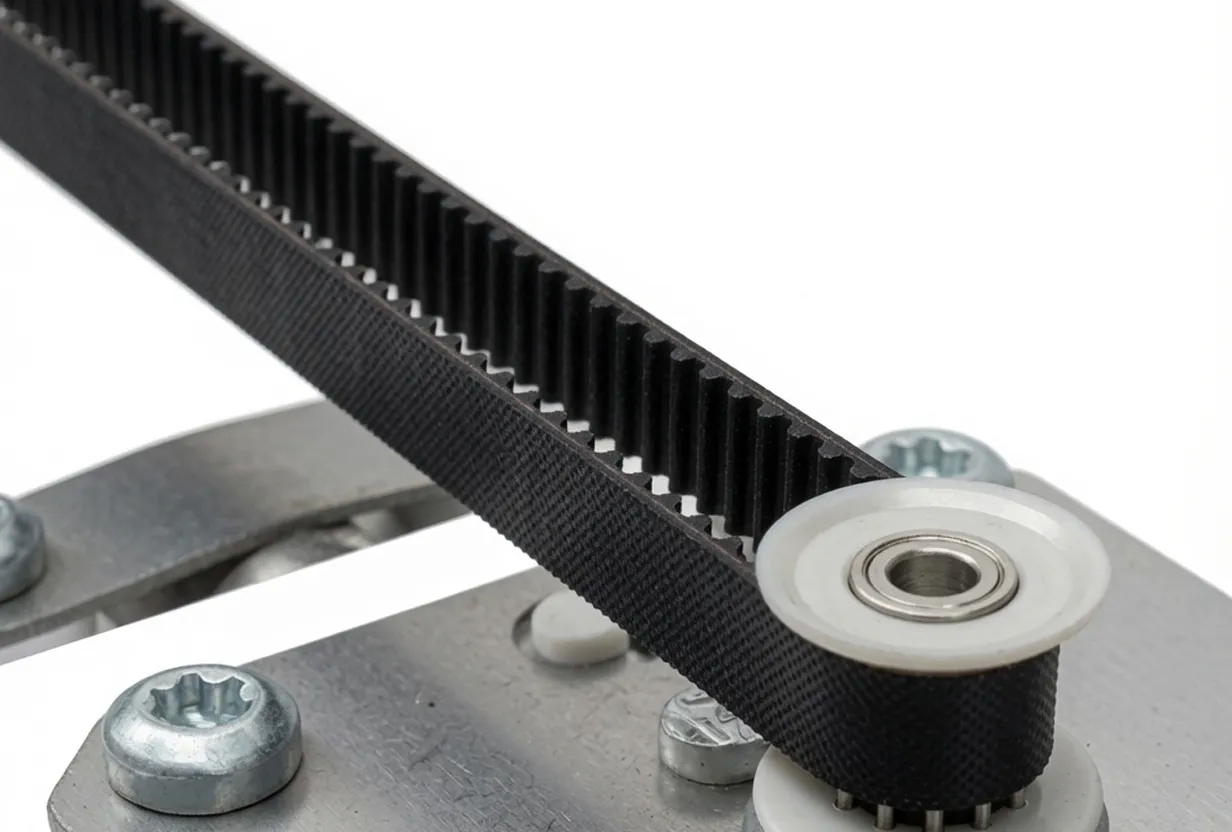
In multi-stage heavy industrial drive systems, a V-belt primary stage handles the bulk power transmission from the motor to an intermediate shaft, while the H200 straight bore timing pulley synchronous secondary stage provides accurate speed ratio from the intermediate shaft to the process equipment. Our V-belt pulley range — covering SPZ, SPA, SPB, SPC, and A/B/C/D groove profiles in cast iron and steel — provides the heavy-duty primary stage counterpart for H200 secondary drives in conveyor, pump, and processing equipment applications. Bore specifications across the straight bore timing pulley and V-belt ranges align with the standard shaft diameter progression used in industrial gearbox and motor output shafts, simplifying the combined drive specification in new machine designs and retrofit projects.

10. எங்களைப் பற்றி
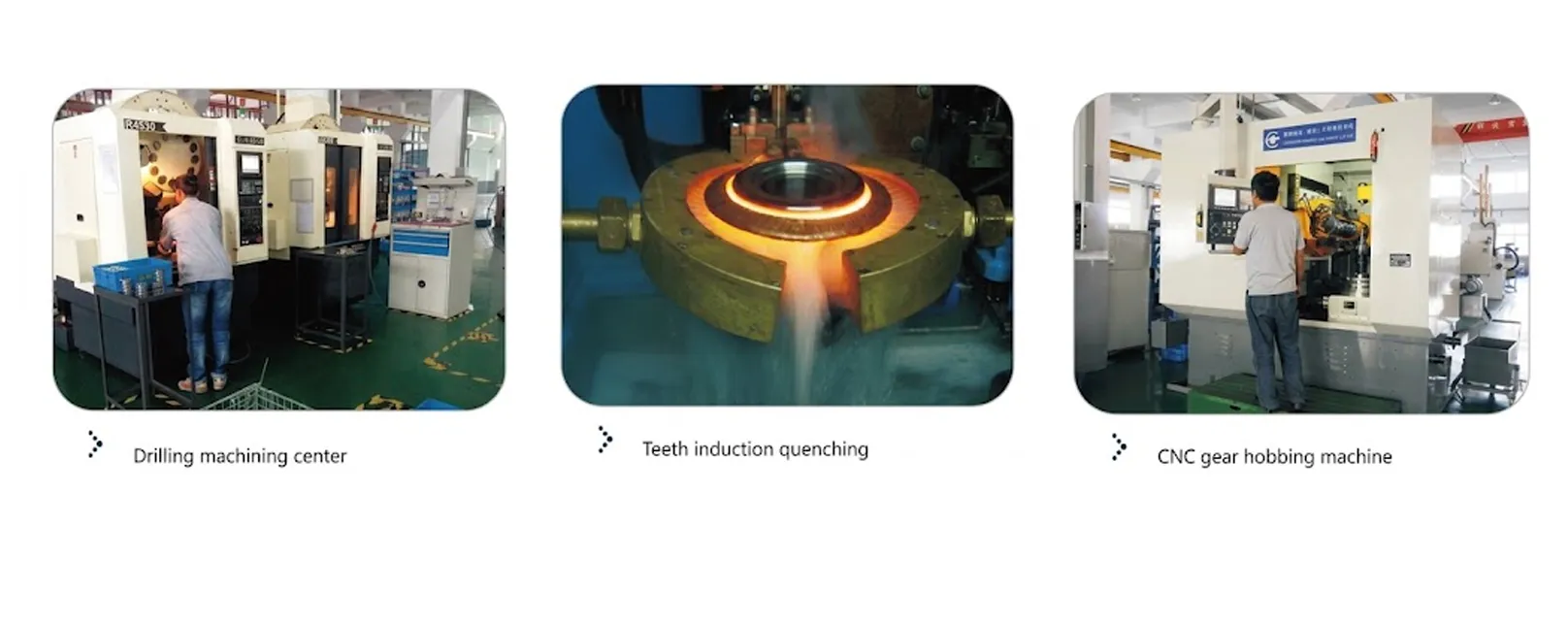
We are a specialized timing pulley manufacturer producing the complete range of ANSI and metric synchronous belt drive pulleys — MXL, XL, L, H (H100/H150/H200/H300), XH, XXH, T2.5, T5, T10, AT5, AT10, HTD 3M, HTD 5M, and HTD 8M pitch — in steel, cast iron, aluminum, and stainless steel across the full tooth count and bore diameter range. Our H200 straight bore timing pulley series production capability spans the full 14–156 tooth range in both steel and cast iron, with CNC finishing of each straight bore timing pulley tooth form, bore, keyway, and hub face to the dimensional tolerances of ANSI/RMA IP-24 and ISO 5294. Every H200 straight bore timing pulley undergoes dimensional inspection before dispatch; critical dimensions (pitch circle diameter, outside diameter, bore diameter, keyway width, and face runout) are verified against the standard tolerances using calibrated gauging equipment traceable to national measurement standards.
We supply timing pulley stock of the most commonly ordered H200 tooth counts in both steel and cast iron for immediate delivery to buyers globally. Custom bore configurations for the straight bore timing pulley — non-standard bore diameters, taper bores, modified hub lengths straight bore timing pulley, and special keyway specifications — are machined to order with lead times of 10–20 business days depending on the tooth count and material. Our engineering team provides straight bore timing pulley drive selection support including power rating calculation, service factor determination, center distance selection, and belt designation specification for buyers integrating H200 straight bore timing pulley products into new machine designs or straight bore timing pulley drive upgrade projects. ISO 9001 quality management certification applies to our complete manufacturing and inspection process.
பட்டறை


அடிக்கடி கேட்கப்படும் கேள்விகள்
பதிப்பாசிரியர்: PXY