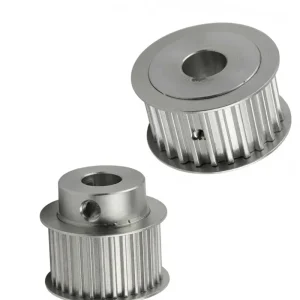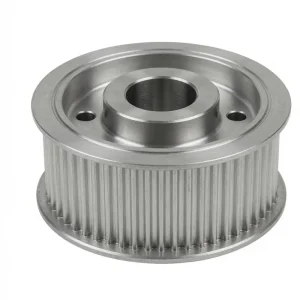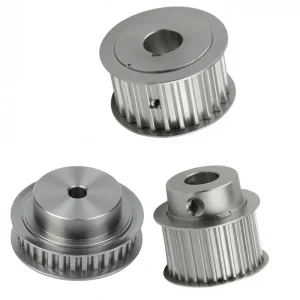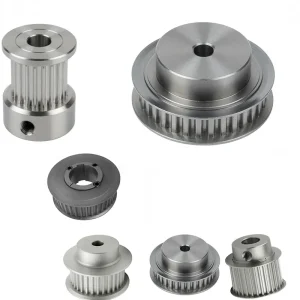

พูลเลย์ไทม์มิ่งแบบรูตรง EP-H100 ขนาด 12.7 มม. ทำจากเหล็กและเหล็กหล่อ
พูลเลย์ไทม์มิ่งเหล็กและเหล็กหล่อ EP-H100 ขนาด 12.7 มม. ออกแบบมาสำหรับไดรฟ์ซิงโครนัสงานหนักที่มีระยะห่างฟัน 12.7 มม. มีให้เลือกจำนวนฟันตั้งแต่ 14 ถึง 156 ซี่ ผลิตจากเหล็กที่ทนทาน (ชนิด 6F, 6WF, 6W) หรือเหล็กหล่อ (ชนิด 6A) เพื่อให้มั่นใจถึงความน่าเชื่อถือภายใต้ภาระสูง
ขนาดที่สำคัญ ได้แก่ ความกว้างของหน้าแปลน (F) ที่สม่ำเสมอ 31.8 มม. ตลอดทั้งรุ่น รุ่นเล็ก (14–42 ฟัน) มีความยาว (L) 45 มม. ในขณะที่ขนาดใหญ่ขึ้นจะยาวถึง 60 มม. เส้นผ่านศูนย์กลางรู (Dm) มีตั้งแต่ 40 มม. ถึง 120 มม. เพื่อรองรับความต้องการของเพลาที่หลากหลาย ด้วยเส้นผ่านศูนย์กลางภายนอก (De) ที่แม่นยำ ตั้งแต่ 55.22 มม. ถึง 629.26 มม. ซีรี่ส์ H100 จึงให้การส่งกำลังที่แม่นยำและแข็งแรงทนทานสำหรับการใช้งานในระบบอัตโนมัติทางอุตสาหกรรมและเครื่องจักรหนัก
พูลเลย์ไทม์มิ่งแบบรูตรง EP-H100 ขนาด 12.7 มม. ทำจากเหล็กและเหล็กหล่อ
พูลเลย์สายพานไทม์มิ่งแบบรูตรง H Pitch สำหรับงานหนัก — ทำจากเหล็กและเหล็กหล่อ จำนวน 14 ถึง 156 ฟัน จัดจำหน่ายโดย Global Industrial Supply
1. H 100 (12.700 มม.) — ตารางข้อมูลจำเพาะด้านขนาดโดยละเอียด
ขนาดทั้งหมดระบุเป็นมิลลิเมตร Dp = เส้นผ่านศูนย์กลางพิทช์; De = เส้นผ่านศูนย์กลางภายนอก; Df = เส้นผ่านศูนย์กลางหน้าแปลน; Dm = เส้นผ่านศูนย์กลางตัวเรือน; Di = เส้นผ่านศูนย์กลางภายใน; F = ความกว้างหน้าตัด; L = ความยาวดุม; d = ระยะห่างรูเจาะ วัสดุ: เหล็กสำหรับ 14–48 ฟัน; เหล็กหล่อสำหรับ 58–156 ฟัน เครื่องหมายขีด (—) แสดงว่าขนาดดังกล่าวไม่เกี่ยวข้องกับประเภทนั้น
| รหัสชิ้นส่วน | ฟัน | พิมพ์ | วัสดุ | ดีพี | เดอ | ดีเอฟ | ดีเอ็ม | ดิ | เอฟ | แอล | ง | หมายเลขหน้าแปลน |
|---|---|---|---|---|---|---|---|---|---|---|---|---|
| 14 ชั่วโมง 100 | 14 | 6F | เหล็ก | 56.60 | 55.22 | 64 | 40 | — | 31.8 | 45 | 11 | 59 |
| 15 ชั่วโมง 100 | 15 | 6F | เหล็ก | 60.64 | 59.27 | 66.5 | 45 | — | 31.8 | 45 | 11 | 60 |
| 16 ชั่วโมง 100 | 16 | 6F | เหล็ก | 64.68 | 63.31 | 70 | 45 | — | 31.8 | 45 | 11 | 61 |
| 17 น. 100 น. | 17 | 6F | เหล็ก | 68.72 | 67.35 | 75 | 45 | — | 31.8 | 45 | 11 | 62 |
| 18 ชั่วโมง 100 | 18 | 6F | เหล็ก | 72.77 | 71.39 | 79 | 55 | — | 31.8 | 45 | 14 | 63 |
| 19 H 100 | 19 | 6F | เหล็ก | 76.81 | 75.44 | 82.5 | 60 | — | 31.8 | 45 | 14 | 64 |
| 20 ชั่วโมง 100 | 20 | 6F | เหล็ก | 80.85 | 79.48 | 87 | 62 | — | 31.8 | 45 | 14 | 76 |
| 22 ชั่วโมง 100 | 22 | 6F | เหล็ก | 88.94 | 87.56 | 94 | 68 | — | 31.8 | 45 | 14 | 67 |
| 24 ชั่วโมง 100 | 24 | 6F | เหล็ก | 97.02 | 95.65 | 102 | 72 | — | 31.8 | 45 | 14 | 70 |
| 26 ชั่วโมง 100 | 26 | 6F | เหล็ก | 105.11 | 103.73 | 112 | 80 | — | 31.8 | 45 | 14 | 72 |
| 28 ชั่วโมง 100 | 28 | 6F | เหล็ก | 113.19 | 111.82 | 120 | 80 | — | 31.8 | 45 | 14 | 75 |
| 30 ชั่วโมง 100 | 30 | 6F | เหล็ก | 121.28 | 119.90 | 128 | 80 | — | 31.8 | 45 | 14 | 78 |
| 32 H 100 | 32 | 6F | เหล็ก | 129.36 | 127.99 | 135 | 80 | — | 31.8 | 45 | 14 | 80 |
| 35 H 100 | 35 | 6F | เหล็ก | 141.49 | 140.12 | 150 | 80 | — | 31.8 | 45 | 14 | 85 |
| 36 H 100 | 36 | 6WF | เหล็ก | 145.53 | 144.16 | 150 | 80 | 118 | 31.8 | 45 | 14 | 85 |
| 40 H 100 | 40 | 6WF | เหล็ก | 161.70 | 160.33 | 168 | 80 | 134 | 31.8 | 45 | 14 | 90 |
| 44 ชั่วโมง 100 | 44 | 6WF | เหล็ก | 177.87 | 176.50 | 184 | 80 | 150 | 31.8 | 50 | 14 | 95 |
| 48 ชั่วโมง 100 | 48 | 6WF | เหล็ก | 194.04 | 192.67 | 200 | 90 | 166 | 31.8 | 50 | 14 | 100 |
| 49 H 100 | 49 | 6 วัตต์ | เหล็ก | 198.08 | 196.71 | — | 90 | 170 | 31.8 | 50 | 19 | — |
| 52 H 100 | 52 | 6 วัตต์ | เหล็ก | 210.21 | 208.84 | — | 90 | 182 | 31.8 | 50 | 19 | — |
| 58 H 100 | 58 | 6A | เหล็กหล่อ | 234.47 | 233.09 | — | 90 | 207 | 31.8 | 50 | 19 | — |
| 60 H 100 | 60 | 6A | เหล็กหล่อ | 242.55 | 241.18 | — | 90 | 215 | 31.8 | 50 | 19 | — |
| 70 H 100 | 70 | 6A | เหล็กหล่อ | 282.98 | 281.61 | — | 100 | 255 | 31.8 | 55 | 19 | — |
| 84 H 100 | 84 | 6A | เหล็กหล่อ | 339.57 | 338.20 | — | 100 | 312 | 31.8 | 55 | 19 | — |
| 96 H 100 | 96 | 6A | เหล็กหล่อ | 388.08 | 386.71 | — | 120 | 360 | 31.8 | 60 | 19 | — |
| 120 H 100 | 120 | 6A | เหล็กหล่อ | 485.10 | 483.73 | — | 120 | 458 | 31.8 | 60 | 19 | — |
| 150 H 100 | 150 | 6A | เหล็กหล่อ | 606.38 | 605.01 | — | 120 | 579 | 31.8 | 60 | 19 | — |
| 156 H 100 | 156 | 6A | เหล็กหล่อ | 630.64 | 629.26 | — | 120 | 603 | 31.8 | 60 | 19 | — |
หมายเหตุ: มีจำนวนฟันเพิ่มเติมให้เลือก ได้แก่ 21, 23, 25, 27, 29, 33, 34, 38, 42, 45, 50, 72, 82, 94, 106, 116, 118, 152, 154 — โปรดติดต่อเราเพื่อขอตารางขนาดที่สมบูรณ์ 43 ส่วน ระบุขนาดเส้นผ่านศูนย์กลางรู (d) เมื่อสั่งซื้อ ขนาดมาตรฐานตั้งแต่ 11 มม. ถึง 19 มม. ขึ้นอยู่กับจำนวนฟัน และสามารถสั่งทำขนาดรูตามต้องการได้
2. เกี่ยวกับพูลเลย์ไทม์มิ่งแบบรูตรงรุ่น H ของเรา
ซีรีส์ EP-H100 เป็นผลิตภัณฑ์ที่แข็งแรงทนทานและผลิตด้วยความแม่นยำสูง พูลเลย์ไทม์มิ่งแบบรูตรง ผลิตตามมาตรฐานระยะห่างฟัน H — ระยะห่างฟัน 12.700 มม. (0.500 นิ้ว) ซึ่งจัดอยู่ในกลุ่มงานหนักปานกลางของตระกูลระยะห่างฟันสายพานซิงโครนัส ANSI/RMA การกำหนดระยะห่างฟัน H ทำให้ซีรี่ส์นี้อยู่ตรงกลางระหว่างระยะห่างฟัน L ที่เบากว่า (9.525 มม.) และระยะห่างฟัน XH ที่หนักกว่า (22.225 มม.) ทำให้วิศวกรมีตัวเลือกที่ทรงพลังในระดับกลางเมื่อระยะห่างฟัน L ไม่เพียงพอต่อความต้องการกำลังขับ แต่ขนาดที่ใหญ่กว่าของระยะห่างฟัน XH ไม่จำเป็น มีให้เลือกทั้งแบบเหล็กสำหรับจำนวนฟันตั้งแต่ 14 ถึง 48 ซี่ และแบบเหล็กหล่อสำหรับจำนวนฟันตั้งแต่ 58 ถึง 156 ซี่ ซีรี่ส์ H100 ครอบคลุมเส้นผ่านศูนย์กลางระยะห่างฟันตั้งแต่ 56.60 มม. (14 ซี่) ถึง 630.64 มม. (156 ซี่) — ซึ่งเป็นหนึ่งในช่วงเส้นผ่านศูนย์กลางที่กว้างที่สุดที่มีอยู่ในการกำหนดระยะห่างฟันสายพานซิงโครนัสแบบเดียว
ตัวเลข "100" ในหมายเลขชิ้นส่วน H100 หมายถึงระดับความกว้างหน้าสัมผัส — ความกว้างหน้าสัมผัสของสายพานและรอกโดยประมาณ 1.000 นิ้ว (25.4 มม.) — ซึ่งแยกซีรีส์นี้ออกจากรุ่น H050 ที่แคบกว่า (0.500 นิ้ว) และรุ่น H150, H200 และ H300 ที่กว้างกว่า ซึ่งตอบสนองความต้องการด้านกำลังและรูปทรงเรขาคณิตของระบบขับเคลื่อนที่แตกต่างกัน ความกว้างหน้าสัมผัส F = 31.8 มม. (โดยประมาณ 1.25 นิ้ว กว้างกว่าสายพานเล็กน้อยเพื่อให้มีระยะห่าง) มีความสม่ำเสมอในทุกช่วงจำนวนฟันของซีรีส์นี้ ทำให้สามารถใช้สายพาน H100 มาตรฐานเดียวกันในชุดขับเคลื่อนใดๆ ตั้งแต่ 14 ฟันถึง 156 ฟันโดยไม่ต้องเปลี่ยนข้อกำหนดความกว้างของสายพาน ความสม่ำเสมอของความกว้างหน้าสัมผัสนี้ช่วยลดความซับซ้อนในการจัดซื้อและการจัดการสินค้าคงคลังสำหรับผู้ผลิตเครื่องจักรที่ใช้ระบบขับเคลื่อนแบบ H pitch ในหลายแกนหรือตำแหน่งสายพานลำเลียงในแพลตฟอร์มอุปกรณ์เดียวกันได้อย่างมาก
รอกซีรีส์ H100 มีโครงสร้างสี่แบบเพื่อรองรับขนาดของรอกและข้อกำหนดในการยึดสายพานที่หลากหลาย ได้แก่ แบบ 6F (มีขอบทั้งสองด้าน จำนวนฟันน้อย 14–35 ซี่), แบบ 6WF (แบบหน้ากว้างมีขอบ จำนวนฟัน 36–48 ซี่), แบบ 6W (แบบหน้ากว้างไม่มีขอบ จำนวนฟัน 49–52 ซี่) และแบบ 6A (โครงสร้างแบบซี่แขน จำนวนฟัน 58–156 ซี่) การเปลี่ยนจากโครงสร้างแบบมีขอบทึบไปเป็นแบบซี่แขนเมื่อจำนวนฟันเพิ่มขึ้น สะท้อนให้เห็นถึงประสิทธิภาพของวัสดุ — แผ่นเหล็กหล่อทึบที่มี 156 ซี่และเส้นผ่านศูนย์กลาง 630 มม. จะมีน้ำหนักมากเกินไป — และความเหมาะสมในการผลิต เนื่องจากรอกขนาดใหญ่แบบซี่แขนนั้นผลิตได้ประหยัดกว่าในเหล็กหล่อเมื่อเทียบกับแผ่นเหล็กหล่อทึบที่มีเส้นผ่านศูนย์กลางเท่ากัน
3. ข้อได้เปรียบหลัก 5 ประการของผลิตภัณฑ์
เอช100 พูลเลย์ไทม์มิ่งแบบรูตรง ซีรี่ส์นี้ครอบคลุมหมายเลขชิ้นส่วนที่แตกต่างกัน 43 หมายเลข ตั้งแต่ 14 H 100 (Dp 56.60 มม.) ถึง 156 H 100 (Dp 630.64 มม.) ซึ่งให้ช่วงอัตราส่วนการขับเคลื่อนตั้งแต่ประมาณ 1:11.1 ถึง 11.1:1 ภายในชุดระยะห่างฟันและขนาดความกว้างของสายพานเดียวกัน ช่วงที่กว้างเป็นพิเศษนี้มีค่าอย่างยิ่งสำหรับระบบลำเลียงอุตสาหกรรมหนัก ซึ่งอัตราส่วนความเร็วที่ต้องการอาจสูงมาก เช่น การขับเคลื่อนสายพานลำเลียงแบบปรับตำแหน่งความเร็วต่ำจากมอเตอร์ความเร็วสูง และการบรรลุอัตราส่วนนี้ในขั้นตอนสายพานเดียวจะหลีกเลี่ยงความซับซ้อนทางกลและพื้นที่ที่ต้องการของชุดเกียร์หลายขั้นตอนหรือเพลาส่งกำลังกลาง ไม่มีช่วงจำนวนฟันระยะห่างมาตรฐาน H อื่นๆ ในซีรี่ส์ H100 ที่ต้องการให้ผู้ออกแบบเปลี่ยนตระกูลระยะห่างฟันเพื่อให้ได้ความเร็วเอาต์พุตที่ต้องการ
วัสดุที่ใช้ในซีรี่ส์ H100 นั้นมีการเรียงลำดับตามขนาดที่เหมาะสม โดยใช้เหล็กกล้าคาร์บอนปานกลางหรือเหล็กกล้าอัลลอยสำหรับจำนวนฟันที่น้อยกว่า และเหล็กหล่อสีเทาสำหรับจำนวนฟันที่มากกว่า เพื่อให้คุณสมบัติของวัสดุสอดคล้องกับภาระและความเร็วในแต่ละขนาด รอกเหล็กในช่วง 14–48 ฟัน ทำงานที่ความเร็วรอบสูงกว่า ซึ่งความแข็งแรงดึงสูงกว่าของเหล็กช่วยให้ทนต่อความล้าได้ดีกว่าที่โคนฟัน และพื้นผิวรูที่แข็งกว่าจะต้านทานการสึกหรอของร่องลิ่มภายใต้รอบการทำงานที่สูงขึ้นของเพลาที่เร็วขึ้น รอกเหล็กหล่อในช่วง 58–156 ฟัน ทำงานที่ความเร็วรอบต่ำกว่า ซึ่งความสามารถในการลดแรงสั่นสะเทือนที่สูงกว่าของเหล็กหล่อสีเทาช่วยลดการสั่นสะเทือนและเสียงรบกวนในระบบขับเคลื่อนอุตสาหกรรมขนาดใหญ่และช้า ซึ่งใช้รอกขนาดใหญ่ นอกจากนี้ คุณสมบัติการหล่อที่ดีเยี่ยมของเหล็กหล่อยังทำให้รูปทรงแบบซี่แขนของรอกขนาดใหญ่มีต้นทุนการผลิตที่ประหยัดกว่าการเชื่อมเหล็กในขนาดที่เทียบเท่ากัน
ระยะห่างของฟันสายพานแบบ H pitch 12.700 มม. ให้ความสามารถในการรับน้ำหนักของสายพานที่มากกว่าแบบ XL pitch (5.08 มม.) หรือ L pitch (9.525 มม.) อย่างมาก ที่ความกว้างหน้าสายพานเท่ากัน ระยะห่างของฟันที่มากขึ้นทำให้ได้หน้าตัดของโคนฟันที่ใหญ่และแข็งแรงกว่า กระจายแรงกดของสายพานไปบนหน้าตัดของวัสดุที่กว้างขึ้น และให้ความทนทานต่อความล้าที่สูงขึ้นภายใต้การรับน้ำหนักแบบวงจรหนัก สำหรับการใช้งานในอุตสาหกรรมหนัก เช่น ระบบขับเคลื่อนสายพานลำเลียงวัสดุ ระบบขับเคลื่อนหลักของเครื่องจักรสิ่งทอ อุปกรณ์แปรรูปไม้ และระบบขับเคลื่อนหลักของสายการผลิตบรรจุภัณฑ์ ซึ่งมักใช้สายพานแบบ H pitch ความสามารถในการรับกำลังที่สูงขึ้นต่อหน่วยความกว้างของสายพานจะช่วยลดจำนวนเส้นใยสายพานหรือความกว้างของสายพานที่จำเป็นในการส่งกำลัง ทำให้การออกแบบระบบขับเคลื่อนง่ายขึ้นและลดความต้องการความกว้างหน้าของรอกลง
การออกแบบเชิงวิศวกรรมที่ก้าวหน้าผ่านโครงสร้างสี่ประเภท ได้แก่ 6F แบบมีปีกทึบ (14–35 ฟัน), 6WF แบบหน้ากว้างมีปีก (36–48 ฟัน), 6W แบบหน้ากว้างเรียบ (49–52 ฟัน) และ 6A แบบซี่แขน (58–156 ฟัน) ช่วยให้ได้โครงสร้างที่เหมาะสมที่สุดในแต่ละขนาด แทนที่จะใช้วิธีการออกแบบเดียวตลอดช่วงจำนวนฟันทั้งหมด แบบ 6A ซี่แขนขนาดใหญ่ พูลเลย์ไทม์มิ่งแบบรูตรง ลดมวลลงเมื่อเทียบกับโครงสร้างแผ่นดิสก์แข็งที่เทียบเท่ากันด้วย 40–60% ซึ่งช่วยลดภาระของแบริ่งและแรงเฉื่อยในการสตาร์ทมอเตอร์อย่างมีนัยสำคัญในตำแหน่งเพลาที่รองรับพูลเลย์ไทม์มิ่งขนาดใหญ่เหล่านี้ในระบบขับเคลื่อนอุตสาหกรรมหนัก ขอบบนของ Type 6F และ 6WF ช่วยยึดสายพานไว้สำหรับขนาดสายพานและความคลาดเคลื่อนที่ยอมรับได้ซึ่งเป็นเรื่องปกติของระบบขับเคลื่อนอุตสาหกรรม ในขณะที่ Type 6W และ 6A แบบเรียบอาศัยความแข็งแกร่งตามธรรมชาติของสายพานและความแม่นยำในการจัดแนวที่ดีขึ้นซึ่งสามารถทำได้ในขนาดเส้นผ่านศูนย์กลางที่ใหญ่กว่า
ระยะห่างฟัน H และข้อกำหนดด้านมิติของมันถูกกำหนดไว้ในมาตรฐาน ANSI/RMA IP-24 และ ISO 5294 ซึ่งเป็นมาตรฐานที่ได้รับการยอมรับในอเมริกาเหนือ ยุโรป ญี่ปุ่น และทั่วตลาดอุตสาหกรรมเอเชียแปซิฟิก การกำหนดมาตรฐานนี้หมายความว่าสายพานระยะห่างฟัน H สำหรับเปลี่ยนสายพานที่สึกหรอมีจำหน่ายจากผู้ผลิตหลายรายในทุกตลาดอุตสาหกรรมหลัก ทำให้ไม่ต้องพึ่งพาแหล่งผลิตเพียงรายเดียวที่เกิดจากรูปแบบฟันที่ไม่เป็นมาตรฐาน สำหรับวิศวกรซ่อมบำรุงโรงงานในโรงงานอุตสาหกรรมในเยอรมนี ออสเตรเลีย เกาหลีใต้ บราซิล และอินเดีย ที่ต้องจัดหาสายพานทดแทน พูลเลย์สายพานไทม์มิ่ง การจัดหาชิ้นส่วนและสายพานในท้องถิ่นเพื่อลดเวลาหยุดทำงานโดยไม่คาดคิดให้น้อยที่สุด — การมีสต็อกสายพานและรอกแบบ H pitch ทั่วโลกเป็นข้อได้เปรียบด้านความน่าเชื่อถือที่สำคัญเหนือมาตรฐานระบบขับเคลื่อนที่เป็นกรรมสิทธิ์เฉพาะ
4. หลักการทำงาน: ระบบขับเคลื่อนด้วยสายพานไทม์มิ่งแบบซิงโครนัส H Pitch
ระดับเสียง H พูลเลย์สายพานไทม์มิ่ง ระบบขับเคลื่อนแบบ H ทำงานบนหลักการการทำงานแบบซิงโครนัสพื้นฐานเดียวกันกับระยะห่างของฟันรอกแบบอื่นๆ กล่าวคือ ฟันรูปสี่เหลี่ยมคางหมูของสายพานจะขบกับช่องว่างของฟันรอกในลักษณะการทำงานเชิงกลที่แน่นหนา ส่งแรงบิดโดยไม่ลื่นไถล และรักษาอัตราส่วนความเร็วที่แม่นยำระหว่างเพลาขับและเพลาตาม ที่ระยะห่าง H 12.700 มม. รูปทรงฟันที่ใหญ่กว่าจะส่งแรงสัมผัสต่อฟันได้สูงกว่าระยะห่างที่เล็กกว่าอย่างมาก — ที่แรงดึงสายพานที่กำหนด ฟันระยะห่าง H สามารถรับแรงสัมผัสได้ประมาณ 1.75 เท่าของฟันระยะห่าง L และประมาณ 6 เท่าของฟันระยะห่าง XL ที่แรงดึงสายพานเดียวกัน ผลกระทบจากการเพิ่มแรงนี้ เมื่อรวมกับฟันหลายซี่ที่ขบกันพร้อมกัน (กำหนดโดยมุมการพันและระยะห่าง) ทำให้ระบบขับเคลื่อนแบบ H สามารถส่งกำลังระดับกิโลวัตต์ที่จำเป็นในอุปกรณ์อุตสาหกรรมหนักได้
เดอะ พูลเลย์ไทม์มิ่งแบบรูตรง ในระบบเฟืองตัว H ตัวล็อกเฟืองทำหน้าที่เป็นตัวส่งผ่านแรงระหว่างเพลาและสายพาน แรงบิดของเพลาจะถูกส่งไปยังดุมรอกผ่านร่องลิ่ม (ในแบบรูตรง) จากนั้นกระจายออกไปในแนวรัศมีผ่านดุม ตัวเชื่อมหรือแขน และขอบไปยังหน้าฟันเฟือง ที่แต่ละฟันเฟืองที่ขบกัน เชือกดึงของสายพาน—เชือกใยแก้วหรือเหล็กที่มีโมดูลัสสูงซึ่งวิ่งไปตามแกนกลางของสายพาน—จะต้านทานแนวโน้มที่สายพานจะยืดตัวภายใต้แรงสัมผัส ทำให้รักษาความแม่นยำทางเรขาคณิตของการขบกันของฟันเฟือง ผลลัพธ์ที่ได้คือระบบขับเคลื่อนที่รักษาอัตราส่วนอินพุต-เอาต์พุตด้วยความแม่นยำที่กำหนดโดยอัตราส่วนจำนวนฟันเฟือง โดยไม่คำนึงถึงการเปลี่ยนแปลงของภาระภายในความจุที่กำหนดของสายพาน และให้ลักษณะการเคลื่อนที่ที่ราบรื่นและคาดการณ์ได้ ซึ่งเป็นสิ่งที่ทำให้ระบบขับเคลื่อนด้วยสายพานแบบซิงโครนัสแตกต่างจากสายพานตัววีในอุปกรณ์กระบวนการทางอุตสาหกรรมที่ความคงที่ของความเร็วเอาต์พุตมีความสำคัญ
โครงสร้างแบบก้านแขน Type 6A ที่ใช้ในพูลเลย์ H100 ขนาดใหญ่ (58 ฟันขึ้นไป ทำจากเหล็กหล่อ) จะส่งแรงบิดจากดุมไปยังขอบผ่านชุดก้านแขนที่เป็นแนวรัศมีหรือโค้งเล็กน้อย โดยแต่ละก้านได้รับการออกแบบมาเพื่อรับแรงบิดรวมส่วนหนึ่งในรูปของแรงดัดงอที่หน้าตัดของก้านแขน แนวทางโครงสร้างนี้มีหลักการเดียวกันกับการสร้างชิ้นส่วนเฟืองขนาดใหญ่และดุมเฟืองในงานวิศวกรรมส่งกำลังขนาดใหญ่ จำนวนก้านแขนจะเพิ่มขึ้นตามขนาดเส้นผ่านศูนย์กลางของพูลเลย์เพื่อรักษาความแข็งแรงของโครงสร้างให้เพียงพอที่แรงบิดรวมที่สูงขึ้นซึ่งเกี่ยวข้องกับเส้นผ่านศูนย์กลางของฟันเฟืองที่ใหญ่ขึ้น — ซีรี่ส์ H100 ใช้มาตรฐานการออกแบบที่สอดคล้องกับหลักปฏิบัติทางวิศวกรรมส่งกำลังของ AGMA และ ISO สำหรับชิ้นส่วนหมุนขนาดใหญ่
5. วัสดุ: เหล็กกล้าและเหล็กหล่อ — เกณฑ์การคัดเลือก
ซีรีส์ H100 ใช้วัสดุสองชนิดที่แตกต่างกัน โดยเลือกให้เหมาะสมกับสภาพการใช้งานและข้อกำหนดด้านโครงสร้างในแต่ละช่วงจำนวนฟัน ตัวเลือกเหล็กสำหรับจำนวนฟัน 14–52 ซี่ ผลิตจากเหล็กกล้าคาร์บอนปานกลาง (โดยทั่วไปคือ 45C หรือเทียบเท่า) หรือเหล็กกล้าอัลลอยคาร์บอนปานกลาง (40Cr) ขึ้นอยู่กับจำนวนฟันและเส้นผ่านศูนย์กลางรูที่ต้องการ เหล็กเหล่านี้ผ่านการอบชุบความร้อนจนมีความแข็งอยู่ในช่วง HB 200–280 ซึ่งให้ความแข็งแรงดึงที่จำเป็นสำหรับภาระความล้าที่โคนฟันในระบบขับเคลื่อนที่ทำงานด้วยความเร็วสูง และความแข็งของพื้นผิวรูที่จำเป็นต่อการต้านทานการสึกหรอจากการเสียดสีที่ส่วนต่อประสานระหว่างร่องลิ่มกับเพลาในระหว่างการทำงานของแรงบิด ความกว้างหน้าตัด F = 31.8 มม. ถูกกลึงด้วยความแม่นยำตามข้อกำหนด ANSI/RMA IP-24 สำหรับพูลเลย์แบบ H pitch และรูปทรงฟันถูกตัดให้เป็นรูปทรงสี่เหลี่ยมคางหมูมาตรฐาน H pitch โดยใช้เครื่องกัดเฟืองหรือเครื่องตัดโปรไฟล์เฉพาะ พูลเลย์เหล็กในซีรีส์นี้ได้รับการเคลือบออกไซด์สีดำเป็นมาตรฐานการป้องกันพื้นผิวสำหรับการจัดเก็บและการใช้งานภายในอาคาร สามารถระบุให้เคลือบสังกะสีหรือเคลือบฟอสเฟตเพื่อเพิ่มการป้องกันการกัดกร่อนในสภาพแวดล้อมที่ชื้นหรือมีการล้างทำความสะอาดได้
ตัวเลือกเหล็กหล่อสำหรับจำนวนฟัน 58 ซี่ขึ้นไป (โครงสร้างแบบก้านและแขน Type 6A) ใช้เหล็กหล่อสีเทาที่มีความแข็งประมาณ HB 180–220 ซึ่งเป็นข้อกำหนดมาตรฐานสำหรับขนาดเส้นผ่านศูนย์กลางใหญ่ พูลเลย์ไทม์มิ่งแบบรูตรง และเฟืองในงานวิศวกรรมระบบขับเคลื่อนอุตสาหกรรมหนัก โครงสร้างจุลภาคแบบเกล็ดกราไฟต์ของเหล็กหล่อสีเทาช่วยลดแรงสั่นสะเทือนได้ดีเยี่ยม มีความสามารถในการขึ้นรูปที่ดีสำหรับการตกแต่งรูปทรงฟันและรู และมีคุณสมบัติการหล่อลื่นตามธรรมชาติที่ดีที่บริเวณรอยต่อระหว่างสายพานกับฟันเฟืองจากอนุภาคกราไฟต์ที่ปรากฏอยู่บนพื้นผิว คุณสมบัติการลดแรงสั่นสะเทือนนี้มีค่าอย่างยิ่งในระบบขับเคลื่อน H pitch ความเร็วต่ำขนาดใหญ่ ซึ่งช่วงสายพานที่ยาวระหว่างรอกขนาดใหญ่ทำให้เกิดแนวโน้มที่จะเกิดการสั่นพ้องของสายพานที่ความเร็วในการทำงานบางช่วง เหล็กหล่อยังมีค่าสัมประสิทธิ์การขยายตัวทางความร้อนต่ำกว่าเหล็กกล้า ซึ่งช่วยลดแนวโน้มการเปลี่ยนแปลงความพอดีระหว่างรูและเพลาในงานที่มีการเปลี่ยนแปลงอุณหภูมิอย่างมาก โครงสร้างแบบก้านแขน 6A เป็นคุณสมบัติเฉพาะของกระบวนการหล่อ – รูปทรงของแขนถูกขึ้นรูปในแม่พิมพ์ ทำให้ต้องมีการขึ้นรูปเฉพาะที่รูปทรงฟัน รู ร่องลิ่ม และหน้าดุมเพื่อประกอบรอกให้เสร็จสมบูรณ์
6. สถานการณ์การใช้งาน
ระดับเสียง H พูลเลย์ไทม์มิ่งแบบรูตรง สายพานซีรีส์นี้ตอบโจทย์ความต้องการระบบขับเคลื่อนด้วยสายพานแบบซิงโครนัสสำหรับงานหนักของเครื่องจักรในอุตสาหกรรมต่างๆ ที่สายพานขนาด L หรือ XL ไม่สามารถให้กำลังที่ต้องการได้ภายในความกว้างของสายพานที่มีอยู่ ระยะห่างของฟันเฟือง 12,700 มม. และวัสดุในซีรีส์นี้เหมาะสมกับเครื่องจักรในกระบวนการผลิตทางอุตสาหกรรม การขนถ่ายวัสดุจำนวนมาก และอุปกรณ์การผลิตขนาดใหญ่ที่ต้องการการส่งกำลังแบบซิงโครนัสที่เชื่อถือได้ตลอดระยะเวลาการใช้งานที่ยาวนาน
โรงงานคัดแยกหินรวม ระบบลำเลียงในเหมือง และสิ่งอำนวยความสะดวกในการขนถ่ายเมล็ดพืชจำนวนมาก ใช้ H pitch พูลเลย์ไทม์มิ่งแบบรูตรง ระบบขับเคลื่อนแบบ H-pitch ใช้สำหรับกำหนดตำแหน่งของสายพานลำเลียงในช่วงเวลาที่แม่นยำ ซิงโครไนซ์สายพานลำเลียงหลายเลน และขับเคลื่อนตัวป้อนแบบวัดปริมาณ ซึ่งความแม่นยำของอัตราการป้อนเป็นตัวกำหนดคุณภาพของผลผลิตในกระบวนการผลิต พูลเลย์เหล็กหล่อขนาดใหญ่ H100 (60–156 ฟัน, Dp 242–630 มม.) ให้ความเร็วรอบสูงที่สามารถทำได้ในขั้นตอนสายพานเดียว ซึ่งช่วยลดเพลาตัวกลางในระบบขับเคลื่อน ลดความซับซ้อนทางกลโดยรวมและจำนวนจุดที่อาจเกิดความเสียหายในสถานที่ห่างไกลและยากต่อการบำรุงรักษา ระบบขับเคลื่อนแบบ H-pitch เป็นที่นิยมมากกว่าสายพาน V-belt ในการใช้งานเหล่านี้โดยเฉพาะ เนื่องจากสายพานลื่น ซึ่งเป็นสิ่งที่หลีกเลี่ยงไม่ได้ในระบบขับเคลื่อนแบบ V-belt ภายใต้แรงกระแทกหรือการปนเปื้อนของสายพาน ทำให้เกิดข้อผิดพลาดในการกำหนดตำแหน่งของสายพานลำเลียง ซึ่งขัดขวางการไหลของกระบวนการ
เครื่องทอผ้า เครื่องจักรแปรรูปเส้นด้าย และเครื่องจักรผลิตผ้า จำเป็นต้องมีการขับเคลื่อนที่ประสานกันอย่างสมบูรณ์แบบระหว่างสถานีต่างๆ เช่น ระบบขับเคลื่อนเฟรมหวีด้าย กลไกการใส่กระสวย ลูกกลิ้งรับด้าย และคานด้ายยืน หากความเร็วแตกต่างกันระหว่างสถานีใดๆ จะทำให้เกิดข้อบกพร่องในการทอในผ้าสำเร็จรูป H pitch พูลเลย์ไทม์มิ่งแบบรูตรง ระบบเหล่านี้ให้คุณลักษณะการขับเคลื่อนแบบซิงโครนัสที่จำเป็น โดยระยะห่างระหว่างฟันเฟือง 12,700 มม. ทำให้มีกำลังต่อความกว้างของสายพานสูงขึ้น ส่งผลให้สามารถใช้ชุดขับเคลื่อนที่แคบกว่าภายในโครงเครื่องจักรขนาดกะทัดรัดของอุปกรณ์ทอผ้าความเร็วสูงที่ทันสมัยได้ รอกเหล็ก H100 จำนวนฟันน้อย (14-20 ฟัน) เป็นที่นิยมใช้ในตำแหน่งอินพุตของมอเตอร์ความเร็วสูงในระบบขับเคลื่อนของเครื่องจักรสิ่งทอที่ให้บริการในภูมิภาคการผลิตสิ่งทอหลักในเอเชียใต้ เอเชียตะวันออกเฉียงใต้ และตุรกี
สายการผลิตบรรจุภัณฑ์ความเร็วสูง — เครื่องบรรจุและปิดผนึกแบบขึ้นรูป เครื่องบรรจุกล่อง เครื่องบรรจุลัง และเครื่องห่อพาเลท — ใช้ไดรฟ์ซิงโครนัสแบบ H pitch สำหรับเพลาขับหลัก โดยอัตราส่วนความเร็วคงที่ระหว่างมอเตอร์และสถานีการจัดการผลิตภัณฑ์ทั้งหมดจะเป็นตัวกำหนดความแม่นยำของขนาดบรรจุภัณฑ์และคุณภาพการปิดผนึก H100 พูลเลย์ไทม์มิ่งแบบรูตรง สายพานเหล็ก (24–35 ฟัน) นิยมใช้ในตำแหน่งเพลาส่งกำลังหลักในเครื่องจักรบรรจุภัณฑ์ของยุโรปและอเมริกาเหนือ โดยผู้ผลิตเครื่องจักรบรรจุภัณฑ์จะระบุระยะห่างฟันแบบ H เป็นมาตรฐานการขับเคลื่อนหลักที่ต้องการสำหรับเครื่องจักรขนาดกลางและขนาดใหญ่ที่มีกำลังมอเตอร์มากกว่า 10 กิโลวัตต์ ความสามารถในการใช้งานร่วมกันได้ของสายพานระยะห่างฟันแบบ H ตามมาตรฐาน ANSI/ISO ทำให้โรงงานผลิตในสหรัฐอเมริกา เยอรมนี อิตาลี ญี่ปุ่น และออสเตรเลีย สามารถจัดหาสายพานทดแทนได้ในท้องถิ่นสำหรับการบำรุงรักษาตามกำหนด
ระบบป้อนไม้เข้าโรงเลื่อย ระบบขับเคลื่อนเครื่องบดไม้ ระบบขับเคลื่อนหลักของเครื่องไสไม้ และระบบกัดไม้ CNC ล้วนใช้สายพานซิงโครนัสแบบ H pitch ในตำแหน่งที่การซิงโครไนซ์ความเร็วที่แม่นยำระหว่างเครื่องมือและการป้อนชิ้นงานมีความสำคัญต่อคุณภาพการตัดและอายุการใช้งานของเครื่องมือ รอกเหล็กหล่อ H100 ขนาดใหญ่ (70–120 ฟัน) ปรากฏในตำแหน่งเพลาขับในงานขับเคลื่อนหลักที่มอเตอร์ทำงานที่ความเร็วมาตรฐานและความเร็วของเพลาเครื่องมือที่ต้องการต่ำกว่ามาก ซึ่งต้องการการลดความเร็วสูงในขั้นตอนเดียวที่เฉพาะช่วงจำนวนฟันที่กว้างของซีรี่ส์ H100 เท่านั้นที่สามารถทำได้ อุปกรณ์แปรรูปไม้ในแคนาดา สแกนดิเนเวีย รัสเซีย และบราซิลใช้ระบบขับเคลื่อนแบบ H pitch อย่างแพร่หลายเนื่องจากมีคุณสมบัติที่รวมกันระหว่างกำลังสูง ความพร้อมใช้งานของสายพานมาตรฐาน ANSI/ISO และความทนทานต่อการปนเปื้อนของขี้เลื่อยที่ทำให้ร่องของสายพาน V สึกหรอเร็วเกินไป
เครื่องพิมพ์แบบเว็บออฟเซ็ตและแบบป้อนกระดาษแผ่นใช้ระบบสายพานซิงโครนัสแบบ H pitch บนเพลาขับหลัก ซึ่งเป็นเพลาขับกลางที่ซิงโครไนซ์หน่วยพิมพ์ กระบอกกด และส่วนส่งกระดาษทั้งหมดให้มีความเร็วรอบเท่ากัน เหล็กกล้า H100 พูลเลย์ไทม์มิ่งแบบรูตรง (24–48 ฟัน) เป็นมาตรฐานการขับเคลื่อนสำหรับตำแหน่งเพลาหลักในเครื่องพิมพ์ขนาดกลางที่ทำงานในช่วงการผลิต 10,000 ถึง 25,000 แผ่นต่อชั่วโมง โดยที่ความต้องการการลื่นไถลเป็นศูนย์ระหว่างหน่วยการพิมพ์เป็นปัจจัยสำคัญในการเลือกประเภทการขับเคลื่อน การเปลี่ยนพูลเลย์สายพานไทม์มิ่ง ตำแหน่งขับเคลื่อนหลักของเครื่องพิมพ์ต้องจำลองจำนวนฟันเฟืองเดิมอย่างแม่นยำเพื่อรักษาความสัมพันธ์ในการจัดตำแหน่งระหว่างหน่วยการพิมพ์ — ช่วงจำนวนฟันเฟืองที่ครอบคลุมของซีรี่ส์ H100 ช่วยให้มั่นใจได้ว่าจะมีอะไหล่ที่ถูกต้องพร้อมใช้งานเสมอ
7. มาตรฐานและการปฏิบัติตามกฎระเบียบ — ตลาดโลก
ANSI/RMA IP-24 เป็นมาตรฐานมิติหลักสำหรับระบบขับเคลื่อนสายพานซิงโครนัสแบบ H pitch ในตลาดอเมริกาเหนือ โดยระบุรูปทรงฟันรอก การคำนวณเส้นผ่านศูนย์กลางวงกลมพิทช์ ข้อกำหนดมิติของสายพาน และวิธีการกำหนดกำลังขับ ซีรี่ส์ H100 ได้รับการออกแบบตามข้อกำหนด IP-24 อย่างครบถ้วน ทำให้มั่นใจได้ว่าสายพานและรอกสามารถใช้แทนกันได้ระหว่างผลิตภัณฑ์ที่ได้มาตรฐาน IP-24 จากผู้ผลิตทุกราย ผู้ผลิตเครื่องจักรในอเมริกาเหนือในอุตสาหกรรมบรรจุภัณฑ์ การแปรรูปอาหาร ผลิตภัณฑ์ไม้ และวัสดุก่อสร้าง ที่ต้องการใช้ H pitch ควรเลือกใช้ พูลเลย์ไทม์มิ่งแบบรูตรง ไดรฟ์ต่างๆ อ้างอิงถึงมาตรฐาน IP-24 ในข้อกำหนดการจัดซื้อชิ้นส่วนของตน
มาตรฐาน ISO 5294 (รอก) และ ISO 5296 (สายพาน) ครอบคลุมกลุ่มระยะห่างฟันเฟือง H ในกรอบมาตรฐานสากล โดยมีข้อกำหนดด้านมิติเทียบเท่ากับ ANSI/RMA IP-24 ผู้ผลิตเครื่องจักรในยุโรป ญี่ปุ่น ออสเตรเลีย และเกาหลีใต้ อ้างอิง ISO 5294 ในข้อกำหนดของชิ้นส่วนขับเคลื่อนเชิงกล รอกสายพานไทม์มิ่งแบบเมตริกและรอกมาตรฐาน ANSI ในระยะห่างฟันเฟือง H มีมิติที่ทับซ้อนกันที่ขอบเขต ISO 5294 / ANSI IP-24 — ระยะห่างฟันเฟือง H เป็นมาตรฐานร่วมกันในทั้งสองกรอบมาตรฐาน ทำให้การจัดซื้อจัดจ้างทั่วโลกง่ายขึ้นสำหรับผู้ผลิตเครื่องจักรข้ามชาติที่มีแพลตฟอร์มผลิตภัณฑ์จำหน่ายในตลาดภูมิภาคต่างๆ
ชิ้นส่วนขับเคลื่อนที่ติดตั้งในเครื่องจักรที่ได้รับเครื่องหมาย CE สำหรับตลาดในยุโรปต้องเป็นไปตามข้อกำหนดด้านสุขภาพและความปลอดภัยที่สำคัญของระเบียบว่าด้วยเครื่องจักร รวมถึงปัจจัยด้านความปลอดภัยในการออกแบบที่เหมาะสมสำหรับชิ้นส่วนส่งกำลัง ระยะห่าง H พูลเลย์ไทม์มิ่งแบบรูตรง ควรเลือกใช้สายพานและรอกโดยคำนึงถึงปัจจัยการใช้งานที่เหมาะสมกับกำลังขับที่กำหนด เพื่อให้มั่นใจได้ว่าอายุการใช้งานของสายพานและรอกนั้นเพียงพอต่ออายุการใช้งานที่ออกแบบไว้ของเครื่องจักร เอกสารทางเทคนิคสำหรับเครื่องจักรที่ได้รับเครื่องหมาย CE โดยทั่วไปจะรวมถึงข้อกำหนดของส่วนประกอบขับเคลื่อน ซึ่งยืนยันว่าภาระการออกแบบอยู่ภายในขีดความสามารถที่กำหนดของสายพานและรอกที่เลือกใช้
มาตรฐานแห่งชาติของจีน GB/T 11362 ครอบคลุมรอกสายพานซิงโครนัสสำหรับตลาดอุตสาหกรรมภายในประเทศจีน โดยมีข้อกำหนดด้านขนาดระยะห่าง H ที่สอดคล้องกับ ISO 5294 และ ANSI/RMA IP-24 เพื่ออำนวยความสะดวกในการส่งออกรอกสายพานของจีน ผู้ผลิตเครื่องจักรในภาคการผลิตของจีน — ผู้ผลิตชิ้นส่วนยานยนต์ ผู้ผลิตเครื่องใช้ไฟฟ้า ผู้ผลิตเครื่องจักรบรรจุภัณฑ์ และผู้รวมระบบอัตโนมัติทางอุตสาหกรรม — กำหนดให้ใช้ไดรฟ์สายพานระยะห่าง H สำหรับการใช้งานหนักแบบเดียวกันกับคู่แข่งในตลาดอื่นๆ และการสอดคล้องกับมาตรฐาน GB/T ช่วยให้มั่นใจได้ถึงความเข้ากันได้ด้านขนาดกับระบบนิเวศของไดรฟ์สายพานซิงโครนัสทั่วโลก
8. ผลิตภัณฑ์ที่เข้ากันได้กับระบบ
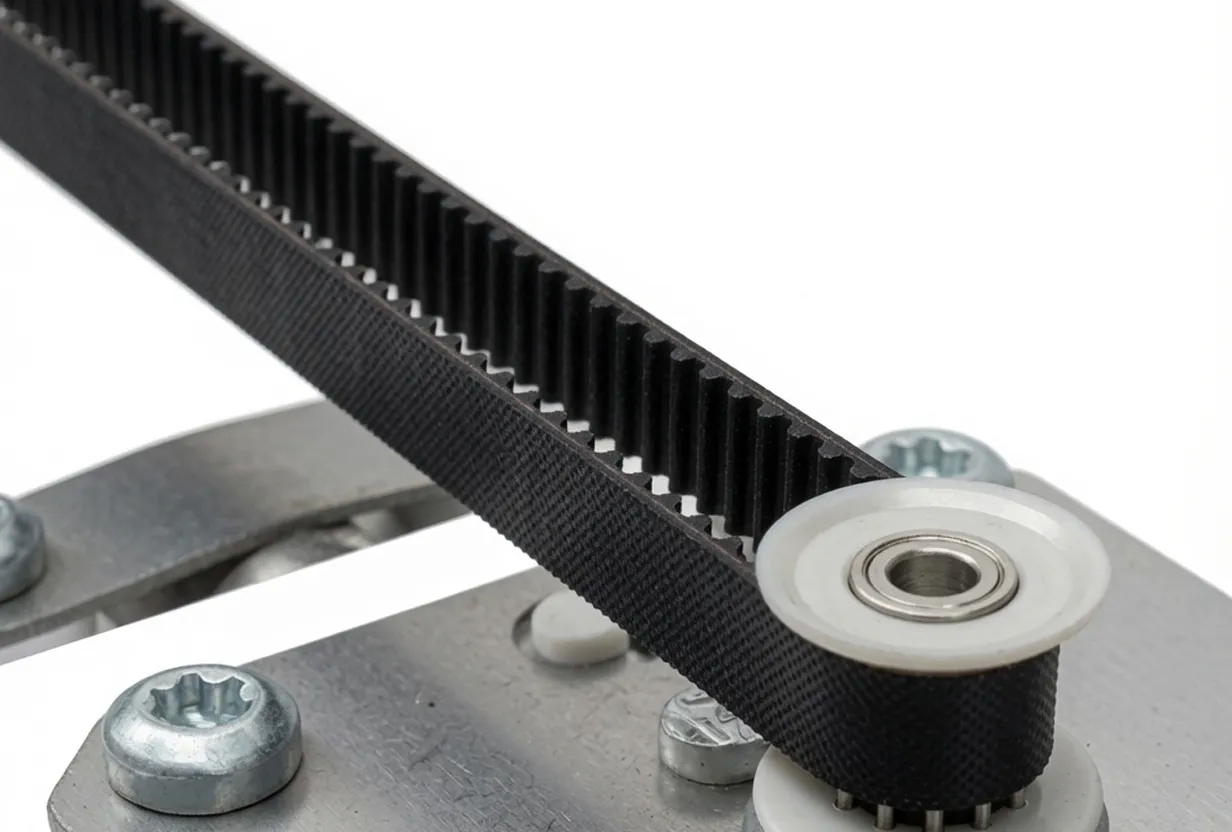
ระบบขับเคลื่อนซิงโครนัสแบบ H pitch ที่สมบูรณ์นั้นต้องการการจับคู่ที่เหมาะสม พูลเลย์และสายพานไทม์มิ่ง เราจัดหาส่วนประกอบต่างๆ พร้อมด้วยส่วนประกอบเสริมสำหรับการตั้งค่าแรงตึง การเพิ่มประสิทธิภาพอัตราส่วนความเร็ว และการบูรณาการระบบ เราจัดหาผลิตภัณฑ์ที่เข้ากันได้ครบวงในกลุ่มผลิตภัณฑ์ไดรฟ์ตั้งเวลาทั้งหมด เพื่อการจัดซื้อแบบครบวงจร
ในระบบขับเคลื่อนอุตสาหกรรมหนักหลายๆ ระบบ ขั้นแรกใช้สายพานตัววีในการส่งกำลังหลักจากมอเตอร์ไปยังเพลาตัวกลาง และขั้นที่สองใช้สายพานซิงโครนัสแบบฟันเฟืองตัว H ในการขับเคลื่อนอุปกรณ์ในกระบวนการผลิตด้วยอัตราส่วนความเร็วที่ควบคุมได้จากเพลาตัวกลาง ผลิตภัณฑ์ของเรามีให้เลือกหลากหลาย รอกสายพานตัววี — โปรไฟล์ร่อง SPA, SPB, SPC, SPZ ในเหล็กหล่อ เหล็กกล้า และอลูมิเนียม — เป็นส่วนประกอบขั้นแรกที่ใช้ร่วมกับ H100 พูลเลย์สายพานไทม์มิ่ง ขั้นตอนที่สองในสถาปัตยกรรมขับเคลื่อนหลายขั้นตอนเหล่านี้ ผลิตภัณฑ์ทั้งสองมีความเข้ากันได้ทางมิติที่เพลาตัวกลางผ่านข้อกำหนดรูเจาะและร่องลิ่มมาตรฐาน ทำให้มั่นใจได้ถึงการผสานรวมทางกลที่ราบรื่นในระบบขับเคลื่อนแบบรวม

แถบฟันเฟืองมาตรฐานแบบเมตริกให้การเคลื่อนที่เชิงเส้นเทียบเท่ากับแร็คที่ใช้ร่วมกับพูลเลย์แบบวงกลมเพื่อสร้างการเคลื่อนที่เชิงเส้นจากไดรฟ์แบบหมุน ในสายการประกอบอัตโนมัติ ระบบลำเลียงเชิงเส้น และกลไกโครงเหล็กอุตสาหกรรมที่รวมไดรฟ์แบบหมุนของพูลเลย์ H100 เข้ากับสเตจแร็คเชิงเส้น ส่วนประกอบทั้งสองต้องมีระยะห่างของฟันเฟืองที่เหมือนกันเพื่อให้การจับคู่ถูกต้อง แถบฟันเฟืองของเราครอบคลุมมาตรฐานระยะห่างแบบเมตริกที่เข้ากันได้กับระยะห่าง H ของเรา พูลเลย์ไทม์มิ่งแบบรูตรง มีให้เลือกหลากหลายในสถาปัตยกรรมระบบขับเคลื่อนแบบไฮบริดเหล่านี้ ซึ่งช่วยให้วิศวกรออกแบบสามารถจัดหาชิ้นส่วนระบบขับเคลื่อนแบบหมุนและแบบเชิงเส้นที่จำเป็นสำหรับการออกแบบระบบการเคลื่อนที่เชิงเส้นแบบสมบูรณ์ โดยไม่ต้องพึ่งพาซัพพลายเออร์เฉพาะทางหลายราย
9. เกี่ยวกับเรา
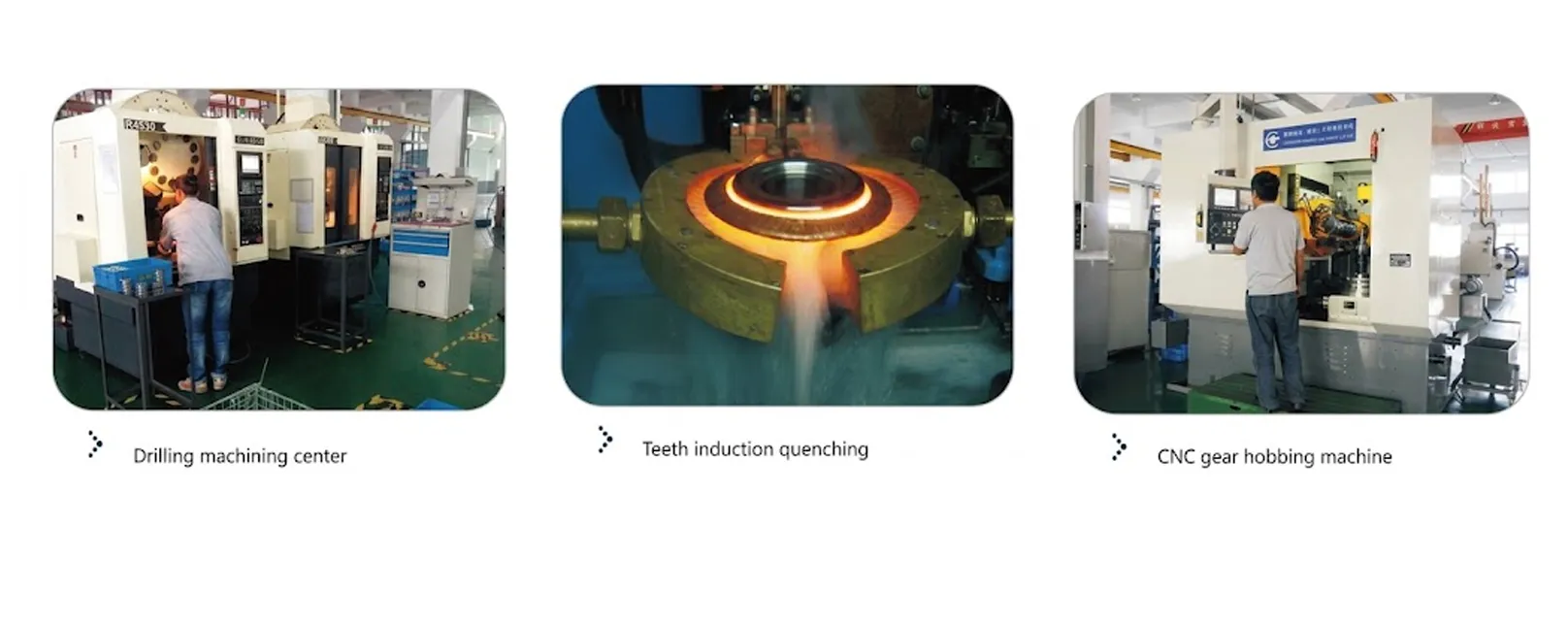
เราเป็นผู้เชี่ยวชาญ ผู้ผลิตพูลเลย์ไทม์มิ่ง ด้วยศักยภาพในการผลิตที่ครอบคลุมทุกช่วงของรอกขับสายพานแบบซิงโครนัส ได้แก่ MXL, XL, L, H, XH, XXH, T2.5, T5, T10, AT5, AT10, HTD 3M, HTD 5M และ HTD 8M โดยใช้วัสดุต่างๆ เช่น อลูมิเนียม 6061-T6, เหล็กกล้าคาร์บอนปานกลาง, เหล็กกล้าอัลลอย, เหล็กหล่อสีเทา, เหล็กกล้าไร้สนิม และพลาสติกวิศวกรรม ผลิตภัณฑ์แต่ละชนิดมีจำหน่ายในรูปแบบต่างๆ พูลเลย์ไทม์มิ่งแบบรูตรง หรือในรูปแบบรูเจาะแบบมีบูช เพื่อให้เหมาะกับความต้องการของเพลาและการติดตั้งที่หลากหลาย อุปกรณ์การผลิตของเราประกอบด้วยเครื่องกลึง CNC เครื่องเจียรโปรไฟล์ เครื่องกัดเฟือง และระบบวัดความแม่นยำสูงที่ตรวจสอบความสอดคล้องของขนาดตามข้อกำหนด ANSI/RMA IP-24, ISO 5294 และ GB/T 11362 สำหรับซีรี่ส์ H100 โดยเฉพาะ โรงหล่อเหล็กหล่อและความสามารถในการกลึงหยาบสำหรับรอกขนาดใหญ่ — สูงถึง 700 มม. — และการตกแต่ง CNC ที่แม่นยำของรูปทรงฟันและรูเจาะให้ได้ตามค่าความคลาดเคลื่อนของขนาดที่แคบ ทำให้ผลิตภัณฑ์ของเราโดดเด่นในตลาดชิ้นส่วนขับเคลื่อนอุตสาหกรรมหนัก
เวิร์กช็อป


คำถามที่พบบ่อย
บรรณาธิการ: PXY